If U.S. Copies Europe, “It Will End in Tears”

Share this article on:

A major European voice for climate and energy rationality told a small Charlottesville audience March 30 that his home, the United Kingdom, and the rest of Europe face an immediate energy crisis that was brewing long before the war in Ukraine.

Benny Peiser of the Global Warming Policy Foundation said prices in Britain jump as of today, April 1.  Householders are seeing the rising electricity and natural gas costs suddenly double, from about 1,000 pounds to 2,000 pounds annually.  By the end of the year another jump to 3,000 pounds annually (almost $4,000) is predicted.  The parallel impact on business and transportation will push up food and other commodity prices.

Peiser noted the irony that only continued supplies of energy from Russia are keeping the lights on.  Knowing how Russia needs the cash, nobody expects that to change until Europe finds other sources.  The United States has saved Europe before and is likely to be one savior now, at least in the short term.

The idea that Europe will save itself by building more wind, solar and related battery facilities is utopian, but that is the prescription being offered by many in a political environment where even most of Europe’s conservative parties are afraid to advocate fossil fuels.

“Don’t follow our path.  Don’t copy the Europeans.  It will end in tears,” Peiser said.  “Pragmatism and realism have to come back.”

Global Warming Policy Foundation, founded in England in 2009, and the related communications outlet Net Zero Watch, publish several writers and researchers who challenge the climate catastrophe narrative.   It has a U.S. branch headed by Francis Menton, also known as the nom de plume Manhattan Contrarian, and he was also at the gathering that evening.

Peiser and Menton have been on a speaking tour of the U.S. and Canada, not producing much news coverage that will turn up in a search.  They spoke at the Jefferson Room of a Charlottesville country club, the Blue Ridge bathed in sunset outside the window.  Had they taken the message to Jefferson’s Rotunda on the University of Virginia grounds a few miles to the east, the reception would have been quite different probably.

One University of Virginia faculty member who has published similar views was present, and the meeting was hosted by a local attorney, Chris Horner, who files litigation on energy and climate matters through a non-profit called Government Accountability and Oversight.

“We have more to fear from climate policy than we have to fear from climate change,” attorney Horner said.  “Man did not take a safe climate and make it dangerous with fossil fuels, we took a dangerous climate and made it safe.”

“You are blessed in the U.S. with enormous resources of oil and gas and coal, and some states are using them while some states are not,” Peiser said.  Because of that, and because the electricity generated by fossil fuels flows between states, “You don’t feel the same hit that Europeans now face.”  California can extol its environmental virtue while buying power across the lines when needed.

In Europe, relying on your neighbor to take up any slack has largely meant Russia, which pre-crisis provided 40% of Europe’s natural gas, 50% of its coal and 30% of its oil.

For 30 years Europeans have pursued the dream of an economy run mainly on solar and wind production, and they have become dependent on them.  They prided themselves on declining fossil fuel emissions, ignoring how they achieved much of the change:  By sending manufacturing overseas to counties still burning oil, coal and gas.  The U.S. has done the same.

There is growing realization that the vision of a modern economy run entirely, or almost entirely, on wind and solar simply will not work without incredible (as in not reasonable) levels of storage.  That was Fenton’s topic for the evening.  “How many turbines does it take at midnight with no wind? It doesn’t matter how many you build because a million times zero is still zero.”

Fenton said the cost of the storage is roughly the same as a country’s entire gross domestic product, especially if all vehicles and home energy use go electric.  A recent analysis of the Virginia Clean Economy Act’s impact, if implemented as is, reached the same conclusion.

Many countries relied on nuclear power as a clean backup for wind and solar, but before this war were closing down that form of generation under pressure from the Green parties.  Some have changed their minds now and will retain the nuclear plants and consider more.  Even after this shock of the Ukrainian war, however, Germany still plans to shutter its final plants next year.  Its own Green Party would prefer to use coal, mainly because Germany has plenty of it.

The British Isles, also once known for coal, have a deep supply of the related asset shale gas, same as the U.S.  But like most Europeans they have prohibited the newer extraction techniques, derided by critics as “fracking.” The current British government is talking about expanding oil and gas production in the North Sea, but only because “there are no voters living in the North Sea,” Peiser said.

Changing the rules and allowing extraction of the shale, “the resource under our feet,” still seems politically untenable. If the dire predictions of energy prices tripling in one year, with all the other inflation that creates, come to pass there could be popular uprisings in Europe similar to the recent Yellow Vest movement in France.

“Most people in the U.S. and in Europe have never experienced hardship.” They think the wealth and comfort of the past 30 to 40 years is normal, and the financial means to help those now struggling re infinite.  More and more of their leaders see the challenge are seeking alternatives.

Peiser is not optimistic that attitudes will change quickly but is encouraged that about 60 British members of Parliament are started to work together to turn things.  “It’s not about solving the problem. It’s actually about acknowledging there is a problem.”
Posted in Business, Economy, Energy | Tagged , | Comments Off on If U.S. Copies Europe, “It Will End in Tears”

Time for Public to Speak

Share this article on:
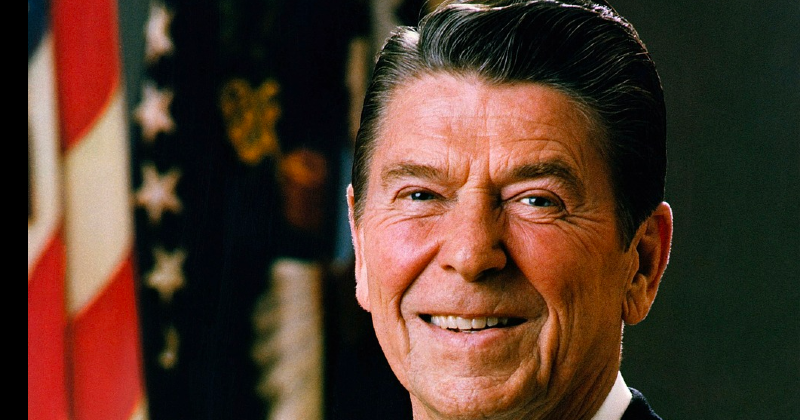
“I urge you again to contact your Senators and Congressmen …. Tell them you believe this is an unequaled opportunity to help return America to prosperity and make government again the servant of the people.”
— Ronald Reagan
July 27, 1981

Richmond, like Washington, has always been a place where an “insider’s game” is played – not in a pejorative sense, but simply as the way things are done.

Relationships are paramount, people speak in the arcane language of lawmaking, agendas are confusing for outsiders, and the activities of a subcommittee for an obscure commission are followed in detail because those in the know understand that what happens there will end up as a new regulation.

But in July, 1981 President Ronald Reagan did something no president had done since Franklin Roosevelt:  He reached beyond the insiders and appealed directly to the public, asking for their help in securing approval of his tax rate cut of 25 percent over three years.  Reagan’s ploy worked.  When passed, the tax cuts led to an economic recovery lasting 92 months without a recession.

Now comes Governor Glenn Youngkin, launching a six-figure television campaign with a commercial laying out his own tax proposals and implicitly, if not explicitly, asking Virginians to weigh in.

This is not “the Virginia Way” of decision-making unhindered by the voices of voters and taxpayers, and Senate Finance Committee Chair Janet Howell immediately declared the ad “counterproductive.”

Counterproductivity, however, is in the eye of the beholder.  So, too, is fairness.  Despite holding only a one-vote majority in the Senate, Senator Howell sits astride a committee with 12 Democrats and five Republicans.  Because of that one vote majority, Senate Democrats are empowered to “stack the deck” and stack it they have, with one committee holding a four to one majority for the Left.

If the Youngkin tax agenda fails, it will be on purely political grounds.  National Democrats may deride the independence of West Virginia Senator Joe Manchin declaring him “one lone man obstructing the President’s agenda” but in Virginia one Senator empowers the obstruction of … well, everything.   Joe Manchin is a piker.

Having lurched so far and so quickly to port during the preceding two years that the electorate rejected their state-wide and House of Delegate candidates in 2021, the Left holds only the Senate … and that most likely because the body was not up for re-election.  Describing themselves as a “brick wall”, they’ve not been hesitant about exercising their right to obstruct nearly everything.

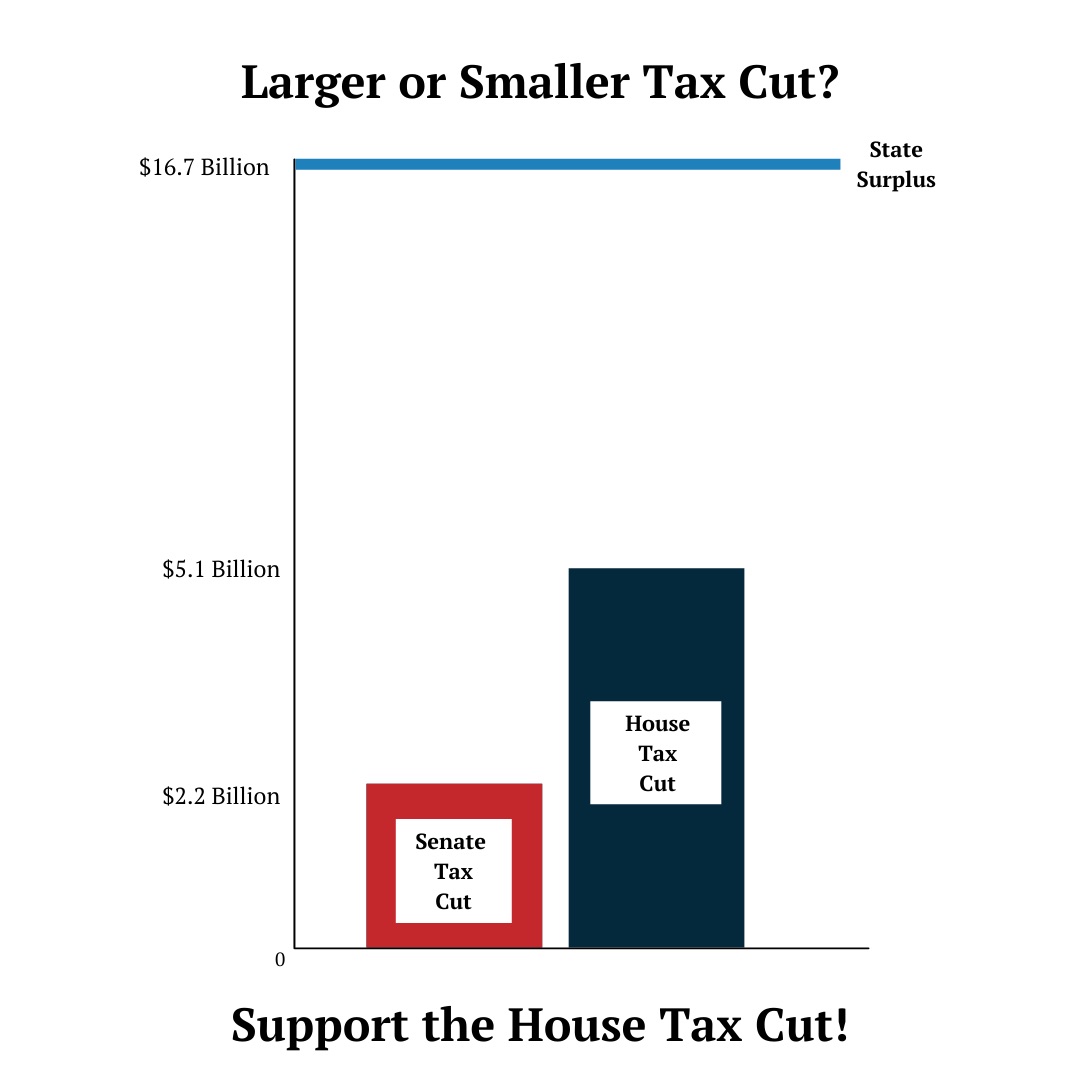
Which is why Youngkin’s public focus on the tax issue is so dangerous for their future.  With voters facing not only the worst inflation in 40 years but also higher taxes resulting from recent tax law changes, the public is unlikely to be sympathetic to the Senate Democrats’ argument that they have to block tax reductions in order to meet “unfunded needs” – especially when Virginia sits on a surplus of more than $16 billion, and even the House/Youngkin proposal would leave most of it untouched.

Doubling the standard deduction alone means that every working Virginia couple would see an immediate and permanent tax reduction of $517.  Add to it the short term boost of a gasoline tax break and elimination of the grocery tax and we’re not talking “billions.”  For Virginia families, we’re talking “real money.”

The opponents’ case is weak, made weaker by a Biden-fueled inflation and their own past tax policies.  A contest in which citizens decide whether government or they, themselves, know better what should be done with their earnings, is usually no contest at all.

In full disclosure, moving the resolution of policy issues away from “inside baseball” to an “outside-in” strategy that empowers and encourages Virginians to engage is one the Thomas Jefferson Institute has now favored for some time, and acted on.  We are glad to see it come to pass.  Our own ads encouraging Virginians to speak out on the tax issue (albeit with a much smaller budget) preceded the Governor’s by more than a month.

But for Governor Youngkin, there are risks as well.  Once the gauntlet is thrown, it will be harder to turn back, and success depends on Virginians responding.  Will they?  Those favoring the economic stimulation coming with lower taxes should identify their elected officials now, and let them know where they stand.

In so many ways, it is a time for choosing.

A version of this commentary originally appeared on March 29 in The Fredericksburg Free Lance-Star. 

Posted in Government Reform, State Government, Taxes, Transparency | Comments Off on Time for Public to Speak

Green New Deal Still Rules in Virginia

Share this article on:

The elections of a Republican Virginia governor and a new Republican majority in the House of Delegates have not changed Virginia’s status as one of the greenest of Green New Deal states in the country.  Every effort to reverse the course set during the previous period of Democratic hegemony has failed at the 2022 General Assembly.

The massive construction plans for ratepayer-funded solar, wind and battery facilities dictated by the 2020 Virginia Clean Economy Act remain on track. A bill to repeal VCEA failed in the majority-Democratic Virginia Senate. So did a simpler bill that merely restored the ability of the State Corporation Commission to review those construction plans for prudence, reasonableness and cost.

If California moves to ban the sales of new internal combustion engine cars and other vehicles starting with the 2035 model year, as expected, Virginia is still positioned to automatically follow suit. Until then, a growing percentage of all new car sales must be electric starting in 2025. A bill to revisit that 2021 legislation, and do a proper regulatory adoption process, also died in the Senate.

Legislative efforts to remove Virginia from the Regional Greenhouse Gas Initiative regional compact all failed. A regulatory reversal may still be possible without legislation, but in the meantime the carbon tax remains on every Dominion Energy Virginia bill and works its way into everything touched by electricity costs.

In these waning hours of the regular session, a bill to protect the use of natural gas from local restrictions or prohibitions is struggling in a conference committee. If it fails or passes without teeth, local governments that operate natural gas utilities (such as the City of Richmond) can proceed to close them or restrict new connections. Other localities can use building codes or other regulations to do the same to private natural gas suppliers. The state’s largest and one of its more Democratic localities, Fairfax County, has plans to discourage gas already adopted. It and Richmond won’t be alone.

Within the General Assembly, the partisan divide on this debate is nearly total. The bill to protect natural gas did receive two Democratic votes in the House. Some Senate Democrats voted to restore State Corporation Commission oversight on the reasonableness, prudence and cost of renewable energy generation that is expected to add hundreds if not thousands of dollars to annual electric bills.

But that bill, House Bill 73, did not even receive total Republican support. It failed in the Senate Commerce and Labor Committee 9-5, with four Democrats and only one Republican voting to keep it alive. One Republican, Senator Mark Obenshain, R-Harrisonburg, voted to kill it. Senate Minority Leader Thomas Norment, R-James City County, failed to vote.

The same pair had weeks before voted to kill a similar effort at restoring SCC authority over these projects, that bill coming from one of their Senate Republican colleagues.

Through the session the steadfast position of the House Republicans with lukewarm support from key Senate colleagues has been joined by mostly silence from Governor Glenn Youngkin, who has only sought to repeal the RGGI carbon tax. The offshore wind and solar bonanza of VCEA, the demands to buy electric cars and covert our homes to all-electric, those will cost average Virginians far more than will RGGI.

Whether they know it or like it, Virginians remain firmly in the grip of those who think fossil fuels are dangerous and must be rapidly retired. We currently depend on those fuels heavily, they are abundant within U.S. borders and national waters, they have delivered reliable economic prosperity, yet they must disappear from Virginia’s future. Replacing them with intermittent and unreliable electricity will be expensive and risky.

Why do Democrats think Virginians want this? Three decades of a steady drumbeat of false or exaggerated narratives about claimed climate catastrophes has sunk in. In a recent poll conducted by Christopher Newport University, anticipating these issues before the 2022 General Assembly, respondents repeated the messages of looming disaster they have been told.

First the pollster asked about various claimed disastrous climate change impacts. More than 40% stated there already are major impacts on Virginia from rising sea levels, harm to wildlife, and more common storms and extreme heat. Another 30% or more claimed there are already minor impacts. Fewer than one-quarter saw no impacts.

There is minor sea level rise, having caused no damage, and the other three claimed extreme outcomes are total fiction. Virginia has experienced little to no change in its climate and certainly no ill effects. But more than half of voting Virginians believe it has, either major or minor.

With the pump fully primed by that first question (a lesson in polling bias), voters were then asked about the priority for state government of “addressing climate change.” About one third set it as a top priority and another third as a medium priority. Similar two-third majorities expressed support for the VCEA and membership in RGGI, including about 40% of Republican respondents.

Missing from some of those questions, of course, was any mention of the cost of converting to intermittent wind and solar electricity, costs which have been estimated and are available. The growing electric bill tax that is imposed by RGGI was never mentioned. Bring those into the poll question and suddenly voters respond very differently. Suddenly their doubts blossom, as a Thomas Jefferson Institute-sponsored poll showed. With the price tag attached, even Democrats disliked RGGI.

But the price tags remain unknown, sometimes hidden and buried, and will now be obscured by government-driven inflation and war-driven commodity price hikes. The mainstream media outlets filled with daily climate disaster claims are silent on the costs or risks of the energy conversions they tout. Abundant evidence that the climate catastrophe narrative is false on some points and debatable on others never makes the local paper or nightly news.

The physics behind our climate remains a controversial mystery. Inertia is something all can understand.

A version of this commentary originally appeared on March 10 in the online Bacon’s Rebellion blog.

Posted in Business, Economy, Energy, Environment, State Government | Tagged | Comments Off on Green New Deal Still Rules in Virginia

Is Fairfax Positioning To Move Against Gas?

Share this article on:

It was a Richmond City Council resolution back in the fall, expressing a desire to shut down its municipal natural gas utility, that triggered pending (and now struggling) Virginia legislation to prevent localities from prohibiting natural gas.   Less attention has been given to the “climate action” plan by Virginia’s largest local government to discourage that energy source.

It is easy to dismiss Richmond’s action, which was vaguely-worded resolution with no timeline.  Fairfax County’s 214-page climate action plan grew out of a serious stakeholder group, is relatively detailed, and on various elements the timeline says, “immediate.”

Action 2A:  Electrify Existing Residential Buildings.  Timeline: Immediate.  Action 2B:  Electrify Existing Commercial Buildings.  Timeline:  Immediate.  Action 3B:  Support All-Electric Residential and Commercial Building Construction.  Timeline: Immediate.  All three are efforts to eliminate use of natural gas the proposed legislation could prevent.

There are signs of realism in the document.  The high cost of some ideas is acknowledged, and it falls short of calling for a ban on new natural gas connections, but the foundation is placed: 

“Working Group members provided mixed feedback on how to address new natural gas connections. Some members expressed support for a new natural gas ban, while others were concerned that a switch to only electricity for heating could be very expensive and limit Fairfax County’s solutions. For example, some Working Group members identified the value that dual-fuel heat pumps could provide by switching from electricity to gas on very cold weather days.”

Read that carefully.  Heating is not the only use for natural gas.  And a mandate that gas can only apply in a dual fuel furnace would still require greater expense than a traditional gas furnace or boiler.

And then there are signs of total fantasy, such a general assumption that imposing all-electric or other energy-related requirements on existing or new commercial buildings would have no cost to the members of community. Business expenses do get passed on to customers rather than shareholders. Not all of the assumed energy cost savings pan out.  The easy energy choices that definitely lower costs are being done.

What authority local governments might have over energy-related building codes is not the focus of this column.  Their authority to restrict new or existing natural gas connections, or the use of propane from a non-utility provider, was the focus of the first half of House Bill 1257 (text as it passed the House).   That major section of the bill restricting all localities has now disappeared from the substitute text likely to be voted on tomorrow by the State Senate.

The substitute narrowly applies to the three local governments that own municipal gas works, and protects only commercial and industrial users if the government wants to exit the business.  The residential customers of Richmond Gas Works, many of them residents of Henrico, Chesterfield and Hanover counties, could still see service restricted.  For that matter, Richmond City Council could ban new industrial or commercial connections under that version.

An effort may be made to restore some teeth to the bill in a conference committee.  As it now reads, there is no reason to pass it and pretend something real was done.

The disembowelment of the original bill represents yet another victory for the environmental activists cheering on the 21 Democrats in the Senate. They have killed every effort to reverse Virginia’s rush toward an all-electric, wind and solar reliant energy economy.  The utilities and industry suppliers expecting to profit off the Virginia Clean Economy Act capital bonanza joined in killing the bills to amend or repeal it.

The opponent’s message against the natural gas bill, from the committee podium and online, has been focused on maintaining local authority and autonomy.  The authority they seek to preserve is for certain localities to move forward with unilateral local regulations, typically framed as public health and environmental goals, reduced pollution, and modernized new building construction.

Fairfax’s ambitious outline could be the model.  It reaches from bike lanes, waste management and green space, traditional local issues, to county policies on aviation fuels, the state’s electricity generation mix and grid management, well outside the county’s authority.  The expansion of electric vehicles (public and private) and related infrastructure is another prominent goal, using the verb most common in the report, “encourage.”  How residents will be encouraged is not often clear.

The whole exercise, of course, is tied to an apocalyptic vision of pending environmental disaster based on worst-case models and carefully chosen data.

“In Fairfax County, the amount of snowfall has been decreasing for decades, the number of extremely hot days (95°F+) has increased seven days from 1970–2018, and the incidences of tick- and mosquito-borne diseases have been increasing in recent years due to longer warm seasons. Current climate models project that Fairfax County and the surrounding region will experience substantial increases in temperatures by 2100 (up to 7°F) and increased levels of precipitation.”

Hot days since 1970?  Anybody else remember that was when global cooling was the “settled science” because average temperatures were dropping?  Start your data with 1900 and suddenly the really hot spells of the 1930s dust bowl era jump out and put current temperatures in some context.  And a temperature rise prediction of 4 degrees Celsius is from the worse-case models, not that widely accepted even by believers.  It sure sounds scary, though.

Unless and until the green activists regain control at the state level, Virginia’s more liberal localities may be their front line, a good place for them keep their scary rhetoric and organizing skills sharp. Here in Richmond, the 2022 legislative stalemate means the VCEA with its planned massive wind and solar buildouts, and the push to join California in banning internal combustion engines, both remain on track.

A version of this commentary was originally published on March 3 in the online Bacon’s Rebellion blog.  

Posted in Economy, Energy, Local Government | 1 Comment

Still Time to Limit Governor’s Emergency Powers

Share this article on:

Should the governor of Virginia have the power to unilaterally declare an open-ended state of emergency that indefinitely restricts Virginians’ civil and constitutional rights without a recorded vote by the General Assembly?

The COVID-19 pandemic lockdowns raised this serious question. But so far, nobody has answered it definitively.

One of the few public officials to even question the limits of a governor’s emergency powers was state Sen. Chap Petersen, D-Fairfax, who in 2020 filed a lawsuit claiming that former Gov. Ralph Northam’s Executive Order 72 – which imposed draconian restrictions on some but not all business establishments in Virginia in an attempt to reduce transmission of the coronavirus – exceeded his authority because Northam did not seek or obtain consent from the state legislature.

But the Supreme Court of Virginia evaded the question by throwing out the lawsuit over plaintiffs’ “lack of standing” and “failure to demonstrate a relevant injury,” and the General Assembly’s Democratic majority at the time apparently didn’t want to answer it either. That same year, legislators also killed a bill that would have required the state Board of Health to not only approve such emergency measures within 30 days, but also vote to renew them every month thereafter until the proximate cause of the emergency had passed.

If Democrats did not want to undermine their own governor by challenging his authority during a pandemic, they seem to have second thoughts now that Northam is out of office and there’s a new Republican governor and a new GOP majority in the House undoing many of Northam’s COVID-19 policies – such as mask mandates for students.

Whatever side of the mask issue you’re on, it’s unsettling to think that one person in the commonwealth can make such a decision for everybody else. So this legislative session might be the best and perhaps only time legislators of both parties agree to clearly define the limits of any future governor’s power during a declared “state of emergency.”

A state of emergency is defined by Section 44 of the Virginia Code as “the condition declared by the Governor when in his judgment the threat or actual occurrence of an emergency or a disaster in any part of the Commonwealth is of sufficient severity and magnitude to warrant disaster assistance by the Commonwealth to supplement the efforts and available resources of the several localities and relief organizations in preventing or alleviating the damage, loss, hardship, or suffering threatened or caused thereby and is so declared by him.”

Disasters in the past warranting state of emergency declarations have largely been things like hurricanes, tornadoes, floods, or other natural phenomena that caused loss of life and widespread property damage. They were typically limited in duration. The COVID lockdowns were different. They were originally announced by Northam as a way to prevent what public health experts predicted would be an inundation of critically ill patients that would overwhelm Virginia hospitals.

Despite these claims and the governor’s own medical training, those predictions never materialized.  Yet his near-dictatorial mandates were not lifted even when it became apparent that certain demographics, such as the elderly and those with co-morbidities, accounted for most of the deaths. Northam moved the goalposts instead.

By definition, an “emergency” is a temporary event of sufficient magnitude requiring immediate action. It is important that the chief executive of the commonwealth be able to act swiftly and decisively to protect residents and property from serious harm. But how long can an emergency last before it ceases being an emergency? And how long can a governor who has unilaterally declared a state of emergency exercise such powers without the consent of the legislature?

The COVID-19 pandemic illustrates why the legislature must step in to set some guardrails for future governors.

On March 23, 2020 Gov. Northam issued Executive Order 53, which ordered the statewide closure of all K-12 schools, certain “non-essential businesses,” and “all gatherings of 10 or more people.”

“This is an unprecedented situation, and it requires unprecedented actions to protect public health and save lives,” Northam said at the time.  And because the governor was also a physician, most Virginians accepted the fact that their liberty would be temporarily curtailed in this statewide effort to “stop the spread of COVID-19.” But nobody expected it to drag on for more than two years, or that people with an extremely low risk of dying from the virus would be treated the same as high-risk individuals.

Even back then, contradictions in the governor’s lockdown plan were evident. For example, the Northam administration defined state-owned liquor stores as “essential” – while closing bars and restaurants that also sold alcohol. Big-box retail stores were allowed to remain open for business, but smaller retail establishments were not – as if the virus knew the difference.

Northam even went so far as to impose a curfew between the hours of midnight and 5 a.m. with no scientific evidence then or now that COVID-19 was being transmitted in the middle of the night.

Virginians were still leaving their homes and mingling with other people – although they were supposedly staying six feet apart. But even targeted lockdowns, social distancing, mandated mask-wearing and the copious use of disinfectant and hand sanitizers turned out to be insufficient to stop this contagious respiratory virus from spreading to every county in the commonwealth.

In fact, a meta-analysis of 34 worldwide “difference-in-difference” studies of excess deaths caused by COVID-19 published in January 2022 (“Effects of Lockdowns on Covid-19 Mortality”) by the Johns Hopkins Institute for Applied Economics, Global Health and the Study of Business Enterprise found that government restrictions had “little to no public health effects,” despite imposing “enormous economic and social costs where they have been adopted.”

“Indeed, according to stringency index studies, lockdowns in Europe and the United States reduced only COVID-19 mortality by 0.2% on average,” the meta-analysis found, concluding that “lockdown policies are ill-founded and should be rejected as a pandemic policy instrument.”

Northam’s one-size-fits-all mandates caused enormous social, economic and even physical harm as tens of thousands of Virginians lost their jobs and businesses. Many others were afraid to seek medical care for serious conditions such as heart disease and cancer or succumbed to drugs used to self-medicate their losses.

What should alarm Virginians is the unbridled power that the commonwealth’s chief executive has to impose such policies. Under state law, a sitting governor only has to send copies of any executive order, rule or regulation made under a state of emergency to members of the legislature. And while a governor should have the authority to react quickly in an emergency, there must be some clear statutory limits on this power.

For example, on January 20, 2022 Gov. Glenn Youngkin signed Executive Order 13, which rescinds Northam’s Executive Order 3 and delegates Youngkin’s emergency powers to his unelected chief of staff or other political appointees if he is incapacitated or unable to perform his duties after a 24-hour period.

Section 2.2-104 of the Virginia Code gives the governor sweeping power to delegate in such cases. But does this mean that the governor’s chief of staff can dictate lockdowns, restrict Virginians’ freedom of movement, right to worship or earn a living by issuing draconian emergency measures for an indefinite period of time without the consent of the General Assembly?

Some states keep their governors on a much tighter leash, even during a declared state of emergency. According to the National Conference of State Legislators, some states set specific time limits for emergency executive orders: 15 days in Kansas and South Carolina; 21 days in Pennsylvania; 28 days in Michigan; 30 days in Alaska, California, Minnesota, Utah and Washington; and 60 days in Florida and Wisconsin.

In other states, the state legislature itself has the power to declare a state of emergency (Alabama), or to terminate one declared by the governor (Alaska, Arkansas, Colorado, Idaho, Indiana, Iowa, Louisiana, Maine, Maryland, Missouri, Montana, Nebraska, Nevada, New Hampshire, New York, North Dakota, Ohio, Oklahoma, Oregon, Rhode Island, Texas, and West Virginia.)

NCLS notes that the legislatures of 34 states plus Puerto Rico currently have bills pending to limit the extraordinary emergency powers their governors invoked during the COVID-19 pandemic. In Virginia, several such bills have already been voted down.

However, the General Assembly still has the chance to statutorily limit the governor’s emergency powers. There are two bills still pending  that would limit the duration of an emergency executive order if the General Assembly has not taken action to endorse it.

H.B. 158, patroned by Del. Kathy Byron, R-Lynchburg, which limits emergency orders to 30 days and requires the General Assembly to approve any extensions up to 90 days, unanimously passed the House 99-0 on February 14 and was sent to the Senate Rules Committee.

S.B. 4, patroned by Sen. David Sutterlein, R-Roanoke, is similar to Byron’s bill, but extends the initial time limit of emergency orders to 45 days. It passed the Senate on a bipartisan 29-11 vote on February 15 and was sent to the House Rules Committee.

Both of these bills could be killed in committee, but there is obviously some agreement on both sides of the aisle this year to limit a future governor from misusing these vast emergency powers. And the 15-day difference between them should not require much compromise.

Although a statutory limit on the governor’s emergency powers would be better than nothing, a proposed constitutional amendment (SJR 36) that would make such limits part of the Virginia Constitution and therefore more difficult to repeal by a future legislature, would be ideal.

Patroned by Sen. Stephen Newman, R-Roanoke, it would require the governor to call a special session whenever a state of emergency was declared for longer than 90 days.

But senators punted on this one, voting 15-0 to send this proposed constitutional amendment to the 2023 Privileges and Elections Committee, presumably to die a slow death there. So while the General Assembly seems ready to set some limits on the governor’s emergency powers this session, a more permanent solution will have to wait.

There’s still time to curb the governor’s vast emergency powers, but the clock is ticking. The last day for committee action is Monday, March 7th, and the 2022 legislative session adjourns the following Saturday on March 12th.

Voters will soon know whether their state legislators were actually serious about checking the power of the executive branch in this matter – or not.

Posted in Government Reform | Comments Off on Still Time to Limit Governor’s Emergency Powers