

Subsidies for Electric Cars, Buses and Charging Will Accompany TCI’s Taxes and Rationing

Share this article on:

The ultimate goal of the Transportation and Climate Initiative with its tax and rationing scheme is to eliminate fossil fuels for transportation and get us into electric vehicles.  That is something advocates have admitted and critics have pointed out.  While Virginia TCI participation is on hold in this statewide election year, the 2021 General Assembly is following other pathways to the utopian EV future.

The House of Delegates has sent the Virginia Senate a bill to create a state financial incentive of $2,500 for purchase of a new or used electric vehicle.  An additional $2,000 rebate is offered to a low- and middle-income buyer of a new car and $500 if that buyer choses a used EV.

The House has also passed legislation empowering the state’s Air Pollution Control Board to adopt state regulations on vehicle fleet fuel economy and to model California’s existing program forcing manufacturers to offer more zero- and low-emission vehicle sales in the state.  This bill sets no goals but puts an accelerated process in motion, bypassing the full regulatory review, with a goal of regulating the 2025 model year vehicles offered in the state.

It is California’s Air Resources Board that runs its LEV and ZEV programs which will be the models for Virginia.  In part, that is because the big financial winners include the electric utilities, with California now planning for a 25 percent increase in power demand from EV expansion.

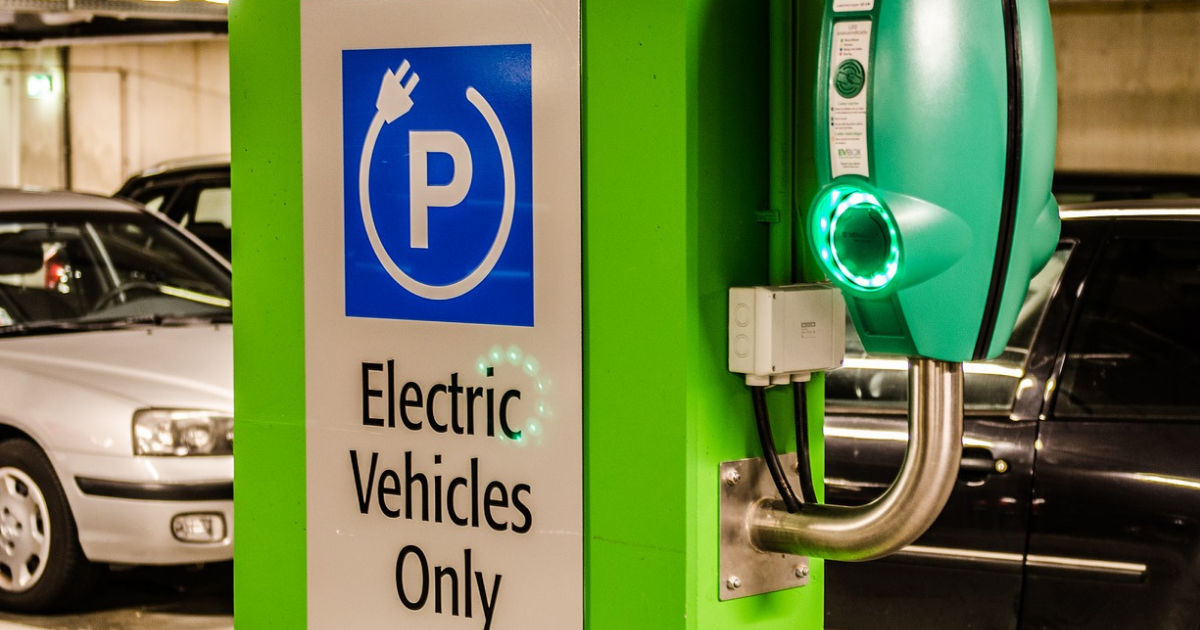
third bill orders the State Corporation Commission and other agencies to plan how best to build out the tens of thousands of charging stations needed to service a planned EV fleet, and whether the state’s utilities should own them.  If they do become additional assets of the monopoly utilities, the investments could enjoy the same guaranteed high-return profit margins they earn on power plants and transmission lines.

Last but hardly least, Dominion Energy Virginia is pushing again to provide – subsidized by general ratepayers – more than 1,000 electric school buses, which cost three times as much as a bus fueled by gasoline or diesel. A small utility-controlled EV school bus pilot is already underway.

A similar electric bus proposal was defeated late in the 2020 session, but now is back with both House and Senate versions, each successful so far but incompatible.  The House version was initially funded with a new 5 cents per gallon tax on off-road diesel fuel, used by farmers and manufacturers.  That tax was estimated to raise $3.2 million annually but was stripped out of the bill, leaving it with no funding mechanism.

The Senate bill funds the school buses by treating them as mobile energy storage devices. It would allow the utility to charge ratepayers for them the same way it will charge for the other energy storage systems mandated by 2020’s Virginia Clean Economy Act.  Ratepayers would even pay schools a compensation for accepting the utility-owned vehicles in their fleets.

The Senate bill would limit Dominion to 1,250 buses statewide, at least at first.  Enthusiasm over replacing $100,000 conventional buses with $325,000 electric buses just drips from a Virginia Business story on the proposal that reads like a company media release.  There is no mention in the article about utility ratepayers buying these buses, not the school systems.

Setting what may become an interesting precedent, the bill treats the bus and all the related equipment as pollution control devices, and thus exempt from any state and local property tax.  That is not the normal tax treatment of utility assets.

With the generous customer rebates on the table, Virginia’s auto dealers have joined in pushing for both that proposal and the related bills.   Auto Dealers Association President Don Hall put its arguments in a guest column for the Richmond Times-Dispatch last month, and the advocacy didn’t stop with the taxpayer subsidies for the cars.

“We also need infrastructure. In California, for example, there are more than 7,000 charging stations with more than 30,000 outlets for EVs to plug in. Virginia has only 711 stations with 2,150 outlets,” Hall wrote “Virginia should be committing no less than $720 million over the next five years to prepare and grow market demand. These funds need to be appropriated by the commonwealth and must happen in advance of any mandate becoming effective.”

As with the Virginia Business article, his is silent on who might pay for all that.

The enhanced rebate amounts of $4,500 for a new vehicle and $3,000 for a used one would be available to buyers with incomes at or below 300 percent of the federal poverty level, or about $70,000 for a family of four.  Millionaire Tesla buyers would get at least $2,500.

A fiscal impact statement for the bill projects over $20 million in taxpayer-financed customer rebates in 2022 and about $75 million by 2026. The early funding was to come from raiding an existing fund for coal industry tax credits.  Another pending bill ends those credits as of this year.

But the rebate legislation was amended before passing the House, removing any reference to that coal industry fund. As it now stands, the General Assembly would need to find another funding source or tap General Fund revenues to start offering the grants in future years.  It can pass the bill now and fund the grants later.

One of major goals of the VCEA last year was to put the electricity providers on strict demand reduction targets, but apparently the General Assembly is willing to make an exception for electric vehicles.  A late, one-sentence amendment to the bill authorizing the air board regulations would remove EV-related demand growth from those calculations.  Use all the power you want for that.

A year from now, the General Assembly will point to all this and claim Virginia is ready to join the TCI compact, ready to tax and ration motor fuels and raise family transportation costs to a level where the EV option is no longer that much more expensive.

Posted in State Government, Taxes, Transportation | Comments Off on Subsidies for Electric Cars, Buses and Charging Will Accompany TCI’s Taxes and Rationing

Senate Taxes PPP Less House Version “Wholly Inadequate”

Share this article on:

Majorities in both chambers of the Virginia General Assembly agree with Governor Ralph Northam and have voted to tax the federal Payroll Protection Plan grants that saved Virginia jobs in the pandemic. They only remain at odds over how much to tax.

The Virginia Senate has passed a bill 39-0 that allows employers, who used the money to maintain their workforce, to exempt the first $100,000 of their PPP grant from 2020.  The rest is taxed.  The bipartisan compromise allowed the bill to pass with the emergency clause it needs to go into effect immediately upon approval, in time for this tax filing season.

The average Virginia PPP grant was about $107,000, state officials reported.  More than 20,000 employers would still see some taxes on their grants under the Senate bill.

The House of Delegates passed a bill 55-43 that allows only some employers – those not incorporated – to exempt the first $25,000 of their 2020 PPP grants.  Because all Republicans opposed the bill, it did not have enough votes for the emergency clause.  More than half of PPP recipients would be taxed on all or part of their PPP grants under the House bill.

Governor Ralph Northam had introduced legislation to tax the grants with no exemption.  It was part of the annual bill that advances the date of the state’s conformity with federal tax law.  Congress, which created PPP and disbursed $12.3 billion to Virginia employers, had decreed the money to be fully free from any federal taxes.  Northam’s bill sought to de-conform from that, capturing state taxes.

Both the House and Senate bills do de-conform for federal law as Northam asked, but each created new deductions elsewhere in state law.  Both deductions are only for 2020, leaving businesses to wonder about the rule for funds they receive under the PPP Round Two just getting underway.  They better hold back 6% for state income tax just in case.

The Senate’s position for a larger exemption could still prevail as the legislative session enters its second half, where differences between the two bodies are resolved.  In theory, the House could relent and simply adopt the Senate version in coming weeks.  But Northam had assumed and spent all the revenue created by the tax when he drafted his budget, and House Finance Committee Chairwoman Vivian Watts, D-Fairfax, warned that the Senate position meant about $92 million less for state spending.

It was clear she was loathe to part with even the $38 million the state would “lose” by allowing the $25,000 deduction.  Her bill and the Senate’s also allow a similar deduction for Virginia business which did not get PPP funding, but were given job-saving grants by a similar state program called Rebuild Virginia.  Absent the agitation over PPP, those employers too would have been taxed in full.

Del. Kirk Cox, R-Colonial Heights, told colleagues that while he is a member of the Appropriations Committee, usually focused on spending, “I would rather give the benefit to the business than to the state.”  He joined with the other Republicans in voting no.

The House deduction translates to a tax savings of $1,437.50 (5.75% of $25,000) per taxpayer.  The Senate deduction would reduce an employer’s taxes $5,750 if the business is not incorporated, and $6,000 if it is.  The funds involved are less important than the illustration of competing views over what is fair to tax, with the Democrats claiming any funds not taxed represent “tax relief,” a subsidy to business on the state’s part.

Watts said her goal was to help small business, but Republican Del. Joe McNamara, R-Roanoke, said it was really the “micro-micro” employers that received grants of $25,000 or less, those with perhaps one or two employees.  He called it “wholly inadequate” and recommended the Senate approach as at least a reasonable compromise.

He also disagreed with the policy of refusing the deduction to an employer who had incorporated the business, rather than running it as a sole proprietor, partnership, or limited liability company.  Small firms might incorporate and very large firms can be partnerships or other structures.

As she has before, Watts repeated the argument of Northam’s Secretary of Finance, Aubrey Layne, and disputed this is in any way a tax on the PPP grants.  The PPP grants are not counted as income, she repeated, which is correct.  That is only half of the equation and it is misleading to stop there.

What she is ignoring – and Delegate McNamara made this point in reply – is the state is also refusing to allow deduction of any payroll or other expenses used to qualify for the grant, which has “the same effective result as if the income had been taxed.”  The larger the amount of PPP money received as a grant, the higher the resulting tax bill.

In the Senate, the Republican minority offered a floor amendment to provide full deductibility for the PPP-related business expenses, in effect ending any tax on the PPP grants.  It failed on a 17-22 vote, with one Republican joining the Democrats.  That was Sen. Emmett Hanger, R-Augusta, like Cox the ranking GOP member on that body’s budget committee.

The Senate’s position is a compromise, both financial and philosophical.  It is a substantial improvement over the House position, has the emergency clause, and any message to legislators now should be that simple:  Support the Senate version as is.

Posted in Taxes | Comments Off on Senate Taxes PPP Less House Version “Wholly Inadequate”

GOP Should Support Bills to Strengthen SCC Oversight

Share this article on:

In a House of Delegates committee meeting Tuesday, Republican delegates fell into an old and damaging pattern, casting vote after vote against bills that would strengthen regulatory oversight of a monopoly utility and better protect its millions of Virginia customers.

Many of the same Republicans would be happy to mount a soapbox to preach against high energy costs associated with converting to wind and solar generation, and they would be right.  But for more than a decade too many have voted for other ways Dominion Energy Virginia has prevented the State Corporation Commission from proper ratemaking, or from returning excess profits to Dominion customers.

One bad aspect of the controversial Virginia Clean Economy Act (VCEA) is how it also overrides the SCC’s traditional authority.  A fully-empowered SCC could scale back the size of the coming offshore wind, solar and other renewable projects to at least fit actual energy demand within the state. It could be sure they are built for the least cost.

You cannot be credible complaining about one way to raise prices (VCEA) if you are complicit in another way (allowing a monopoly utility to evade proper regulation).  More and more Virginians understand that the General Assembly has destroyed the normal regulatory compact, where an independent body (the SCC) balances the interests of the monopoly and its captive ratepayers.

When the State Corporation Commission issues dire predictions of future prices, both forces are in play – the green energy conversion, and the way the rules are now gamed in favor of utilities.  On both issues the SCC has been put into handcuffs by a bipartisan General Assembly, by Republicans and Democrats. It is time for legislators in both parties to take action to restore that balance.

Starting in 2007, with the return to electricity regulation and the end of efforts to deregulate, Dominion has tied the regulatory process in knots with the assistance of legislators and governors in both parties.  Bills in 2013, 2014, 2015, 2018 and finally in 2020 removed SCC discretion and dictated regulatory outcomes, at one point totally suspending the rate review process for years.

Through all those years the SCC and others noted with rising alarm that Dominion was racking up major excess profits, well over its allowed profit margins.  The rules it wrote with legislative blessing allowed the utility to keep hundreds of millions of dollars that either could have been returned either as refunds or as lower rates.

Five bills approved in the House Labor and Commerce committee Tuesday reverse much of that.  They don’t fix every problem, but their combined effect would restore regulatory balance and State Corporation Commission authority.  With them, this year’s Dominion rate review – the first since 2015 — could result in significant refunds or even a cut in base electric rates.

Only one Republican committee member, Del. Lee Ware of Powhatan, consistently voted for the regulatory reforms Tuesday, and he had sponsored one of them.  He was joined on some of the bills by two of his Republican colleagues, but six of the nine GOP committee members consistently supported the utility and resisted these reforms.  They can correct that mistake in the coming floor vote.

House Bill 2020 is the longest and most extensive of the proposals and was amended to incorporate a similar bill sponsored by Del. Ware. It removes several roadblocks to SCC authority over accounting decisions, refunds, or rate cuts. Sometimes it simply changes the word “shall” to “may,” releasing various handcuffs on the SCC.

House Bill 1914 reverses the most obnoxious element of a 2013 Dominion bill, which gave the utility control over how to time the accounting of certain one-time costs, such as closing a power plant or storm damage. In traditional regulation, the SCC would normally spread such costs over multiple years, but the utility can pile them all into one rate period and effectively reduce profits, prevent refund and short circuit any rate reduction.  Utility control over this accounting was extended in the 2018 Grid Transformation and Security Act (GTSA)

House Bill 2049 deals with another aspect of the 2018 GTSA, the Customer Credit Reinvestment Offset (CCRO).  That bill invented this accounting maneuver, not allowed in any other state.  At its own discretion Dominion can spend its excess profits on various capital projects rather than hold it for refunds.  Spending down the profits in this way also prevents the SCC from ordering refunds or cutting rates.

House Bill 2160 reverses a provision in the 2007 legislation that allows utilities to keep a portion of their excess profits, preventing the SCC from making full refunds.   In the 2009, 2011, 2013 and 2015 rate cases the so called “return on equity collar” worked in the utility’s favor and will again in 2021 if not repealed.  If this bill passes, another $100 million or so might be on the table for refunds in 2021.

House Bill 1984  is the shortest, simplest bill, and potentially the most powerful.  It sets a clear policy that despite all these previous laws, the SCC is empowered to use its own judgement in determining a fair outcome, limiting the utility to fair rates and a fair profit.

The General Assembly – with bipartisan votes — should use these five bills to untie one of the SCC’s hands, and then step two is to untie the other so it can manage the VCEA process rationally.  Republicans who want to debate the VCEA going forward will have far greater credibility.

Posted in Government Reform, Transparency | 1 Comment

A Win-Win for Virginia

Share this article on:

Candidates love to be on the side of the gods – and supporting reduced pollution and greater economic growth is a “win-win.”  After all, if Virginia can use new technologies to reduce not only greenhouse gases but also what we send to landfills … while simultaneously creating new, well-paying jobs, who could oppose it?

Technological advances like those invested in by Elon Musk or Google have simultaneously lowered costs and reduced environmental threats for years.  But some seem determined to have ideology stand in the way of common sense.

In 2018, more than 35 million tons of plastic municipal waste was produced:  only three million tons were recycled; another five million were used for energy production.  By far, the greatest amount of plastic waste was simply dumped — American landfills received 27 million tons of plastics because one of the greatest current drawbacks of recycling plastic is … it can’t all be recycled easily or efficiently.

That’s why, if you look at the fine print, most trash recyclers don’t want all your plastic.  Hard plastics like milk and beverage bottles are typically recycled through mechanical recycling where the plastic is cleaned, shredded, melted and turned into pellets.  But flexible plastics are not because the cost and complexity, combined with potential contamination and impurities, make them unsuitable.  Among the most common non-recyclables:  Styrofoam and grocery bags.

But new advanced recycling technologies now make it possible to break down post-use plastics previously unrecyclable and convert them into everyday products … significantly reducing the amount of waste sent to landfills.  These new technologies decompose the chemical composition of previously hard-to-recycle plastics into basic chemicals or oils which, in turn, provide a diverse range of products, including low-sulfur fuels and manufacturing raw materials or feedstocks used to create new products.  The new approach could recycle as much as 90 percent of material.

“It basically takes a waste plastic and unzips it back to its original feedstock or components,” says Jim Becker, vice president at Chevron Phillips Chemical.  In the process, these new technologies reduce the amount of waste going into landfills and reduce greenhouse gases by up to 70 percent.

European countries – always more sensitive to the utilization of space for landfill – have leapt on the idea.  The U.K.-based company Plastic Energy plans to build 10 such advanced recycling plants by 2025.  The potential to reduce landfill waste while promoting economic activity is one short-on-space Europe isn’t letting pass.

So far, the U.S. isn’t standing by.  Following China’s 2018 decision to refuse the import of further landfill waste, investment in plastics recycling boomed, generating more than 60 projects valued at more than $5 billion.  Industry experts project that U.S. and Canadian activity could ultimately be as much as $120 billion, creating 38,000 jobs and $2.2 billion in annual payroll.

Governor Ralph Northam has similarly recognized the potential, announcing last June Braven Environmental’s $32 million plan to build an advanced recycling plant in Cumberland County after providing county planners $215,000 in state grants for the project.  The plant is expected to create up to 90 new jobs and be able to process 71,000 tons a year in waste that would otherwise have gone into landfills.

Virginia Manufacturers Association President Brett Vassey said Virginia could sustain at least five more such plants and one projection suggests they could generate more than $179 million in economic activity each year.  In short:  An entire industry of green jobs and investment is ready to offer the Commonwealth new opportunities.

But taking full advantage of advanced recycling also requires updating recycling laws, ensuring that the waste going into advanced recycling is defined differently than, and kept separate from, the waste otherwise headed towards landfills.  Redefining the process as a form of manufacturing, rather than solid waste disposal, is critical to leveling the playing field.

Legislation offered by Democratic Delegate Ken Plum (HB2173) and Republican Senator Emmett Hanger (SB1164) does just that, smoothing the way to expanding Virginia’s recycling universe.  And the legislation attracted bipartisan support – just the antidote Virginians are hoping for during hyper-partisan times.

But some groups couldn’t resist getting involved at the last minute, derailing Plum’s bill back to committee by raising the misleading specter of burning plastic belching smoke into pristine Virginia skies.  In actuality, what is done is not incineration, which requires oxygen.  Instead, plastic is super-heated in an oxygen-free container until the contents melt and can be separated into components for different uses.

Facts, unfortunately, don’t provide vivid, if inaccurate, visuals.  And organizations standing in the way have the luxury of not being held accountable for their positions.

But those running for office are.  One unenviable position for a candidate would be explaining why they voted against reducing landfill and greenhouse gases as well as post-Covid economic growth.

Voters who want to help those candidates help themselves, should be certain to let them know a “Yes” vote on those bills is preferable, creating a potential new major industry that could be an economic and environmental game changer for Virginia.

Posted in Economic Development, Environment | Comments Off on A Win-Win for Virginia

Northam Compromise Still Taxes Most PPP Money That Saved Jobs

Share this article on:

A week ago, Governor Ralph Northam’s Administration was adamant that it would be unfair, in fact a double tax benefit, to allow Virginia employers with forgiven Paycheck Protection Plan loans to also deduct any expenses used to qualify for forgiveness.

This week, the position changed.  Maybe it would make sense to allow it for some employers. Perhaps those employers could keep the first $100,000 from the grants free from tax.  What was a firm assertion of fair tax policy is now a typical legislative horse trade, with smaller businesses considered “deserving” and larger businesses not.

Northam and his secretary of finance, Aubrey Layne, built the introduced state budget on a key assumption:  Any Virginia employer that received some of the $12 billion in PPP money which flowed into Virginia, and had that loan forgiven, would be denied a tax deduction on the expenses which qualified it for forgiveness.  (Mostly employers qualified by keeping employees on the job, so the deduction would be payroll dollars that supported them and their families.)

Under traditional IRS rules, which the IRS confirmed in the case of the PPP program last year, that is how other business loans are treated if the loan amount is forgiven.  Applying that IRS interpretation added up to $500 million in projected individual and corporate income tax revenue for fiscal years 2021 and 2022.

But then Congress overruled the IRS.  Congress in December made it clear the PPP loans are not taxable income and the expenses that justified them remain deductible expenses. That effectively made PPP tax free at the federal level.  Governor Northam is asking the legislators to stick by the old approach and impose state tax on the PPP proceeds that preserved jobs in the 2020 recession.

Two bills, one in the House and one in the Senate, seek to de-conform Virginia from several new federal tax provisions adopted in response to the COVID-19 pandemic.  Most are business related, and most have not proven controversial.  But the attempt to prevent deduction of the payroll and other expenses which turned the PPP loans into grants brought both bills to a halt.

Layne was back in front of the Senate Finance and Appropriations Committee Wednesday with more information and the outlines of a compromise, but without a specific recommendation.  Six members of that committee will meet and decide whether to allow none of those deductions, all of them, or some portion.  In other words, whether to tax all, none, or part of those PPP grants.

Estimates were provided on the fiscal impact to the state of various caps that might be set on the deductions — $10,000, $25,000, $50,000 or $100,000.  (“Fiscal impact to the state” also translates into “more money left with taxpayers.”) Some larger employers – heavily in Northern Virginia – received PPP loans in the millions, but the statewide average amount was $107,000, Layne reported.

Committee members in both parties warmed to the idea of allowing partial deductions with a cap. “For the most part I agree with where you are going,” said senior Republican Emmett Hanger of Augusta.  Some members, however, discussed trying to focus the deductions only on struggling companies.

This is not an issue for companies that will show a loss on their 2020 tax returns.  In fact – an inconvenient fact – disallowing these deductions will push some companies from tax-free losses into taxable gains.

To assist in the deliberation, Layne broke the data into estimates for incorporated businesses and unincorporated businesses, which are often taxed through their owner’s individual returns.  The vast majority of PPP loans were given to unincorporated businesses, often family operations, or partnerships.

Of the 108,000 loans to taxed entities, only 21,500 were for amounts above $100,000. That means a cutoff of $100,000 for deductions of the PPP-tied expenses covers 80 percent of recipients.  It protects more of the smaller unincorporated operations, and fewer large corporations.  Layne didn’t circle that fact in red or put a gold star on the chart, but the politicians will home in on that line immediately.

The $100,000 deduction cap provides political cover.  Eight in ten of the employers would get full deductions.  Since the larger loans were often much larger, the state would still get most of the PPP tax receipts baked into the Governor’s introduced budget.  This approach may emerge next week.

As he had in a previous meeting, Layne argued Wednesday that the PPP recipients do not deserve better treatment than those employers who did not seek it or didn’t qualify.  He mentioned that those were disproportionately small and minority firms, as if higher taxes on the firms that did get PPP removes that problem.

Many of those employers instead received grants from Rebuild VA, which the state set up.  Rebuild VA was about one percent of the size of the PPP program, $120 million instead of $12 billion, and it was the Northam Administration’s plan to impose the same tax hit on them – deny to them any deduction for the expenses they used to qualify for the grants.  That changed, too.

“Threshold, timing, and definition of qualifying taxpayers (for Rebuild VA) should be consistent with the deduction for PPP loan recipients, if such tax benefits are adopted,” Layne wrote in his presentation slides.   That is correct.  Taxing those grants – taking a six-percent kickback on that job rescue money – would be wrong.  The General Assembly should fix that, too.

Stephen D. Haner is Senior Fellow for State and Local Tax Policy at the Thomas Jefferson Institute for Public Policy.  He may be reached at steve@thomasjeffersoninst.org.


Posted in Economic Development, Economy, State Government | Tagged , | 1 Comment