


Attorney General Ramps Up To Hunt for Corporate Bias

Share this article on:


One intrusive employment law change opposed by business groups was finally watered down in the late stages of the 2020 Virginia General Assembly, but others are passing and will be actively enforced by a phalanx of new state investigators and lawyers.
The final state budget, still in negotiation, could add as many as five new enforcement staff to the Office of the Attorney General to seek out and prosecute discrimination in Virginia’s workplaces, using old and new definitions of what is prohibited.  Another 15 investigators may be added to the Department of Labor and Industry to enforce a host of new employer requirements. 
The proposal which lost its impact had previously been discussed in a previous column.  House Bill 624 as it passed the House of Delegates forced employers with 100 or more workers in Virginia to file detailed payroll data with the Human Rights Division of the Office of the Attorney General.   The substitute to House Bill 624 removes all the extensive reporting requirements, at least for now.
Instead the Attorney General’s Office will start a stakeholder process to explore what information might be needed to undertake state-level enforcement of laws against wage and race discrimination, and how that might work.  The House patron, Delegate Chris Hurst, D-Blacksburg, told the Senate General Laws and Technology Committee he intends to keep pushing for the state to seek out offenders.
There are three other employment or anti-discrimination laws the legislature will be looking to Attorney General Mark Herring to aggressively enforce. 
One, called by advocates the Virginia Values Act (House Bill 1663), was also amended.  As it passed initially, it allowed the aggrieved to ask for unlimited punitive damages, disregarding the $350,000 cap in Virginia law. The punitive damages cap was put back into the bill after a major lobbying effort by the business community, including some of the large companies that had initially endorsed the bill.  The House and Senate versions are now reconciled and greatly expand protected classes. 
The Attorney General will also have new enforcement authority against alleged discriminatory practices towards pregnant applicants or employees, under House Bill 827.  That bill has received little attention, but it creates the same opportunities for the complainant to sue in court for actual and punitive damages. 
Finally there is House Bill 1418, which extends to very small employers, with at least five employees, the prohibition and penalties under state law for harassment and sexual discrimination. Along with new causes of action in civil court, it establishes the Office of Attorney General as a place to send initial complaints and allows it take over the enforcement action.
In several venues over the past few weeks, advocates worried about the flood of lawsuits coming and the possibility of unlimited punitive damages were usually met with no sympathy from legislative advocates. One of the House bills had a provision allowing the defendant to recover attorney fees if the court found the complaint was clearly frivolous or brought in bad faith. That protection was promptly stripped out of the bill by the Senate.  Efforts by Republicans to exempt religious institutions were all rejected. 
Five new positions is not huge growth given the overall Attorney General’s headcount of 467 in the introduced budget. Herring might not be limited to state-funded staff, depending on a budget provision still being debated.
The Senate version of the budget includes a language provision to prevent Herring from seeking or accepting additional staff funded by outside entities. In other states, private activist groups have funded additional legal positions in state agencies dedicated to issues such as regulating carbon emissions or guns. That was prohibited for Virginia in the current budget cycle, but Governor Ralph Northam removed the restriction in his introduced budget bills, leading to fears that Northam planned to allow special interests to start funding positions in the Attorney General’s office – a bad practice, whether done by Democrats or Republicans. 
While the Senate has put it back, an effort on the House floor to put the restriction into its budget failed, but it could reappear in the final conference report. Republicans warned that if this becomes the practice, there will be another Republican attorney general someday and Democrats will regret the precedent.
It isn’t just the Office of the Attorney General growing stronger, of course.  Both the House and Senate are proposing more money and people for enforcement activities by the Department of Labor and Industry. Governor Northam’s introduced budget added two positions, and the Senate won the bidding for most additions with another 13 new positions, costing $2.5 million over two years.  What will they seeking to enforce?  The Senate specifically cited: 

  • Senate Bill 7, which creates a new state minimum wage substantially higher than the federal $7.25 per hour.  The final wage level is still in negotiation, but once chosen an more enforcement will be available.
  • Senate Bill 8, which establishes the required payment of prevailing wages on construction contracts for state and local projects, in effect a state Davis-Bacon Act, and creates a complaint process for covered employees.
  • Senate Bill 48, which prohibits firing or any other retaliation against an employee who has complained about unpaid wages.
  • Senate Bill 481, which provides all private employers with 15 or more workers must provide paid sick leave; and
  • Senate Bill 662, which prohibits discharge or any other retaliation against an employee who complains his position has been misclassified to prevent payment of employee benefits.

So far, that adds up to nine bills creating new protected classes or prohibited practices that will leave an employer vulnerable to state review and punishment, including court actions. 
Climate change can apply to the business climate, as well.

E-Mail this author
Posted in Civil Liberties, Economy | Comments Off on Attorney General Ramps Up To Hunt for Corporate Bias

Virginia’s ‘Clean Economy Act’ Will Have Dirty Results

Share this article on:


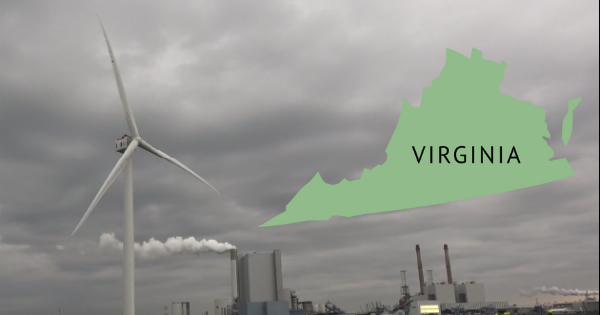
Largely with party-line, urban-vs-rural votes, Virginia’s legislature is poised to enact a Clean Economy Act that would eliminate coal-based electricity generation, prevent construction of new gas-fired power plants – and replace reliable, affordable fossil energy with wind, solar and battery-backup power. The bill offers important cautionary lessons for voters, workers and consumers in Virginia and across the United States.
Senate Majority Leader Dick Saslaw has said Virginia has “a climate problem, and you can’t fix it for free.” However, the climate crisis is mostly exaggerated, imaginary or based on faulty computer models. Worse, the “fix” will be pricey on many levels, but won’t make an iota of difference to the global climate.
The USA has actually had fewer violent (F3-5) tornadoes the past 35 years than during the previous 35, and not one in 2018. Hurricane frequency and intensity has changed little since 1850 – except that the USA enjoyed a record 12-year absence of Category 3-5 hurricanes, 2005-2017. After rising some 400 feet since the last Ice Age, seas have been rising at just 7-12 inches per century for over 150 years, and a lot of apparent sea level rise is actually land subsidence, including around the Norfolk-Virginia Beach area.
Water, ice and water vapor have vastly greater influences on Earth’s temperatures, climate and weather than do carbon dioxide and all the other atmospheric gases combined, Greenpeace cofounder Patrick Moore notes. The oceans have 1,000 times more heat than the atmosphere. Clouds both trap heat and reflect incoming solar energy. And scientists still cannot separate human from natural factors in all this.
But Virginia Democrats insist there is a climate crisis, and are determined to ban fossil fuels to end it.
Virginia’s “carbon-free” bills would shut down some 6,200 megawatts of coal-based electricity and ban construction of new gas-fired units. Meanwhile, China already has 900,000 MW of coal-fired power plants, has another 200,000 MW under construction, is planning an additional 150,000 MW (all in China), Greenpeace reports, and is building or financing numerous coal and gas power plants in Africa and Asia. India already has hundreds of coal-fired units and is planning nearly 400 more. China and India are building or planning to build hundreds of new airports, and to put millions more cars on their roads.
So even if CO2 does play more than a trivial role in climate change, Virginia’s actions might reduce future warming by an undetectable 0.001 to 0.01 degree. The bill’s details are revealing, and troubling.
The nearly enacted law would close America’s newest and cleanest coal-fired power plant, unless it can slash CO2 emissions 83% by 2030, using still unproven “carbon capture and storage” technology. But even if it worked, that technology would cost millions per year to operate – and require a third of the power plant’s electricity output to operate. Talk about not being free, especially for local residents.
To replace the eradicated electricity, Virginia energy companies would install 5,200 MW of offshore wind turbines – apparently GE 12 MW Haliade-X turbines manufactured in a new factory in Guangdong Province, due south of Wuhan. That would require 433 of these behemoths, each one rising 850 feet above the waves some 27 miles off the Norfolk-Virginia Beach coastline, in 50-70 feet of water. (For comparison, the Washington Monument is “only” 555 feet tall.)
Constant saltwater and frequent storms will corrode the turbines, causing them to perform worse every year. Actually getting 5,200 MW of electricity would require that the 433 turbines operate at 100% of rated capacity 24/7/365. If they work only half the time, Virginia would need 866 monster turbines.
Climate activists and Big Wind developers expect up to 30,000 MW of offshore wind along the East Coast by 2030. At 100% capacity, that’s 2,500 gargantuan Heliade-X turbines! The impacts on radar, aviation, submarines, surface ships and fishing would be enormous. Turbine blades would kill countless birds. Vibration and infrasound noise would impair whale and dolphin sonar navigation systems for miles.
Since these turbines would be in federal waters, the Interior Department, National Marine Fisheries Service and other federal agencies must fully and carefully evaluate their cumulative impacts on all these human activities and environmental values. They must also address the cumulative impacts of all the global mining, processing, manufacturing and other operations required to build and install the turbines.
These monster windmills will require millions of tons of concrete, steel, copper, rare earth elements, carbon-fiberglass composites and other raw materials. Obtaining them will require removing billions of tons of ore and associated rock, in new or expanded mines all around the world, but probably not in the United States. Wind (and solar) energy would be almost totally dependent on foreign materials, components and finished products – mostly Chinese or Chinese owned. Pollution, workplace conditions, land and habitat destruction, child labor and human rights violations, cancers and other terminal diseases among workers and local communities, would be rampant, and abhorrent to most Americans.
Right now, there are few or no derrick barges capable of installing 12-MW turbines. Imagine how long it will take to install 400 to 2,500 of them along the East Coast – and repair or replace them as they age, or after a huge storm like the Great Atlantic Hurricane of 1944 wipes out offshore electricity generation.
The Clean Economy Act states that another16,100 MW of fossil fuel replacement power would come from photovoltaic solar panels. Based on data for a 400 MW Spotsylvania County, Virginia solar operation, those panels would completely blanket a land area up to 3.5 times larger than Washington, DC.
Arizona conditions don’t exist in Virginia. Clouds, nighttime, and sub-optimal sunshine during much of the day and year make it likely that these millions of panels will actually generate little more than 3,200 megawatts – unpredictably and unreliably. To get the full, legislated 16,100 MW of electricity, Virginia would have to cover up to 18 times the land area of Washington, DC with panels. That’s 700,000 acres.
The Virginia legislation (HB1526 has passed both chambers) also requires that utility companies “construct or acquire 3,100 megawatts of energy storage capacity,” presumably batteries. This is confusing, since batteries don’t generate electricity (megawatts); they simply store power generated by coal, gas, nuclear, wind or solar sources (megawatt-hours, MWh). If the legislators mean 3,100 MWh, Virginia would need 36,500 half-ton Tesla 85-kilowatt-hour battery packs, requiring still more lithium and cobalt sourced from places with terrible environmental and human rights records.
Will Virginia require that its wind, solar and battery materials and components be responsibly sourced? Will it require independently verified certifications that none of them involve child labor, and all are produced in compliance with US and Virginia laws, regulations and ethical codes for workplace safety, fair wages, air and water pollution, wildlife preservation and mined lands reclamation? Will it require that any supposed social costs of carbon recognize the social benefits of carbon-based fuels and carbon dioxide?
Getting power from offshore wind and eastern region solar facilities to communities on the western side of the 2,200-mile-long Appalachian Trail will require many new transmission lines across the trail. Environmentalists adamantly oppose gas pipelines that would pass 700 feet beneath the trail. How will they respond to multiple transmission lines and towers crossing the trail and impairing scenic views?
Wind, solar, battery and biofuel alternatives are simply not clean, green, renewable or sustainable. The Clean Economy Act represents greenwashing, virtue-signaling and government control at their worst. It replaces reliable, affordable electricity with expensive, unreliable power. Simply declaring, as this Virginia legislation repeatedly does, that all these actions are “in the public interest” does not make it so.
Eliminating fossil fuel electricity means lighting, heating, air conditioning, refrigeration, computing and other costs will soar – for families, hospitals, schools, churches, businesses, factories and government agencies. Local, state, US and global environmental impacts will skyrocket, with no climate benefits.
In Virginia and across America, liberal cities and counties have given “sanctuary” to illegal immigrants, including repeat criminals. Numerous conservative Virginia communities have declared themselves Second Amendment sanctuaries. Perhaps it is time for them to resist the onslaught of climate alarmism and pseudo-renewable energy fantasies – by declaring themselves fossil fuel sanctuaries, as well.

E-Mail this author

Posted in Energy | 1 Comment

The Legal Corruption of COPN

Share this article on:

I have been asked to give examples of the corruption of administration of the Certificate of Public Need (COPN) law and show how it has created and supports regional monopolies. I have chosen as my example COPN Planning District 20 which is my home area of south Hampton Roads, the cities of Norfolk, Virginia Beach, Chesapeake, Suffolk and Portsmouth, home to more than 1.2 million people.

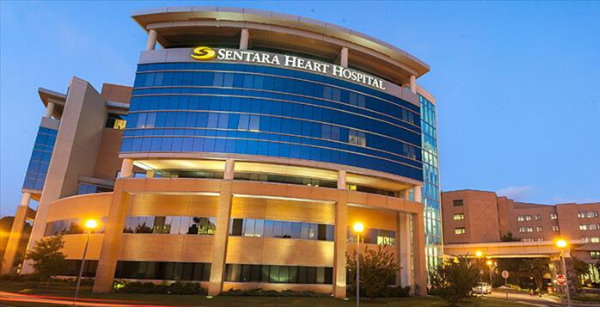
Sentara Health and its massive vertically integrated health system thoroughly dominate this area and the COPN process here.

Sentara has five general hospitals in south Hampton Roads: two in Norfolk, two in Virginia Beach and one in Suffolk. Portsmouth’s hospital is Bon Secours Maryview. Bon Secours also operates DePaul hospital in Norfolk. Chesapeake’s general hospital is state-chartered Chesapeake Regional Medical Center.

Bon Secours and Chesapeake Regional combined have lost money for years on their hospital operations here while Sentara hospitals have operated at double digit margins. In 2017, Sentara’s five hospitals made 87% of the operating revenue of the entire corporation.

It is those profits taken from overcharging patients that fund vertical integration and scale. I just opened the Sentara website and it announced that Sentara has 268 locations of care near my home Virginia Beach. Sentara’s captive HMO and insurer Optima is powerful in Hampton Roads and makes life difficult for Sentara competitors. Sentara controls a large percentage of referrals through its massive network. Bon Secours and Chesapeake have been starved of the money to compete.

The 2008 COPN scandal of which I wrote earlier awarded two hospital certificates to Sentara and denied three parallel applications of Bon Secours on the same date. That decision sealed the Sentara monopoly here and ensured the fiscal distress of Bon Secours. The Health Commissioner in 2008 went to the job from Sentara. She announced that she had recused herself from the decision. The most consequential decision in COPN history was announced by her deputy.

Shocked, the General Assembly actually changed the COPN law after this decision to encourage the Commissioner to consider “the extent to which the proposed service or facility fosters institutional competition that benefits the area to be served …” [1] The irreversible damage here had already been done.

I have assessed data from the records of the COPN program from 2001 through 2018. The results below confirm its absolute control by Sentara in south Hampton Roads.

The data show Bon Secours and Chesapeake Regional have been largely blocked by COPN from expanding in the businesses Sentara most covets – hospitals, ambulatory surgical centers, imagery centers and highly complex (and profitable) services. Riverside has tried to expand to south Hampton Roads with surgical centers and has been denied certificates to do so.

Another facet of these data is the lack of applications from physicians other than eye surgeons wishing to establish their own surgical or imagery centers.  Such projects costs about $100,000 to prepare and six months to a year to go through the application process. History tells them that their applications will be rejected. So, for years individual physicians have petitioned their state representatives for special bills exempting their projects from the process. Many such bills were introduced, but few if any passed.

COPN application decisions in Planning District 20, 2001 – 2018 [2]

Sentara

  • Applications: 61. These include a new general hospital in Virginia Beach, expansion of a general hospital in Suffolk, a long-term acute-care hospital, a mini acute-care hospital in Suffolk, four outpatient surgical centers, and three imagery centers
  • Approvals: 58
  • Denials: 2 (outpatient surgical centers)
  • Recommended denials by Virginia Department of Health Division of Certificate of Public Need (DCOPN) staff: 14
  • Withdrawn: 1 (outpatient surgical center)

Chesapeake Regional Medical Center[3]

  • Applications: 13. These include an outpatient surgery center, two imagery centers, and open-heart surgery services
  • Approvals: 9
  • Withdrawn: 3 (two imagery centers and introduction of stereotactic radiology services )
  • Denials: 1 (open heart surgery services)
  • Recommended denials by DCOPN staff: 3

Bon Secours[4]

  • Applications: 26. These include establishing four hospitals, open- heart surgery services, an outpatient surgical center and two imagery centers)
  • Approvals: 19 (no hospitals
  • Withdrawn: 1 (new hospital)
  • Denied: 6 (all new hospital applications, two outpatient surgical centers, center for MRI imaging, center for radiation therapy)
  • Recommended denials by DCOPN staff: 11

Riverside[5]

  • Applications: 7. These include five outpatient surgical centers and two mobile sites
  • Approvals: 2 (mobile imagery)
  • Withdrawn: 1 (outpatient surgical center)
  • Denied: 4 (all outpatient surgical centers)
  • Recommended denials by DCOPN staff: 3

Decisions for medical facilities that don’t compete with Sentara

  • Children’s Hospital of the King’s Daughters: all approved
  • Eye surgery centers: all approved
  • Nursing home establishment and expansion: all approved
  • Psychiatric bed expansion: all approved

Commissioners overturn DCOPN staff recommendations

  • Staff recommended denial / Commissioner approved: 20 times (Sentara 12, Bon Secours seven, Chesapeake one)
  • Staff recommended approval / Commissioner denied : 4 times (Bon Secours, Chesapeake, Riverside two)

You can see above that Commissioner overturned the recommendations of the professional staff of the Division of Certificate of Public Need (DOCPN) in Sentara’s favor 12 times in just 61 applications and sustained denials only twice resulting in a 95% Sentara approval rate. Those overturn decisions by the political appointee were worth billions of dollars to Sentara.

Attorney General Herring owes the people an investigation to see if laws were violated. He should ask the Justice Department to participate, as they bring to bear the much stronger penalties of federal law including RICO. Start with staffers who were present.

The General Assembly and the Governor need to look at these results and understand that the current system has been corrupted because it has a single politically appointed decision maker. If we must have COPN, then it should be administered by an independent regulatory agency on the Maryland model[6]

[1] Code of Virginia § 32.1-102.3
[2] COPN Monthly Report October 2019
[3] Chesapeake Regional simply does not have the resources to attempt to expand more than with its applications represented here.
[4] Bon Secours has tried for years to expand enough to make its operations profitable in south Hampton Roads. It just can’t get certificates approved.
[5] Riverside tried five times to establish a foothold in south Hampton Roads and was denied each time.
[6] https://mhcc.maryland.gov
A version of this commentary originally appeared in the February 27, 2020 edition of the online Bacon’s Rebellion.
E-Mail this Author

Posted in Health Care | 1 Comment

Political polls, like economic forecasts, can vary greatly depending on assumptions

Share this article on:


Predicting economic growth and the outcome of elections have something in common: Both rely on assumptions. We economists make assumptions about when and by how much the Federal Reserve will increase interest rates or whether the coronavirus will lead to a slowdown in exports and world trade.
Our assumptions impact how fast we expect gross domestic product to grow in the future. Similarly, the results of political polls vary greatly depending on the assumptions the pollsters make. Poll respondents should reflect the demographic makeup of the population, but that almost never happens. So pollsters should weigh the sample results of their survey to reflect reality.
For example, 16.3% of the population said they were Hispanic or Latino, according to the 2010 Census. If only 9% of the people who answer the survey are Hispanic or Latino, the data underrepresents the Hispanic population. The pollster gives their responses a higher weight to determine the predicted winner.
Age and gender are other demographics that are typically included. Others that are more debated in terms of predictive ability are party registration and educational attainment.
But just having a representative population is not enough under our election system. That is what happened in the 2016 election when Hillary Clinton was expected to win.
The American Association for Public Opinion Research wanted to learn what went wrong when it commissioned a study that was released in mid-2017. The study found that national polls were generally correct. Collectively, they expected Clinton to win by 3 percentage points. In fact, she won the popular vote by 2 percentage points.
But to predict the Electoral College outcome, polls need to be conducted at the state level and then combined for national results. Getting statistically significant results becomes more expensive at the state level and very expensive at the sub-state level.
This is one of the areas where the study said the 2016 polls fell short. They underestimated Donald Trump’s support in the Upper Midwest. Polls gave Clinton a narrow victory in Pennsylvania, Michigan and Wisconsin where, in fact, Trump was victorious.
Another assumption that makes polling difficult is determining who will show up to vote. The pollster can ask the person about their likelihood to vote. Or the pollster can use historical voter turnout on the assumption that past behavior is a good predictor of the future.
With the data from the survey gathered, the pollster’s weighting decisions can have a large influence on the predicted election results. Do we assume the same percentage of African Americans will vote in 2020 as in 2016? Will female and Hispanic turnout be higher? How does the likelihood of a person voting change based on a strong economy?
Pollsters learned from the 2016 election. But as the AAPOR report concluded, “With shrinking budgets at news outlets to finance polling, there is no reason to believe that this problem is going to fix itself.”

A version of this commentary originally appeared in the February 9, 2020 edition of  The Richmond Times-Dispatch.

chmura-100Email this author

Posted in Economy, Politics | Comments Off on Political polls, like economic forecasts, can vary greatly depending on assumptions

The Virginia Clean Energy Act: What It Does and What It Will Cost You

Share this article on:

Responding to a perceived climate emergency, the new Democratic majority in the Virginia General Assembly is seeking to transform the Commonwealth into a wind and solar energy Wonderland. It is passing legislation to mandate construction of solar and wind, mandate closure of disfavored power sources, and to prevent the State Corporation Commission (SCC) from challenging either step on the grounds of prudence or cost.
Proponents call the main legislative vehicle, adopted on straight party-line votes in both chambers February 11, the Virginia Clean Energy Act. The House of Delegates version is now pending in the Virginia Senate, and vice versa, but all involved expect them to be amended again before Governor Ralph Northam has to sign them (or not) in the spring.
Virginia Democrats have added a new set of political motives to the drive to eliminate carbon dioxide emissions from electric power plants: Race, poverty and environmental justice claims. Should their bills pass and be implemented, the utilities for the first time will be charging means tested rates, exempting low-income ratepayers from some charges entirely, submitting their construction plans for review by an environmental justice council, and engaging in preferential hiring for at least some construction projects.
Even if you accept the premise that Virginia’s CO2 emissions are harming the world, this bill moves toward cleaner energy at far higher costs that necessary, protecting and even adding to utility profits.
Democrats may need to protect low-income customers from these costs to prevent a revolt. In a first back of the envelope estimate, the SCC told state legislators their plans will add $280 to $370 per year in cost to a Dominion Energy Virginia residential customer using 1,000 kilowatt hours per month. Dominion serves about two-thirds of the state. The impact on Appalachian Power Company customers in western Virginia will be lower, but they too will face higher bills.
Most of the costs will appear on future bills in the form of rate adjustment clauses (RACs), individual charges for specific capital investments. A series of six RACs to pay for new fossil fuel generators already appear on Dominion’s bills. Currently they add $12.43 to that 1,000-kilowatt residential bill, for a far less expensive building spree than this bill demands. The SCC estimates of future cost are credible.
The single biggest reason for the cost growth in Dominion’s territory will be construction of between 2.6 and 5.2 gigawatts of wind turbine generation off the Virginia Beach coastline, the only United States project of that size to be funded by captive ratepayers of an integrated utility. Critics believe the utility-owned approach will triple the cost of power compared to other offshore wind models. The pending legislation orders the SCC to accept the costs as reasonable and prudent.
Much of the rest of Dominion’s cost increase will come from a massive expansion of utility scale solar facilities also built at ratepayer expense. The utility solar expansion will be joined by an increase in opportunities for individual customers, public and private, to install their own solar panels and sell power back to the utility (net metering). Private developers, however, are prevented from building more than a third of the larger solar projects, even though that method saves considerable consumer cost.
The third major – and expensive – leg of the plan is development of more than 2 gigawatts of energy storage capacity, mostly batteries but perhaps including a new pumped storage reservoir. They will store excess renewable-generated energy and release it in response to customer demand. The SCC made no effort to estimate that particular customer cost as that technology is still evolving. Once again, this will be mostly utility owned.
The bill calls for Virginia to have zero-carbon energy, at least from those two utilities, no later than 2045. As a first step, it enrolls Virginia in the Regional Greenhouse Gas Initiative, which will be Virginia’s first true carbon tax. The legislation orders the closure of most, but not all remaining coal generation, mainly generation from aging plants that are no longer economically viable anyway.
But – disappointing the New Green Deal purists – the proposal leaves intact the new gas-fired plants Dominion has built around its territory, the coal and biomass-fired plant it built out in Wise County, the Clover plant it owns jointly with the rural electric cooperatives, and its aging Mount Storm coal plant just across the line in West Virginia.
With those continuing to operate for two more decades or longer – and rapid growth of private solar sources — it is doubtful customer demand will be there for multiple gigawatts of new wind and solar power, but a neutered State Corporation Commission will lack the authority to slow their construction. Instead the law creates a series of hurdles for development of any new fossil fuel generation.
Proponents also expect to bend down the demand with a major expansion of utility-owned and ratepayer-financed energy efficiency programs. These install insulation and low wattage light bulbs, replace older inefficient appliances, and seek to reduce electricity usage in various other ways. Large industrial customers who have previously avoided paying for energy efficiency spending will be forced to step up.
Low-income customers will have to accept energy audits and efficiency efforts as part of the program which may subsidize their residential bills. The proposed Percentage of Income Payment Plan will also pay off bills they owe in arrears, using funds provided by other ratepayers (with yet another rate adjustment clause).
Further softening the blow on low-income customers, the bill proposes that they be spared from paying the rate adjustment clause for the offshore wind project or from paying any stand-by charge imposed on other net-metering solar customers. Low-income communities will be earmarked for major portions of other spending dictated in the bill, such as flood mitigation efforts.
This summary hits only the highlights of this one main clean energy proposal, which is supplemented with dozens of other bills changing energy regulation and dictating decisions to the SCC. Trying to eliminate CO2 emissions from energy generation is only a first phase, with the rest of Virginia’s economy facing its transformation away from fossil fuels in years to come. If this bill is the model, expect similar disregard for consumer cost and regulatory oversight in those efforts.
Stephen D. Haner is Senior Fellow for State and Local Tax Policy for the Thomas Jefferson Institute for Public Policy. For more detailed information, consult these recent articles by Haner on Bacon’s Rebellion: Energy Omnibus: What it Does. How it Costs You; Energy Omnibus II: It Doesn’t Shut Gas Plants; Energy Omnibus III: Race, Poverty and Justice.

E-Mail this author

Posted in Energy | Comments Off on The Virginia Clean Energy Act: What It Does and What It Will Cost You