Is US Economy Headed Toward a Depression? No, but a Recession is Likely

Share this article on:


With so much uncertainty surrounding the COVID-19 crisis, it is difficult to predict how the economy will fair for the remainder of the year.
Many economists have been looking for a drop in real gross domestic product — the monetary value of all final goods and services produced — to the tune of 14% to 40% on an annualized basis in the second quarter.
Economists also predict the unemployment rate could be in double digits. (The rate jumped to 4.4% in March from 3.5% in February, matching a 50-year low.)
Given those dramatic declines, could this downturn be classified as a depression?
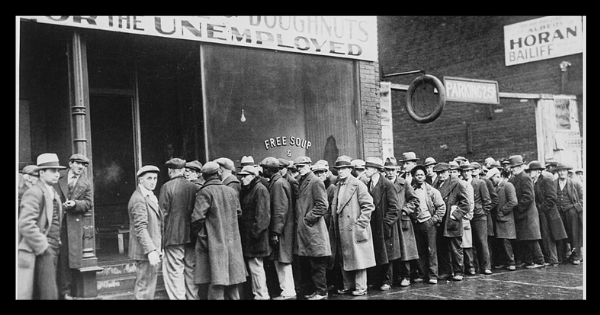
The question is understandable. Real GDP fell 27% during the Great Depression from 1929 through 1933 and the unemployment rate peaked at 25%.
The prediction that GDP would decline 14% to 40% in the second quarter is misleading because the drop is figured on an annualized basis to show how much the contraction would be if it were sustained for an entire year.
A 14% decline in GDP on an annualized basis translates into a 3.3% drop in output for that quarter.
The upcoming downturn in the second and third quarter of this year is expected to be sharp but short.
That is a sharp contrast to the Great Depression when the economy contracted for 43 months.
While the U.S. economy is not expected to go into a depression, a two-quarter recession starting in the second quarter of this year is more likely.
The economic contraction that is expected this year is the result of a pandemic crisis rather than economic weakness or imbalances that usually precede recessions. Afterall, the U.S. economic output had grown without interruption for a record 10½ years.
Federal Reserve Chairman Jerome Powell, who was interviewed on NBC’s “Today” show the day after the U.S. Senate passed a $2 trillion pandemic relief bill, acknowledged that the economy “may well be” in a recession. But he said that this is a unique downturn
“There is nothing fundamentally wrong with our economy,” he said.
Another reason that this recession will not be as bad as the Great Depression is the various government programs implemented after it.
For example, the unemployment insurance program provides basic income for out-of-work individuals so that they can still maintain a certain level of consumption, thus blunting the sharp reduction of income from being unemployed, and preventing the economy from going into a free fall like what happened during the Great Depression.
In addition, the relief program recently enacted puts more money into the hands of consumers and businesses, further stabilizing the economy.
All economic forecasts rely on assumptions.
The great uncertainty over the spread of COVID-19 and the timeline for when the epidemic might wane is creating greater divergence than usual among economic forecasters.
The one factor that is consistent in all forecasts is that the downturn related to COVID-19 will end — some forecasts say as soon as the third quarter — and will result in a rebound in growth.
A version of this commentary originally appeared in the April 5, 2020 edition of The Richmond Times-Dispatch.
chmura-100Email this author

Posted in Economy | Comments Off on Is US Economy Headed Toward a Depression? No, but a Recession is Likely

This is the Green New Deal Economy. Enjoy

Share this article on:


If all else fails in achieving your green energy dreams, you can always hope for a depression.
In Italy, the COVID-19 depression has already dropped electricity demand by about 18-21%, as reported recently by Utility Dive. The regional transmission organizations around the United States are seeing declines, as well, and I’ve been told (no data, but a reliable source) that the load of PJM (a regional electricity transmission organization) is approaching a 10% drop. Past recessions have included electricity usage declines.
“We don’t have a complete picture yet of what the impacts are, but we can tell you that the shift in work patterns and business closures is likely behind subtle shifts in electricity use,” PJM spokesman Jeff Shields (told Utility Dive) in an email.
PJM’s highest electricity use is now coming in a little later in the morning, and the grid operator expects electricity use to “drop to some degree if schools and businesses continue to stay shuttered because of the coronavirus. Electricity use will more closely resemble weekend days.”
Virginia, of course, is part of the PJM Interconnect, so that drop in seasonal electricity demand includes us. Will the demand reduction over the next few months achieve even long term goals set the Regional Greenhouse Gas Initiative, every potential goal set by the Transportation and Climate Initiative, and all the demand drops envisioned in the recently passed Virginia Clean Economy Act?
So, are you liking the economy that goes along with that? This is indeed what it looks like. The people at headquarters for Britain’s Extinction Rebellion movement are denying authorship, but somebody is plastering up signs in its name claiming humans are the disease and Corona is the cure.
In fairness, the drop in demand will reverse (all rational people hope) when the economy ramps back up, but perhaps not all at once, and perhaps not without resistance. The financial crisis which has wiped out so much wealth will linger beyond that point, something already noted by the renewable energy developers hot to start building in Virginia. This was a topic March 27 for Virginia Mercury, worried that the promises of the omnibus clean energy package won’t be financed now.
It was a banner moment for environmentalists. Among the promises they secured were state commitments to build out 24 gigawatts of solar, wind and energy storage by 2035 — almost 40 percent more than the existing capacity of the fossil fuel units owned by the state’s largest utility, Dominion Energy — and annual targets that would bind the utilities to progressively including more and more renewables in their energy portfolios.
“Almost 40 percent more than the existing capacity…” That’s the key fact that keeps getting overlooked. The 2020 legislation should have been called the Clean Energy We Don’t Actually Need Act. There is not a single scenario, even in Dominion Energy Virginia’s dreams, where that capacity is needed in Virginia or in PJM over the next 25 years. The bill left in place all the new natural gas plants and two large coal plants owned by Dominion.
There is nothing in the new law that allows the State Corporation Commission to hold up a single project on that basis, need. The SCC most certainly cannot say no to the $8 billion offshore wind project which will really cost us ratepayers more like $14 billion over time. That’s $14 billion for energy (1) we don’t need, (2) that could be obtained for a far better price if we did, (3) from a project that fails every measure for rational capital use.
If the new workforce mandates I wrote about in an earlier column are bricks on the life raft for Virginia’s economic recovery, this turkey of a bill is a pallet of cinder blocks.
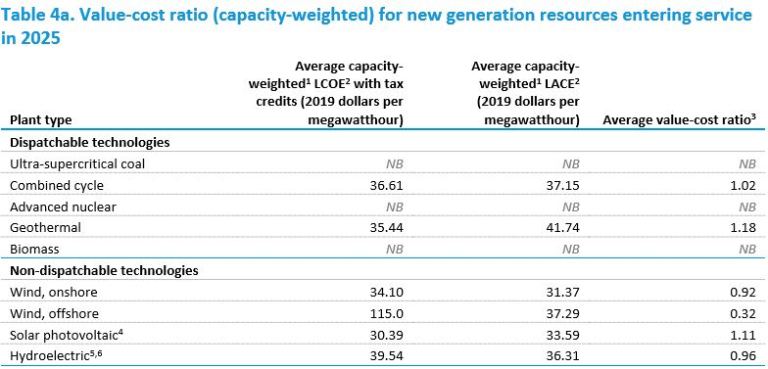
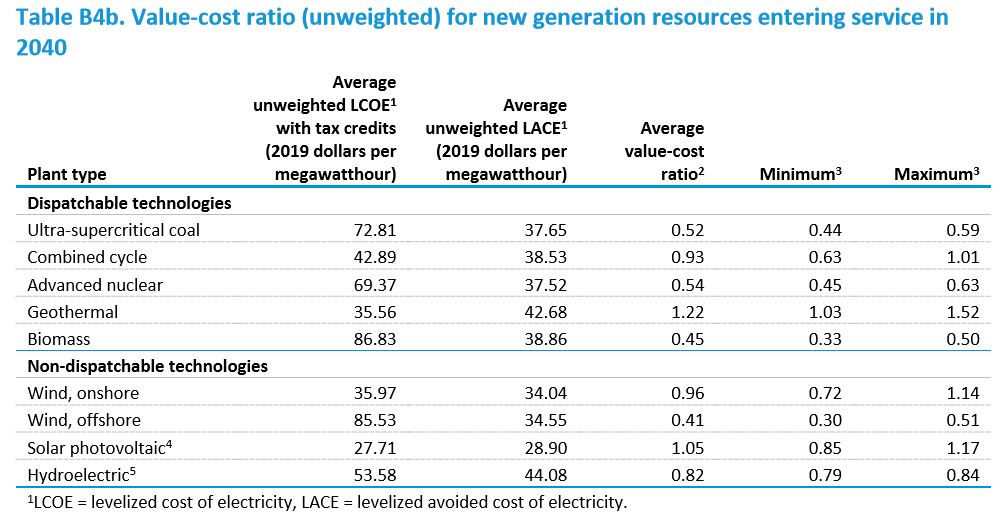
The U.S. Energy Information Agency is viewed as fairly detached from the ideological wars around carbon emissions. It looks at various electricity generation modes and scores them on economics, the levelized cost of energy (LCOE) being the best know metric. Offshore wind has a lousy score on that, given the high capital cost and the 40% or so capacity factor, in that some days the wind just doesn’t blow. The most recent EIA analysis I found put a capacity-weighted LCOE on offshore wind at $115 per megawatt hour.
EIA uses another interesting measure, the leveled cost of avoided energy (LACE.) “LACE accounts for the differences in the grid services each technology is providing and recognizes that intermittent resources, such as wind or solar, have substantially different duty cycles than the baseload, intermediate, and peaking duty cycles of conventional generators,” EIA writes.
If a project produces intermittent power, but otherwise has a low cost of energy, then it still makes sense to build it. If it has bad scores on both, it’s a bad use of capital. EIA calls that the value-cost ratio, and if that falls below one, don’t do it. No existing technology has a lower value-cost ratio than offshore wind, 0.32 on the EIA chart. Solar now has an excellent score, 1.11. Onshore wind, hydro power and geothermal also do well.

That chart above is based on projects entering service in 2025 and here is another one projecting scores for projects out to 2040. Offshore wind looks only a bit better.
So how did the General Assembly order us to spend $14 billion in our capital over the next decade or so? Simply the worst capital decision in the history of the Commonwealth, unless campaign contributions and political brownie points are entered in the equation.
The good news is that if solar developers are going to be struggling for capital for projects with good value-cost scores, with little risk, finding investors or lenders for that offshore wind ziggurat will be doubly difficult. At some point, people will realize that most of the money, despite promises to hire local for the short-term construction work, will go to European countries. Their economic depression could exceed ours in length and depth. That’s why the national Democrats are going to pull out all the stops to add new financial sweeteners for their favorite donors.
Stephen D. Haner is Senior Fellow for State and Local Tax Policy at the Thomas Jefferson Institute for Public Policy. A version of this commentary was originally published in Bacons’s Rebellion on March 27, 2020.

E-Mail this author

Posted in Economy, Environment | 2 Comments

Wartime Governor

Share this article on:

If Donald Trump is a “wartime president”, Ralph Northam is now a “wartime governor.”

Unless one has been isolated on a Pacific isle (or wears tinfoil hats to block evil radio waves), Virginians understand that the pandemic we are in is deadly serious, growing exponentially, and requires radical steps to reduce its disastrous effects on our health and our economy.  Unlike Nazis during World War II, Covid-19 has already landed on our shores.

But like World War II, mobilizing to fight our new enemy requires redirecting large numbers of resources.  And winning will take “not playing by the rules.”

In the last 75 years, government has done what Thomas Jefferson, in the Declaration of Independence, accused King George of doing:  “… erected a multitude of New Offices, and sent hither swarms of Officers…” in the form of a regulatory regime designed to protect Americans from abuses and from each other.

In fighting a common enemy, those rules and regulations serve mostly to hinder.  The answer is better found by freeing up those regulations, permitting flexibility, and waiving requirements in key areas needed to win.  And, by all accounts, Virginia’s Governor – when emergency powers are invoked – can cut through those regulations.

Prime among these is freeing up resources to be more flexible in delivering care.  COVID-19 cases will soon overwhelm our hospitals. Patients normally treated there will be moved back to their homes.  Health professionals will start to fall ill themselves. “Regular check-ups” will temporarily become a thing of the past, as doctors strive to minimize visits to their waiting rooms.

Steps should be taken to ensure telemedicine is expanded as broadly as possible and, correctly, Governor Northam recently expanded telemedicine services to include full Medicaid reimbursement.  Licensure reciprocity should be instituted so doctors and nurses licensed in one state can practice here (including and especially through telemedicine).  

Pharmacists should be permitted to test for and provide medication for non-chronic conditions (i.e., strep and flu), and to make non-narcotic medicine refills available without new prescriptions on a limited emergency basis, as well as to give the coronavirus test when more inevitably become available.  They are already trained to do this testing: They are simply not permitted to do it in Virginia. And they may need some funding assistance to obtain the machines.

To backfill medical professionals who will eventually be forced to self-quarantine, retired nurses and doctors should be invited back to work for lower levels of care, whether their licenses are up to date or not.   

But since that population is also the one most at-risk, we should also go to the other end of the generational spectrum.  Just as military officers graduated after only three years during WWII, doctors and other health professionals in their last year of medical and nursing school should be allowed to practice several months early – perhaps even graduate early.  They may not be ready for surgery or detailed oncology plans, but they could free up experienced doctors for more difficult cases in hospitals. The Governor has now started moving in that direction.

Full practice authority should be offered to advanced practice registered nurses with added skills (i.e., nurse practitioners and anesthetists, midwives and clinical specialists), and be able to practice to the full scope of their education, training and certification.  They have the knowledge but, like pharmacists, they are not permitted to use it in Virginia.

Post-9/11, Virginia organized a Medical Reserve Corps.  But those medical professionals need to be compensated and, just as important, conflicts with the state’s “Good Samaritan law” (which applies only to uncompensated Virginians) need to be swiftly resolved in order to maximize its effectiveness.

Short on supplies?  In an action reminiscent of WWII industry switches from adding machines and wheelbarrows to automatic pistols and ammunition carts, Virginia’s Alcohol and Beverage Control Board is giving distillers permission to switch from vodka to hand sanitizer.  The Governor and regulators should set the tone by making it clear: Innovation encouraged here.

All of this can be done … mostly through the powers given a “wartime governor” in a state of emergency, or by requesting CMS Section 1135 waivers from the federal government – in this case, an Administration with plenty of disdain for regulations serving as barriers to commonsense.  None of them need be permanent; all of them are needed to win.

Finally:  Will some take advantage of that flexibility?  Yes. Will mistakes be made? Yes. But the consequences of doing nothing far outweigh those of doing something.

Against an unseen enemy, we’re told there’s a war.  Let’s act like it.

Thanks to Bacon’s Rebellion blogger James Sherlock and former Delegate Dr. John O’Bannon for their ideas, insight and review.  Chris Braunlich is president of the Thomas Jefferson Institute for Public Policy. This commentary was originally published in the December 26 issue of The Richmond Times-Dispatch.

E-Mail this Author

Posted in Politics | Comments Off on Wartime Governor

Wear a Mask

Share this article on:


You should wear a mask when you leave the house. In East Asia and the Czech Republic, huge numbers of people now wear masks, and that has greatly reduced the spread of coronavirus. Mask-wearing is a key reason why the virus spread less in East Asia than in Western countries like Italy, Spain, and the United States.
“More Americans should probably wear masks for protection,” notes the New York Times. “Places like Hong Kong and Taiwan that jumped to action early with social distancing and universal mask wearing have gotten their cases under much greater control.” The Times quotes Dr. Neil Fishman, the chief medical officer of the University of Pennsylvania hospital, explaining that “if everyone in the community wears a mask, it could decrease transmission.”
You don’t need a medical-grade mask to reduce the odds of spreading coronavirus — if you can’t find one on the market, you can even make your own at home, as many Czech people did. As Jeremy Howard notes, “The community response in Czech Republic was amazing. People made their own masks at home, and then hung them on ‘mask trees’ for anyone in their community to use.”
Such a home-made mask won’t provide as much protection as a medical-grade mask, but it will protect you better than wearing no mask at all. Most of the benefit from a home-made mask is in keeping wearers who are sick, or not yet sick but unknowingly carrying a virus, from giving the virus to other people. But such a mask also protects the wearer a little against catching the virus.
As Science Magazine notes, “Health authorities in parts of Asia have encouraged all citizens to wear masks in public to prevent the spread of the virus, regardless of whether they have symptoms. And the Czech Republic took the uncommon step last week of making nose and mouth coverings mandatory in public spaces, prompting a grassroots drive to hand make masks.”
Western health officials are belatedly admitting that people should wear masks when they go out in public. “After months of denial, German medical officials now call on people to wear makeshift masks in public to reduce contagion,” notes Bojan Pancevksi. Former FDA Commissioner Scott Gottlieb says the federal government “should consider telling people to wear masks in areas of epidemic spread.” For those “consumers who don’t already have masks,” Dr. Gottlieb suggested that the Centers for Disease Control provide guidance “on how” they can “make cotton masks.”
But earlier, when coronavirus was less widespread, Western health officials sang a different tune. For example, on February 27, the CDC told ordinary people they didn’t need to wear masks. It tweeted, “CDC does not currently recommend the use of facemasks to help prevent novel #coronavirus. Take everyday preventive actions, like staying home when you are sick and washing hands with soap and water, to help slow the spread of respiratory illness.”
This was an odd recommendation, because the public does benefit from ordinary people wearing masks. Research shows wearers do get some protection from masks, even when they are not medical-grade. More importantly, people around mask wearers benefit a lot, if the person wearing a mask is sick, or asymptomatic (carries a virus, but does not know it or have symptoms yet). The CDC is widely believed to have downplayed the need for masks, despite their usefulness in protecting against infection, as a way to keep ordinary people from buying up medical-grade masks needed by doctors and nurses.
Healthcare workers clearly do benefit from masks. As Quartz points out, the scientific “literature is unequivocal on one point: Masks protect healthcare workers from high levels of viral pathogens. From the lowly paper mask to ultra-high filtration N-95 masks designed to stop aerosols, decades of studies show masks stop healthcare workers from getting infected in hospitals, and prevent sick people from spreading disease to others.”
Ordinary people benefit from wearing masks, too, although not as much as healthcare workers. As Dr. Zeynep Tufekci notes in the New York Times.
Masks work — maybe not perfectly and not all to the same degree, but they provide some protection. Their use has always been advised as part of the standard response to being around infected people, especially for people who may be vulnerable. World Health Organization officials wear masks during their news briefings….health officials in many high-risk Asian countries had advised wearing masks…
It is of course true that masks don’t work perfectly, that they don’t replace hand-washing and social distancing, and that they work better if they fit properly. And of course, surgical masks (the disposable type that surgeons wear) don’t filter out small viral particles the way medical-grade respirator masks rated N-95 and above do. However, even surgical masks protect a bit more than not wearing masks at all. We know from flu research that mask-wearing can help decrease transmission rates along with frequent hand-washing and social-distancing. Now that we are facing a respirator mask shortage, the federal Centers for Disease Control and Prevention is recommending that surgical masks are “an acceptable alternative” for health care workers — again, obviously because some protection, even if imperfect, is better than none….
The W.H.O. and the C.D.C. told the people to wear masks if they knew they were sick. However, there is increasing evidence of asymptomatic transmission, especially through younger people who have milder cases and don’t know they are sick but are still infectious. Since the W.H.O. and the C.D.C. do say that masks lessen the chances that infected people will infect others, then everyone should use masks. If the public is told that only the sick people are to wear masks, then those who do wear them will be stigmatized and people may well avoid wearing them if it screams, “I’m sick.” Further, it’s very difficult to be tested for COVID-19 in the United States. How are people supposed to know for sure when to mask up?
… Places like Hong Kong and Taiwan that jumped to action early with social distancing and universal mask wearing have the pandemic under much greater control, despite having significant travel from mainland China. Hong Kong health officials credit universal mask wearing as part of the solution and recommend universal mask wearing. In fact, Taiwan responded to the coronavirus by immediately ramping up mask production.
Given the clear benefit of wearing masks, why did some health officials downplay the benefit of wearing them?
As Alex Nowrasteh of the Cato Institute notes, “The arguments against mass use of face masks were noble lies intended for the good reason of attempting … to conserve them for healthcare workers. However, they backfired quickly [and that] will cause even more harm down the line.”
Similarly, Dr. Tufekci says, “Many health experts, no doubt motivated by the sensible and urgent aim of preserving the remaining masks for health care workers, started telling people that they didn’t need masks or that they wouldn’t know how to wear them.”
But as Nowrasteh notes,
Those claims were simply untrue. Yes, healthcare workers need masks, but masks also reduce transmission outside of hospitals and clinics. Sick people who wear masks reduce their likelihood of transmitting the virus and healthy people who wear them reduce their likelihood of becoming infected. Tufecki pointed out the obvious contradiction: If masks don’t work, why do healthcare workers need them?
Yet some people in the West have an ingrained bias against wearing masks. As one woman put it on Twitter, “Baffled by people walking around our local grocery store with masks on. If you have symptoms or are at risk, get the hell out of the grocery store.”
But refusal to wear masks will cost many lives. As Market Urbanism notes, the West may “decimate” its “elderly population because we’re too pig-headed to learn anything from Asian countries that’ve already” curbed coronavirus by wearing masks. “Please don’t go shopping in the midst of a respiratory virus pandemic without covering your mouth and nose!”
Don’t worry about running out of masks. Masks can be reused. As Jeremy Howard observes, “you can reuse your masks. Stanford University research shows that you can just pop them in the oven at 70C (160F) for 30 mins, and they’re good to go.” By reusing masks, or making your own, you won’t be using up the supply of masks needed by doctors.
For all these reasons, health officials should stop minimizing the benefit of wearing masks. As Nowrasteh observes, “Experts lying about COVID-19, such as saying that facemasks don’t make a difference, do far more harm than they realize. Don’t lie, even if you think it is for noble purposes.”
Minimizing the benefit of masks is hardly the biggest blunder of the Centers for Disease Control. As the New York Times chronicles, the CDC’s bureaucratic bungling delayed a meaningful response to the spread of coronavirus by a crucial month, enabling the disease to get a foothold in many parts of the United States. As the New Yorker notes, “The three-week delay caused by the CDC’s failure to get working test kits into the hands of the public-health labs came at a crucial time. In the early stages of an outbreak, contact tracing, isolation, and individual quarantines are regularly deployed to contain the spread of a disease. But these tools are useless if suspected cases of a disease cannot be tested. The void created by the CDC’s faulty tests made it impossible for public-health authorities to get an accurate picture of how far and how fast the disease was spreading. In hotspots like Seattle, and probably elsewhere, COVID-19 spread undetected for several weeks.”
As the Times explains, bureaucrats at the CDC and FDA stymied private and academic development of diagnostic tests that might have provided an early warning and a head start on controlling the epidemic that is now spreading across the country. Seattle infectious disease expert Dr. Helen Chu had, by January, collected a huge number of nasal swabs from local residents who were experiencing symptoms. She proposed testing those samples for coronavirus infections. But the CDC told Chu she could not test the samples unless her laboratory test was approved by the FDA. The FDA refused to approve Chu’s test on the grounds that her lab “was not certified as a clinical laboratory under regulations established by the Centers for Medicare & Medicaid Services, a process that could take months.”
In the meantime, the CDC required that public health officials could only use the diagnostic test designed by the CDC itself. That test turned out to be badly flawed. The CDC’s demand for centralized control over the testing process greatly slowed down the process of disease detection.
Hans Bader, a former Competitive Enterprise Institute scholar, is an attorney living in Northern Virginia. A version of this commentary was originally published in the April 1, 2020 online Bacon’s Rebellion.
Email this Author

Posted in Health Care | Comments Off on Wear a Mask

Coronavirus: Forced Change for Education

Share this article on:


All news is focused around the coronavirus pandemic in America and around the world. It is good to be informed, but all day – every day is a bit much for me. My husband and I begin our day with watching the morning news and then turn it off until the evening, but this is our norm.
For others there are many norms being shattered. With all the closures and shutdowns many have time to think and wonder about a range of everyday life impacting matters. For example, the public education system has been brought to a standstill. Many states have closed the K-12 schools for the remainder of the academic year. This means children are home at least until August 2020, others until September 2020. This single act has spread another pandemic – panic for how children will learn, be educated, not fall behind, graduate, etc.
How about we consider this to be a silver lining for many children, parents and families. We all are hearing advice given by many to take this opportunity and enjoy the simple pleasures of life with family. Many suggestions include read books together, play board games, get in the kitchen to cook together, play sports in your backyard and much more. Remember – these are learning experiences. Research has proven that reading together improves reading skills. Playing board games improves thinking and strategy skills, especially games like Checkers, Chess, Clue and Monopoly. Your children measuring and mixing recipe ingredients help with math and science skills. And of course playing soccer, basketball, touch football or simply throwing a frisbee in the backyard provides exercise as well as enjoying the sunshine and fresh air.
Another silver lining is the sharing of available curriculum, online resources, activities and learning opportunities. Many non-profits, small businesses and communities are providing ways for families to enjoy the same benefits and resources homeschooling families partake in everyday. Organizations such as ExcelinEd.org, EdWeek.org, Code.org, Khan Academy, Freedom Project, GreatSchools.org and many more offer a vast array of resources, information and tools. These are wonderful opportunities to engage in your child’s education by providing them individual and unique experiences. These resources can be tailored to your child’s individual interests as well as ensure they are learning the basics. Families will be amazed at how much children can learn when they are engaged and excited about the topic and subject matter. This is what I refer to as covert learning.
Being home and spending more time with family is a good thing for children. They are receiving specialized attention many crave, can help create a schedule that best fits their learning and are in a safe environment. News outlets are reporting families are re-engaging with their children around the dinner table and simply having conversations. All these changes can only improve reading, writing and math skills.
The coronavirus has forced change and we all know how difficult that can be for many. Yet education will be forever changed as we move into the 2020-21 school year. Families are realizing that education can happen anywhere, at anytime, given various situations. The education system will be forced to move out of this mindset that all children must be educated in a classroom.
As the experts, politicians, reporters and community leaders are saying: WE WILL GET THROUGH THIS. We are compassionate. We are innovative. We are strong. We are Americans.
E-Mail this Author

Posted in Education | Comments Off on Coronavirus: Forced Change for Education