Supreme Court Groundwater Ruling May Lead to More Litigation

Share this article on:


In February 2018, the U.S. Court of Appeals 9th Circuit held that sewage pollutants at the County of Maui, Hawaii, were traceable to wells which discharge into groundwater. That is a violation of the Clean Water Act.
In September 2018, the 6th Circuit Court of Appeals determined that the Clean Water Act (CWA) does not extend liability when pollution from a point source reaches surface water through groundwater.
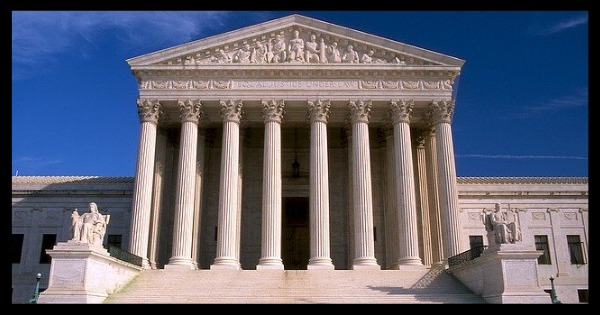
Now fast forward to last week. On Thursday, April 23, 2020, the U.S. Supreme Court issued an opinion that states a permit is required “…when there is a direct discharge from a point source into navigable waters or when there is the functional equivalent of a direct discharge.
This will create enormous amounts of litigation as judges try to determine if rainfall on a farm field seeping into a farm tile will be “a functional equivalent of a direct discharge.”
The justices did criticize the 9th Circuit’s decision on groundwater, saying the ”fairly traceable limitation” was simply too broad for the CWA.
The facts
Maui’s wastewater treatment facility collected sewage from the surrounding homes and businesses. It treated this wastewater and pumped approximately four million gallons of treated water into the ground through four wells. This treated wastewater traveled approximately 0.5 miles through groundwater channels and eventually ended in the Pacific Ocean.
Environmental groups alleged that the Maui Treatment Works (MTW) was discharging a pollutant into navigable waters of the U.S. and such a discharge required a CWA or National Pollution Discharge Elimination System (NPDES) permit. A U.S. District Court agreed with the environmental groups, and the 9th Circuit Court of Appeals in San Francisco confirmed the decision saying that when “…pollutants are fairly traceable from the point source to a navigable water” a CWA permit is required.
EPA argued in the case that its interpretative statement should rule. EPA stated, “All releases of pollutants to groundwater are excluded from the scope of the [NPDES] permitting program even where pollutants are conveyed to jurisdictional surface waters via groundwater.”
This argument was opposed by the justices when they concluded this position of EPA “…would open a loophole allowing easy evasion of the statutory provisions’ basic purposes, is neither persuasive nor reasonable.”
The Court believed EPA’s interpretation of the CWA is difficult to reconcile within the statute. The justices believed that so long as identifiable sources of pollutants can be identified, then a permit is required to discharge into a navigable water.
Undermining the stormwater exemption
It does not take much to conclude that this determination by the U.S. Supreme Court undermines the agricultural stormwater runoff exemption. The Court did admit “Virtually all water, polluted or not, eventually makes its way to navigable water.” The Court also admitted as to groundwater sources and nonpoint source pollution, “Congress intended to leave substantial responsibility and autonomy to the States.”
The Opinion does discuss the fact that States have developed methods for regulating nonpoint source pollution. It discusses reports from Maine, California, and Oklahoma. It concluded state regulatory practices undermined the 9th Circuit’s broad interpretation of the statute.
The Supreme Court justices felt that EPA’s view was too extreme. The Supreme Court made law when it stated, “…when there is functional equivalent of a discharge. We think this phrase best captures in broad terms those circumstances in which Congress intended to require a federal permit.”
The Court believes time and distance are critical in determining a “functional equivalent” discharge. It uses this example: “Where a pipe ends a few feet from navigable waters and that pipe emits pollutants that travel those few feet through groundwater or over the beach, the permitting requirement clearly applies. If the pipe ends 50 miles from navigable waters and the pipe emits pollutants that travel with groundwater, mix with much other material, and end up in navigable waters only many years later, the permitting requirements likely do not apply”.
More litigation is what this creates!
A version of this commentary appeared on April 28, 2020 in the online Farm Progress.

Email this author

Posted in Agriculture, Land Use | Comments Off on Supreme Court Groundwater Ruling May Lead to More Litigation

The Revolution Has Been Postponed, Not Cancelled

Share this article on:


The revolution has merely been postponed, not cancelled.
Governor Ralph Northam has asked the General Assembly to put off until May 1, 2021 the implementation of several key pro-union changes in Virginia’s labor and employment laws, including a 31 percent increase in the minimum wage.
Saturday, April 11 was the deadline for Northam’s consideration of the 2020 General Assembly’s output. He had to choose whether to sign, veto or propose amendments to hundreds of successful bills. The amendments he proposed will be put to a vote in the General Assembly reconvened session on April 22.
Will enough legislators of his own Democratic Party join him in disappointing the key constituency of the Democratic Party? Union leaders expressed their fury in the wake of his announcements, so that battle is joined. In the meantime, do not ignore the dozens of other bills which were signed which also damage the business climate in Virginia going forward.
When you see all of the “pro-worker” legislation signed and touted by the Governor in one combined list, it is crystal clear that liberal Democrats (and there appears to be few centrist Democrats left) believe many Virginia employers were refusing to pay, misclassifying, punishing, discriminating against or otherwise abusing workers until the new Democratic majority came along to offer salvation.
Business owners and their advocates pushed back on the claims they were bad actors, but even the most ethical and careful now need to fear lawsuits. The long list of bills includes several creating new ways for employees to sue their employers, for actual damages, punitive damages and attorney’s fees, with no consequences for frivolous or even malicious claims.
Along with new causes of action for employees, business owners must also be concerned about civil actions brought by aggrieved job applicants and even customers under expanded anti-discrimination rules, also accompanied by the opportunity to collect punitive damages and attorney’s fees. How much to pay employees and whether they are unionized may be the least of the new challenges.
Four highly controversial proposals sought by the unions were subjected to amendments, as the economic crisis from the COVID-19 shutdown underlined and strengthened business complaints about their impact. The Governor’s proposed delays add weight to those arguments of economic harm, but the short respite he proposes won’t really soften the blows.
The four measures (each with duplicate bills) he proposes to delay are:

  • House Bill 395 and Senate Bill 7, which raise the minimum wage to $9.50 per hour as of January 1, 2021. Under the Governor’s amendments, the minimum wage would increase beginning May 1, 2021. With additional General Assembly approval , the minimum would rise to $15 by 2026. It also applies the minimum level to more workers.
  • House Bill 833 and Senate Bill 8, which requires payment of “prevailing wages” as defined by the federal Davis-Bacon Act by contractors doing business with certain government bodies, unless the contracts are for less than $250,000.
  • House Bill 582 and Senate Bill 939, which permit localities (but not the state) to enter into collective bargaining agreements with local employees.
  • House Bill 358 and Senate Bill 182, which allow state and local bodies to require project labor agreements for construction, manufacture, maintenance, or operation of public works. Under the Governor’s amendments, this law would take effect May 1, 2021.

The final three proposals were all set to go into effect July 1 of this year, so they would be delayed by ten months if the Governor’s amendments are approved. That delay would push their implementation beyond the November elections, and would allow the 2021 General Assembly a chance to revisit the issues before implementation.
Should the amendments be rejected April 22, and they will if Democratic legislators unify in opposition, the bills go into effect as originally scheduled. The Governor could take the additional step of vetoing bills after his amendments are rejected, but he won’t.
As the United States, and perhaps Virginia, went from record low to record high unemployment in a fortnight, the value of jobs – both to those employed and those who live off the taxes generated – has been underlined. Millions of jobs that disappeared in the crisis at one level of cost to employers will now cost substantially more (for entry level low skill positions one third more) to restore. Will they all come back? A great economic experiment now begins.
The business groups normally so successful in the General Assembly fought these measures, seeking to defeat them or amend them into form that would be less damaging to future growth. No one realized at the time that the real issue would be economic recovery, not economic growth.
To his credit, Governor Northam listened to the many Virginians who correctly pointed to the changed circumstances, and he has proposed a brief pause. The same arguments are being made to the legislators who must approve or reject the pause. Each individual measure needs its own examination, but the overall impact of the package is clear: Virginia now distrusts its employers, distrusts the free market, and as was said often during the recent session, what has passed is merely prologue.
Stephen D. Haner is Senior Fellow for State and Local Tax Policy for the Thomas Jefferson Institute for Public Policy.


Posted in State Government | 1 Comment

The Transportation World After COVID-19

Share this article on:


As with the 9/11 terror attacks, one’s first reaction to a disaster like the COVID-19 pandemic is often, “This changes everything,” or less apocalyptically, “The world will never be the same.” The latter is closer to the truth, but I will amend it by saying that many things will likely change at the margin.
For example, there has been a lot written in recent weeks about a reversal of the emphasis on increasing urban density, which has been urged for ostensibly environmental reasons. Urban geographer Joel Kotkin has written a number of pieces on this, noting that coronavirus hot spots worldwide and in this country tend to be major cities like New York City and Milan. To be clear, we should not expect New York City, London, Paris, and Tokyo to be abandoned, but recent years have seen outmigration from New York and San Francisco for less-dense and more-suburban metro areas. As people realize the correlation between very high density and even the ordinary flu, there may be more outmigration, at the margin.
The same personal calculations may increase the desire of (especially) families with children to move to less-dense suburbia, where they and their children are less-exposed to contagions of whatever source. This may reduce market demand for infill housing and increase demand for suburban and exurban housing. It might even reduce political support for policy measures that increase density, such as bans on single-family zoning.
Turning more to transportation, the large increase in online shopping, boosted considerably by recent lockdowns and required closures of retail stores, will likely accelerate the pre-existing trend in that direction, which is not good news for investors in malls. As more shopping shifts online, it is good news for the trucking industry (and possibly for railroads providing intermodal service hauling containers from seaports to major distribution centers). But all of the increase in merchandise ordered online will be delivered by trucks (drone delivery is a side-show). Already, U.S. DOT projections of truck vehicle miles traveled (VMT) were running at about twice the rate of growth in personal-vehicle VMT. That makes rebuilding and modernizing the Interstate highways all the more important, including the addition of dedicated truck lanes in key long-distance Interstate corridors like I-10, I-40, I-65, I-70, and I-81.
Another important change concerns all-electronic tolling. Across the country, numerous toll systems have announced “temporary” conversions to only electronic tolling, to shield customers and toll collectors from contagion. This is true statewide on Florida, Maryland, and Illinois tollways (although the Ohio Turnpike has shifted to exact change only!), the Harris County (Houston) toll road system, the Dulles Toll Road in Virginia, and many smaller systems such as the Delaware River toll bridges in Pennsylvania, the Mackinac Bridge in Michigan, the Lake Ponchartrain Causeway in Louisiana, and others. If this pandemic goes on for many months as predicted, I expect many of these providers will scrap manual toll collection permanently.
Speaking of tolling, with traffic down significantly everywhere, rating agency Moody’s released an outlook report on US toll roads on March 20. Obviously, its near-term outlook is negative, with reductions in traffic and revenue for an unpredictable period. But the report’s summary pointed out that “statewide or regional toll systems have significant scale and entrenched market positions with strong liquidity that enable them to absorb both short and prolonged traffic shocks.” Moody’s also said, “[Debt] coverage will decline in 2020 compared with 2019 for nearly all toll roads, but liquidity will remain strong.” Additionally, Fitch has just reaffirmed its investment-grade ratings on nine major long-distance toll road systems.
The sharp reduction in driving is reducing gasoline sales, and hence gas-tax revenue. IHS Markit estimates that U.S. demand for gasoline could fall by as much as 50 percent during the response period to the coronavirus. This will accelerate the decline that was already under way in many states, and that could increase political interest in making the needed transition from per-gallon gas taxes to per-mile charges.
One change I think will be mostly temporary is online conferences. Of necessity, many events that were scheduled for this year will be either cancelled, postponed, or done in some kind of virtual fashion. We will likely see improvements in online meeting technology, as companies and organizations figure out ways to do this for larger groups of people, perhaps even up to the scale of the 14,000-participant Transportation Research Board annual meeting. But a major drawback of virtual conferences is the lack of unplanned get-togethers in the corridors, impromptu lunch meetings, and the idea-hatching that later turns into a project or a serious policy proposal. I don’t see how that can be duplicated online, so I think business air travel will bounce back, as it did in the years after 9/11.
A version of this commentary was originally published in the April 9, 2020 edition of Surface Transportation Innovations Newsletter.
Email this author

Posted in Transportation | Comments Off on The Transportation World After COVID-19

Why Aren’t Farmers Included in Disaster Loans?

Share this article on:

The Coronavirus Aid, Relief, and Economic Security Act (CARES) has within its Title I Section 1110 entitled “Emergency EIDL grants.” The Small Business Administration (SBA) states on its website, “The SBA’s Economic Injury Disaster Loan (EIDL) provides vital economic support to small businesses to help overcome the temporary loss of revenue they are experiencing as a result of the COVID-19 pandemic.”
All but farmers, apparently.
SBA’s webpage talks about the program being available to any small business with less than 500 employees, sole proprietorships, independent contractors, self-employed individuals, private nonprofit veterans’ organizations, and private nonprofits. Section 1110 of the CARES Act states from January 31, 2020 to December 31, 2020 the following entities are eligible to receive EIDL money grants. The statute lists businesses with not more than 500 employees, any sole proprietorship with or without employees, independent contractors, a cooperative with not more than 500 employees, a small tribal business concern with not more than 500 employees, private nonprofit organizations, and small agricultural cooperatives. 
Not once in the statute is the farmer mentioned.
This statute gets better. The SBA Administrator must waive “…any rules related [to] the personal guarantee on advances and loans of not more than $200,000; need to be in business for one-year before the disaster and approve an applicant based solely on the credit score of the applicant and shall not require an applicant to submit a tax return or a tax return transcript for such approval…”
Under the Emergency Grant section of the Act, it declares any small business concern, private nonprofit or any “small agricultural cooperatives” may request from the Administrator of the SBA an advance amount of money. In fact, if you qualify, your entity can receive an advance of $10,000. You must use this $10,000 to provide paid sick leave, your payroll, increased costs due to rising prices of materials, making rent or mortgage payments and repaying obligations that cannot be met due to lost income.
Loan repayment
An approved applicant does not have to repay any of the $10,000 even if it is subsequently denied a loan under EIDL. 
$10 billion was the amount Congress appropriated for this emergency loan program. In Section 111 of the CARES Act, “The Administrator shall provide the resources and services made available by the Administration to small business concerns in the 10 most commonly spoken languages, other than English, in the United States, which shall include Mandarin, Cantonese, Japanese, and Korean.” 
There is also authorized $25 million to carry out this language provision.
I have been advised by two farming operations that the Small Business Administration Disaster Loan Application declares farmers are INELIGBLE for this loan program. Yet, nothing in the statute precludes farmers from applying for this emergency grant of $10,000. Yet, in reviewing the Disaster Loan Assistance document, we see that OMB control #3245-0406 Expiration Date: 09/30/2020 states clearly that one is “not eligible” for an emergency loan. The applicant must swear that “Applicant is not an agricultural enterprise (e.g., farm), other than an aquaculture enterprise, agricultural cooperative, or nursery.” 
Also, farmers will appreciate knowing they are lumped in with businesses involved with prurient sexual nature and derive their gross revenue from the sale of products and services that involve depictions or displays of a prurient sexual nature. 
As stated earlier there is absolutely nothing in the statute which precludes farmers and farming operations from applying for the EIDL Emergency Loans except some bureaucrat in Washington, DC. 
Farm organizations are working to change this exclusion of farmers from the EIDL program.
This commentary originally appeared in the February 14, 2020 edition of Farm Futures.
Email this author

Posted in Agriculture | 1 Comment

Arlington Schools Shut Down New Learning

Share this article on:


The schools in Arlington County are refusing to teach children anything new out of a concern for “equity.” Although the schools are physically closed due to coronavirus, students have been doing their assignments from home using school-issued electronic devices. Now school officials fear students will learn differently if they come from different home environments or have different abilities.
In an April 9 email, Arlington’s schools notified parents that their kids won’t be taught any new “concepts” during the remainder of this academic year. Instead, during the school closures, students’ “learning plans” will “focus on previously introduced learning from” the prior academic quarters when they were physically in school. They will be taught the same things all over again.
So, until the end of this academic year, students will receive only a repetitive, low-quality education.
That violates kids’ right to be given a quality education, on a continual basis, under the Virginia Constitution. Article I, § 15 of the state constitution mandates a “system of free public … schools for all children of school age throughout the Commonwealth,” to ensure that “an educational program of high quality is …. continually maintained.”
Coronavirus is a good reason for physically closing the schools — but not for preventing students from learning at home. Especially not when teachers are still being paid to assign students work and correct it, and federal education dollars are still flowing to the state of Virginia to enable its education system to function.
The Arlington schools admit that “students in grades 3-12 have their own devices, which allows us to deliver learning opportunities to them in a streamlined and efficient manner.” Despite that, the schools say they won’t teach students any concepts they haven’t already been taught before: “As part of our commitment to ensuring equity of access to new learning for all students, concepts that students would have normally learned during the fourth quarter will be introduced in September, at the start of the 2020-21 school year.”
This restriction on learning is terribly misguided. “Equity” is no reason to deprive kids of an education. The fact that a few students may not be able to learn at home because of a bad home environment is not an excuse to deprive other students — the vast majority of students — of the opportunity to learn new things. In other school systems, students continue to be taught — and graded on — new concepts, such as my nephew’s school in the Midwest.
It is conceivable that the school system’s reference to “equity” is an allusion to federal laws about civil rights or disabled rights. But the Education Department says nothing in federal law prevents distance learning or learning at home — not the federal civil-rights laws, and not the Individuals with Disabilities Education Act, which some misguided activists have sought to use to prevent distance learning. It makes that clear in guidance you can find at this link.
Moreover, the Education Secretary has explicitly told school officials that they should teach new material, not just subjects they previously covered. According to Education Week:
Despite the challenges that the coronavirus has placed on schools. U.S. Secretary of Education Betsy DeVos believes that schools must try to ensure students don’t just go over old coursework if they’re forced to stay home.
As schools quickly shifted to online learning, some have encouraged teachers to largely review material they had previously covered, due to concerns that students with barriers like inadequate internet access might miss a chance to master new concepts.
The Education Department’s guidance about the permissibility of distance learning is right, as the Cato Institute’s Walter Olson notes. But even if it is wrong, the proper response by Virginia school officials would be to seek a waiver of any federal requirements interfering with distance learning — not to just give up and stop educating their students.
The coronavirus relief law signed by President Trump on March 27 expands states’ ability to seek waivers of federal requirements. As Education Week reports,
The massive economic aid package passed by Congress and signed by President Donald Trump in response to the coronavirus pandemic directs billions in federal funding to shore up K-12 education budgets, and also gives states and schools new avenues to seek waivers from federal mandates from U.S. Secretary of Education Betsy DeVos.
This expanded ability to seek waivers is not limitless. For example, it does not allow the Education Department to waive “civil rights laws.”
But the coronavirus law does show Congress’s potential willingness to relax such laws on a temporary basis. It instructs the Education Secretary to report to Congress on any “additional waivers the Secretary believes are necessary to be enacted into law under the Individuals with Disabilities Education Act” and other disabled-rights laws to provide “flexibility to States and local educational agencies” in educating “students with disabilities.”
So if Arlington school officials worry that the IDEA statute prevents distance learning, they should tell the Education Secretary, so the Secretary can either explain to them why it doesn’t, or ask Congress to waive any requirements in the IDEA that do.
What local school officials should not do is passively cite “equity” as an excuse not to educate their students. It is their duty under the Virginia constitution to try to provide a “high quality” education on a continuing basis.
This duty is not trumped by the IDEA. It just says that if state and local governments want federal education money, then they have to provide an appropriate education for disabled students. It imposes additional requirements on school systems, but it does not relieve them of their obligations to their students under state law.
Email this Author

Posted in Education | Comments Off on Arlington Schools Shut Down New Learning