Throughout history military commanders have faced a classical dilemma: When confronted with overwhelming odds, do they stand fast and hope for a miracle to deliver victory, while risking total annihilation as a fighting force?
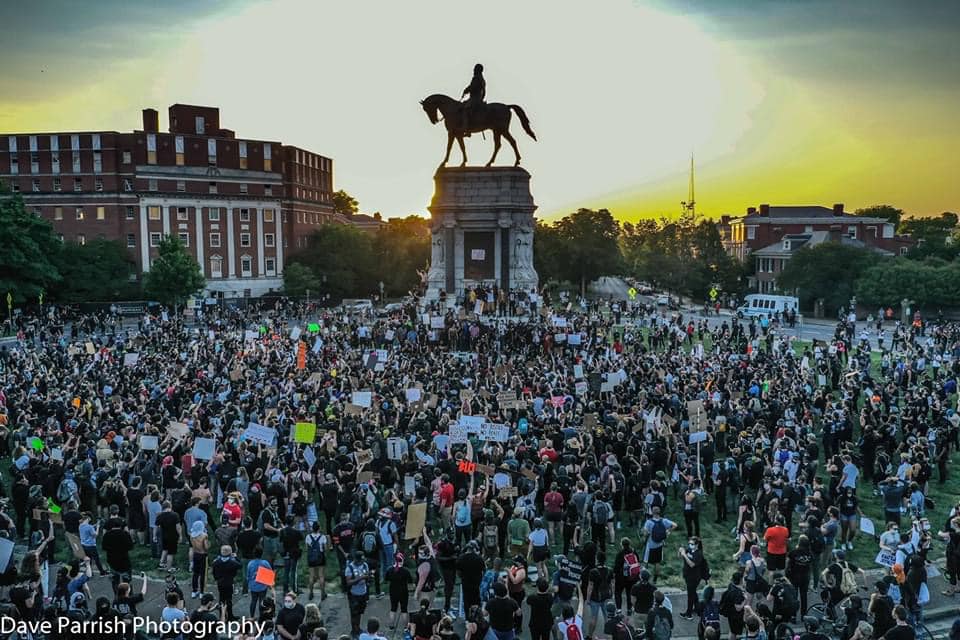
Or do they conduct an orderly retreat, regroup and live to fight another day? Robert E. Lee, Stonewall Jackson, and J.E.B. Stuart knew when to pick their battles. Now their statues are coming down, and those who wished to preserve them face similar choices. Do they fight against all odds to keep the statues in the public square, or do they move on in the hope of influencing what comes next?
I have heard rumblings of lawsuits to prevent the Northam administration and Richmond Mayor Levar Stoney from removing the statues. Appealing to the courts may protract the agony, but I don’t see how they can do anything but delay the inevitable. The next session of the General Assembly will simply re-write the state law to eliminate whatever legal obstacles might exist.
Given the tenor of the times, the Confederate statues are coming down. Once they are gone, two questions inevitably will rise: (1) what do we do with them, and (2) what do we replace them with?
Removal of the statues is inevitable because their foes are fervent and lack any reservation while defenders are ambivalent. Whatever the personal virtues of the Civil War figures honored by the statues (and they were many), and whatever their personal motives in fighting for the Confederacy (and they, too, were many), at the end of the day they fought to defend an evil system, the system of chattel slavery. Defenders of keeping the statues in the public square had to adopt a “yes, but” strategy. Yes, those things are true, but…
There’s no point in prolonging a battle that cannot be won. We need to answer a different set of questions now.
The first is what becomes of the statues. Do we melt them down into scrap metal? Do we concede that they are magnificent pieces of art worth preserving, perhaps in museums where they can be “interpreted” in line with the intellectual tone of the times? Or do we find some other setting for them — perhaps warehousing them for 20 or 30 years until the dust settles?
Personally, I feel that the first of those options would be a senseless tragedy — although I’m sure many would disagree. I’m not even sure there is a museum in Richmond right now that would be willing to accept the statues, much less display them. The sooner statue conservationists concur about which course of action to take, the better the odds they can successfully influence the public debate.
The second question is what replaces the statues? The statues were designed to serve as focal points on Monument Avenue. The Lee and Stuart statues are located on traffic circles. Lee, Jackson and Stuart are set upon magnificent plinths and horses. The settings require a monumental scale. An Arthur Ashe-scale statue would look puny, almost demeaning.
Even more forbidding is the job of selecting subjects for the statues. Do we replace them with contemporary art? Do we pick Civil Rights leaders? Do we restrict our choices to Virginians? Who has sufficient stature to stand horseless upon Lee’s magnificent plinth?
What are our aims now? Do we want to emphasize reconciliation? If so, would it make sense to commission a statue that recreates the famous scene of Grant accepting Lee’s surrender at Appomattox Courthouse? My wife has made that suggestion.
We are who we honor, and that will become the real battleground. As a lover of freedom and liberty, I see the evolution of Virginia as a 400-year struggle — with twists and detours — toward individual freedom. I believe we should honor the men and women, white and black, morally perfect or imperfect, — and preferably Virginian — who did the most to advance those freedoms. That is a battle I’m willing to fight.
A version of this commentary originally appeared on June 7, 2020 in the online Bacon’s Rebellion.
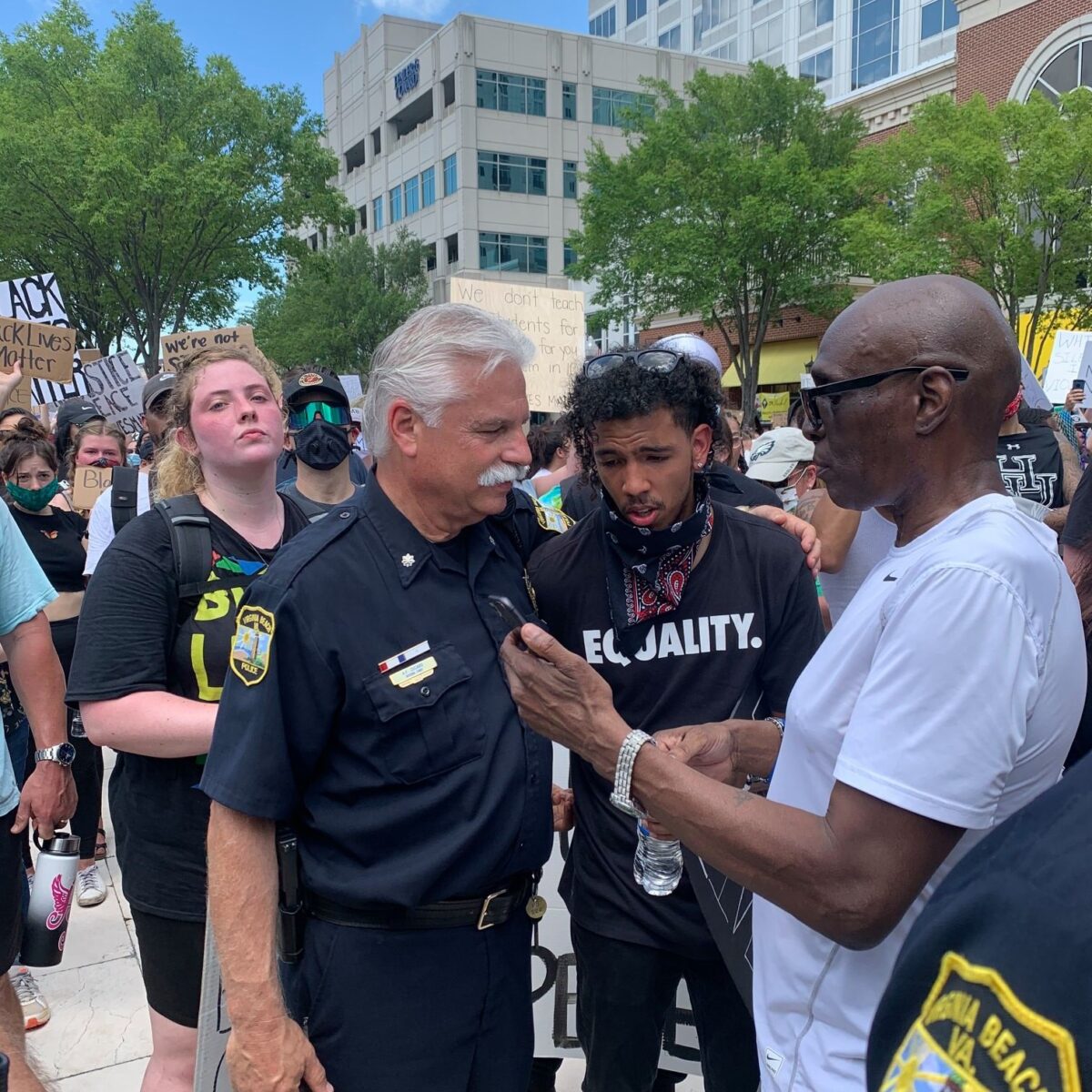
It’s been a tough week in America. It’s hard to explain what’s been going through my mind as I am a problem solver but it’s apparent that at this point, in order for us in America to truly move forward, we have to start speaking and sharing our truths on race.
Here’s my truth:
Growing up, I can’t count on my hands how many people would say you “act or speak white,” or you’re a very articulate and well-spoken young man.
Or how when my personalized tags weren’t swapped out properly by DMV on a new vehicle, three cops followed me home and came to my car with guns drawn at 9 pm in my own driveway — or how many altercations occurred at all points in life because someone called me the N-word.
Or having the cops called on me because, well, just because! Or people who spread falsehoods about you to attempt to discredit you … and I could go on and on….
All that said, here’s the other truth: I can’t count on my hands the number of people who didn’t look like me that would let me sleep in their homes even when they weren’t there, pick me up from events and practices, call and check in on me in college, and continue to help me with professional advice. People who support me more than I could ever imagine in my endeavors.
How many times growing up I was in the wrong and was bailed out and guided by people who didn’t look like me. How many people of all backgrounds who gave me opportunities that shaped me to become who I am today.
My inner circle is a true melting pot because I realized a long time ago that it’s important to understand people who are NOT like you. Only then do you realize that we’re all fighting a battle that we may never “win.”
So if you understand that, then you’ll understand where I’m coming from about how we move forward:
Just try to be a part of the solution. Educate, conversate, uplift, and be with one another. Protest if you want, make your voice heard, but most importantly, try to understand one another — cut out this left vs right rhetoric because, trust me, there are bad actors on both sides.
Side note: You’re about to see politicians on both sides attempt to fundraise off of this … take notes and do with it what you choose.
And most importantly stop one of my biggest pet peeves: labeling people.
I’m not a black Republican — I’m a commonsense conservative who happens to be black. No political party owns me. Do you see the difference?
We need leadership right now. Leadership from the White House to Congress to State Houses to our City Halls to our communities, but this is America. Our America. Let’s not let this be the new normal.
I see a lot of talk about let’s reset 2020 or forget about it. Nope. Let’s confront it and not cover up decades of wounds in this country.
Institutions are only as great as the people who empower them. Infiltrate them. We need more men and women in law enforcement. I’d love to see a push for more minority law enforcement officers.
We need more public officials and leaders who care about equal opportunities for all and not equal outcomes. People who don’t use their power to pick winners and losers.
Basically, you want to fix this? Start by having tough conversations with yourself, then truly get involved and be a part of the change in your community.
I’m not going to lie, it’s hard right now — it’s tough to keep watching all this unfold. But it’ll make us stronger as a people. Folks have been fighting this battle for too long and are tired. It seems that the more we progress, the more we regress.
Let us chart the path forward. Together, as best we can.
A version of this commentary originally appeared on June 1, 2020 in the online Bearing Drift.
“We had to destroy the village in order to save it.” The infamous Vietnam era quotation may or may not have been uttered by an anonymous US Army major. It may have been misquoted, revised, apocryphal or invented. But it quickly morphed into an anti-war mantra that reflected attitudes of the time.
For Virginians and others forced to travel the path of “clean, green, renewable, sustainable” energy, it will redound in modern politics as “We had to destroy the environment in order to save it.”
Weeks after Governor Ralph Northam signed Virginia’s “Clean Economy Act,” which had been rushed through a partisan Democrat legislature, Dominion Energy Virginia announced it would reach “net zero” greenhouse gas emissions by 2050. To do so, the utility company will raise family, business, hospital and school electricity bills by 3% every year for the next ten years – as these customers and state and local governments struggle to climb out of the financial holes created by the ongoing Coronavirus lockdown.
Just as bad, renewable energy mandates and commitments from the new law and Dominion’s “integrated resource plan” will have major adverse impacts on Virginia and world environmental values. In reality, Virginia’s new “clean” economy exists only in fantasy land – and only if we ignore “clean” energy CO2 emissions, air and water pollution, and other environmental degradation around the world.
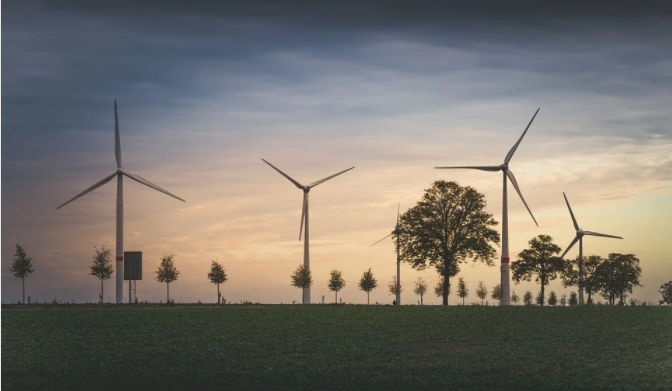
Dominion Energy plans to expand the state’s offshore wind, onshore solar and battery storage capacity by some 24,000 megawatts of new “renewable” energy by 2035, and far more after that. It will retain just 9,700 MW of existing natural gas generation, and only through 2045, build no new gas-fired units, and retire 6,200 megawatts of coal-fired generation. This will reduce in-state carbon dioxide emissions, but certainly won’t do so globally. The company intends to keep its four existing nuclear units operating.
To “replace” some of its abundant, reliable, affordable fossil fuel electricity, Dominion intends to build at least 31,400 megawatts of expensive, unreliable solar capacity by 2045. The company estimates that will require a land area some 25% larger than 250,000-acre Fairfax County, west of Washington, DC. That means Dominion Energy’s new solar facilities will blanket 490 square miles (313,000 acres) of beautiful croplands, scenic areas and habitats that now teem with wildlife.
That’s almost half the land area of Rhode Island, eight times the District of Columbia, 14 times more land than all Fairfax County parks combined – blanketed by imported solar panels. Still more land will be torn up for access roads and new transmission lines. All this is just for Dominion Energy’s solar panels.
The panels will actually generate electricity maybe 20-25% of the year, once you factor in nighttime hours, cloudy days, and times when the sun is not bright enough to generate more than trifling electricity.
Dominion and other Virginia utility companies also plan to import and install 430 monstrous 850-foot-tall bird-chopping offshore wind turbines – and tens of thousands of half-ton battery packs, to provide backup power for at least a few hours or days when the sun isn’t shining and the wind isn’t blowing. The batteries will prevent the economy from shutting down even more completely during each outage than it has during the Corona lockdown. Similar policies across America will impact hundreds of millions of acres.
Most of these solar panels, wind turbines and batteries – or their components, or the metals and minerals required to manufacture those components – will likely come from China or from Chinese-owned operations in Africa, Asia and Latin America … under mining, air and water pollution, workplace safety, fair wage, child labor, mined land reclamation, manufacturing and other laws and standards that would get US and other Western companies unmasked, vilified, sued, fined and shut down in a heartbeat.
It is those minimal to nonexistent laws and regulations that govern most of the companies and operations that will supply the “clean” technologies that will soon blight Virginia landscapes and serve the new “clean” Virginia economy. As Michael Moore observes in his new film, Planet of the Humans, other states that opt for “clean” energy will face the same realities.
Thus far, no one has produced even a rough estimate of how much concrete, steel, aluminum, copper, lithium, cobalt, silica, rare earth metals and countless other materials will be needed. All will require gigantic heavy equipment and prodigious amounts of fossil fuels to blast and haul away billions of tons of rocky overburden; extract, crush and process tens of millions of tons of ores, using acids, toxic chemicals and other means to refine the ores; smelt concentrates into metals; manufacture all the millions of tons of components; and haul, assemble and install the panels, turbines, batteries and transmission lines, setting them on top of tens of thousands of tons of concrete and rebar. All of it beyond Virginia’s borders.
No one has tallied the oil, natural gas and coal fuel requirements for doing all this “Virginia Clean Economy” work – nor the greenhouse gases and actual pollutants that will be emitted in the process.
Nothing about this is clean, green, renewable or sustainable. But Virginia politicians and Dominion Energy officials have said nothing about any of this, nor about which countries will host the mining and other activities, under what environmental and human rights standards.
Will Virginians ever get a full accounting? Just because all of this will happen far beyond Virginia’s borders does not mean we can ignore the global environmental impacts. Or the health, safety and well-being of children and parents in those distant mines, processing plants and factories.
This is the perfect time to observe the environmentalist creed: think globally, act locally. Will that be done?
Will Dominion and Virginia require that all these raw materials and wind, solar and battery components be responsibly sourced? Will it require independently verified certifications that none of them involve child labor, and all are produced in compliance with US and Virginia laws, regulations and ethical codes for workplace safety, fair wages, air and water pollution, wildlife preservation, cancer prevention and mined lands reclamation? Will they tally up all the fossil fuels consumed, and pollutants emitted, in the process?
Science journalist, businessman and parliamentarian Matt Ridley says wind turbines need some 200 times more raw materials per megawatt of power than modern combined-cycle gas turbines. It’s probably much the same for solar panels. Add in the millions of wind turbines, billions of solar panels and billions of backup batteries that would be required under a nationwide Green New Deal, and the combined US and global environmental, human health and human rights impacts become absolutely mindboggling.
If you ignore all the land and wildlife impacts from installing the wind turbines, solar panels, batteries and transmission lines – you could perhaps call this “clean energy” and a “clean economy” within Virginia’s borders. But not beyond those borders. This is a global issue, and the world would likely be far better off if we just built modern combined-cycle gas turbines (or nuclear power plants) to generate reliable electricity – and avoided all the monumental human and ecological impacts of pseudo-renewable energy.
When it’s time to select sites for these 490 square miles of industrial solar facilities, will Virginia, its county and local governments, its citizens, environmentalist groups and courts apply the same rigorous standards, laws and regulations that they demand for drilling, fracking, coal and gas power plants, pipelines, highways, timber cutting and other projects? Will they apply the same standards for 850-foot-tall wind turbines and 100-foot-tall transmission lines as they demand for buried-out-of-sight pipelines?
Virginia’s Clean Economy Act will also plunge almost every project and jurisdiction into questions of race, poverty and environmental justice. Dominion Energy and other utility companies will have to charge means-tested rates (even as rates climb 3% per year) and exempt low-income customers from some charges. They will have to submit construction plans to “environmental justice councils” – even as the companies, councils and politicians ignore the rampant injustices inflicted on children and parents slaving away in Chinese, African and Latin American “clean energy” mines, processing plants and factories.
Government officials, utility industry executives, environmentalists and anyone else who promotes wind, solar, battery and biofuel energy need to explain exactly how they plan to address these issues. Future town hall meetings and project approval hearings promise to be raucous, entertaining and illuminating.
Paul Driessen is senior policy analyst for the Committee For A Constructive Tomorrow (www.CFACT.org) and author of books and articles on energy, environment, climate and human rights issues.
How is it that her grandfather’s funeral was forced – by order of the governor – to be almost a non-event while demonstrators and protestors violate Virginia’s 10-person crowd-size rules with absolute impunity?
I have no answer.
Perhaps someone will show this to Gov. Ralph Northam and he can explain why massive protests are safe but funerals, graduations, proms, weddings and Easter services were not.
Large gatherings either pose a threat to public health or they don’t. Placards do not provide immunity to the coronavirus. That’s science.
Stanley Swain December 30, 1938 – April 4, 2020
On April 4th Shannon’s beloved grandfather, 81-year-old Stanley Swain of Chesapeake, died at home of complications from COPD.
There were exactly eight people at his funeral a few days later. Music was from an iPhone.
Northam’s current stay-at-home order limits gatherings to just 10 people. Unfortunately, two funeral home workers counted into that equation, so only eight family members could be present. One of Mr. Swain’s elderly sisters had to sit outside the funeral home in a car.
His brothers from International Union of Operating Engineers Local 147, where he’d been an active member for 54 years, couldn’t pay their respects to the retired crane operator either.
Mr. Swain’s graveside service was also curtailed. The family knew that only eight of them would be allowed under the tent, but they’d figured more friends and family could come to the cemetery provided they stood six feet apart.
They were wrong.
Ms. Jones says the funeral director put the “kibosh” on that. He warned them that if more than 10 mourners gathered in Chesapeake Memorial Gardens the police would put a stop to it.
Fear of COVID-19, you know.
So there was no filled-to-capacity funeral, no eulogies, no hugs, no remembrances, no wake at the family home after the burial.
Just a spartan service on a sunny spring day.
Funerals serve a real purpose. There’s something therapeutic about the way we lay our loved ones to rest.
The rituals offer comfort to the bereaved. So do the mourners who gather with the family to offer their condolences and share warm – and sometimes funny – remembrances about the deceased.
The music, the flowers, the eulogies, the prayers. These are the ways that we say farewell in most of America.
Since the beginning of the COVID-19 pandemic in March, many governors sharply limited gatherings believing that this would curb the spread of the virus. The unintended consequence of their orders? People in hospitals and nursing homes die alone. Then they’re buried in haste, without the ceremonies that comfort grieving families.
All right, this is a pandemic. People have been forced to make tremendous sacrifices. Many grumbled, but they complied.
So imagine Shannon Jones’ reaction when she watched the news this past week to see thousands of demonstrators marching shoulder to shoulder to protest the death of George Floyd, a black Minnesota man who was killed by a white police officer.
The marches had no social distancing. The huge gatherings were not interrupted by police telling the participants to disperse. No governors with bullhorns warned the protesters that they would kill vulnerable folks by their actions.
Even in Virginia, where the 10-person-limit is in effect until tomorrow when it grows to 50, the marches were massive.
Yet the national scolds – who’d lost their minds over scenes of spring breakers on the beach – were largely silent.
“It enraged me,” Ms. Jones said of the size of the demonstrations. “We couldn’t have people at a funeral but protests can have as many people as they like?
“Where’s the consistency?” she wondered. “There is no consistency.”
Shannon Jones said that from the start she thought the lockdowns were excessive. But she and her family abided by the governor’s orders.
Now, she says, it’s clear that fears of the virus were exaggerated. How else to explain Northam’s sudden indifference to crowd size?
Shannon and her family have had a rough spring. They lost a loved one and couldn’t properly mourn his passing. Now they see that the draconian rules that prevented them from having a funeral don’t apply to thousands of other Virginians.
“He was my person,” Ms. Jones said softly of her grandfather. “It isn’t fair.”
According to Governor Ralph Northam, the way to ensure access to quality, affordable medical insurance for Virginians is to reject bills that would… expand access to health insurance for Virginians.
Last week Northam vetoed two bills passed with broad bipartisan support that would have allowed self-employed people to buy insurance through professional groups such as Realtors’ associations. He also vetoed a third, which would have permitted small businesses to band together to buy group health insurance for employees.
Northam’s logic was that the legislation could undermine the Affordable Care Act by providing an alternative to buying coverage on the state exchange, reports the Washington Post.
“Governor Northam’s administration has worked to expand access to affordable quality care for all Virginians,” said a statement released by the Governor’s Office. “The vetoed bills would address health insurance cost concerns for targeted segments of the population, but in doing so, could increase the cost of insurance for sicker Virginians in the marketplace.”
“Governor Northam today reaffirmed his commitment to a government-only, ‘one-size-fits-all’ approach to healthcare coverage,” said a statement from state Senate Minority Leader Thomas K. Norment Jr., R-James City, and other GOP leaders.
I often disagree with Norment, but he got this right. The state exchanges were set up to provide a medical insurance option for those who couldn’t find insurance anywhere else. Risks were pooled and government subsidies provided. But the insurance products are not attractive for self-employed professionals. Why not let them explore alternatives with less onerous charges and deductions?
One major justification for the health care exchanges is to provide an insurance option for people with pre-existing conditions. Yes, it is important to ensure that people with pre-existing conditions have access to medical insurance. But that is a broad social obligation — not an obligation of the self-employed.
If Northam wants to ensure that Affordable Care Act plans remain affordable for Virginians with pre-existing conditions, the subsidies should come from the state General Fund. That way, Virginians can know exactly how much they are spending to provide the access and can debate appropriate levels of support. Subsidies should not come from self-employed Virginians by means of obscure and non-transparent insurance pricing practices over which neither they nor the electorate have any say.
Medical insurance is more expensive in Virginia than almost any other state. Vetoes like this don’t help.
Why is medical insurance so expensive? Because the General Assembly has enacted so many coverage mandates, which outlaw affordable, no-frills insurance options. Because the Certificate of Public Necessity law thwarts competition and innovation among medical practitioners. Because occupational licensing laws have turned the medical professions into craft unions. Because the absence of price transparency makes it impossible for consumers to comparison shop for the best deals in discretionary medical procedures. Because the system is riddled with subsidies and cross-subsidies (like forcing the self-employed to subsidize those with pre-existing conditions) so nobody knows how much anything truly costs.
Health care in Virginia is a tangled knot, and untangling it won’t be easy. One way to start the process is to stop the subsidies and cross subsidies so actors in the healthcare marketplace (providers, patients, insurers) at least can make economically rational decisions based on the underlying cost of things. If we continue down the same path, Virginia health care will lurch from stopgap response to unintended consequence, leading to such widespread perversity, dysfunction and failure that even Wise King Ralph won’t be able to set it straight. A version of this commentary originally appeared on May 22, 2020 in the online Bacon’s Rebellion.
 According to Governor Ralph Northam, the way to ensure access to quality, affordable medical insurance for Virginians is to reject bills that would… expand access to health insurance for Virginians.