Power Lines Divide the Beach

Share this article on:

One four-hour public hearing was not enough. Virginia Beach City Council wants another such debate before it votes on a wind company’s request to bring power cables ashore at Sandbridge Beach.

Last week’s hearing on Kitty Hawk North’s application for an easement to bury cables apparently was not covered by any Hampton Roads news media. Almost half of the time (watch it here) was used by the company’s speakers, both before and after the public spoke. Parent firm Avangrid Renewables LLC personnel were at the podium for so long because of questions from council members.

The representative for that part of the city, Barbara Henley, was the most pointed.

“We’ve heard a lot tonight from Avangrid, but in all this time, this is the first time we’ve heard it,” she complained.  “I think we all deserve answers to all of the questions before we make a decision.” Information she’d heard that evening seemed to contradict previous things she was told by city staff, she claimed. She also said city staff at one point told her of the project: “It’s not going to be viable. Don’t worry about it.”

Henley said the Sandbridge residents have been “shortchanged” so far, and also worried that nobody in the room spoke for the residents along the nine-mile route the power cables will take before connecting to the main electric grid at Corporate Landing.

Her comment came right before the meeting ended. She did not indicate how she might vote and included in her comments general support for offshore wind and the economic dream of creating a wind energy industry hub in the region. “None of that depends on where this project lands,” she said.

She was followed by Mayor Robert “Bobby” Dyer, who announced the intention for council to host another hearing “but not have a vote that night.” No date was announced.

As speaker after speaker was recorded, key observers watched from the back row. To the left (from the camera’s perspective) was William Murray, Dominion Energy Virginia’s top governmental affairs vice president. To the right was Robert Matthias, longtime Virginia Beach City lobbyist in Richmond and an early advocate for offshore wind.

So far, Dominion’s project, much larger and much closer to Virginia’s beaches, has not sparked the kind of public opposition demonstrated to Kitty Hawk that evening. Dominion’s cables are coming ashore further north, away from any residential or public beach areas, but it is going to require an even longer network of new power lines.

Maps of the lines required for both projects exist separately. What does not exist, at least in the record examined, is a combined map showing all the lines from both. Nor it is clear if the powerlines shown on current applications will be sufficient for future phases or if more will be needed, as both Dominion and Avangrid have plans for hundreds of additional turbines later.

The first speaker in opposition to the project was Joe Bourne of Protect Sandbridge Beach; several speakers wore stickers from this organization. One opponent had the crowd of opponents stand, and it appeared to be two-thirds of those present. Concerns ranged from lowered property values to construction disruptions to medical impacts of electromagnetic radiation from power lines. One speaker worried about the turbine projects driving off the region’s whales.

Speakers against included the owner of the market directly on the parking lot in question and a spokesman for the condo association directly across from it.

Speakers in favor did include residents of the Sandbridge neighborhood and other Virginia Beach residents who use it frequently. Most supportive speakers focused, however, on the economic hopes the region is pinning on the overall East Coast wind industry wanting to use Hampton Roads as its long-term installation, operations and maintenance hub.

“New York and New Jersey are coming on strong and they want to take our jobs!” warned Gretchen Heal of the Greater Hampton Roads Chamber of Commerce. Television reporter-turned-public-relations-professional Joel Rubin, who said on this occasion he was not representing his client Dominion, predicted the region can become “the center for clean energy in this country.”

Avangrid disputed claims that the work installing the transmission lines and equipment under the parking lot would create a long disruption, saying it could be done in one off season, between October and May. It wasn’t clear whether that would cover just the first phase of turbines being built or would need to be repeated with future phases.

Kitty Hawk project manager Megan Higgins was pressed by a councilman on alternative landing sites for Avangrid’s cables and said a long analysis of other options determined this location was “optimal.” There isn’t enough capacity at the nearest points of possible grid interconnection in North Carolina, she said.

The project, which so far lacks any fixed power purchase agreement, wants to feed its electrons into the PJM Interconnection regional transmission organization for market prices. From a landing on the Outer Banks, hooking into PJM would require perhaps hundreds of miles of onshore transmission lines.  Pamlico Sound was rejected as a route because of the disruption to the fishing industry there and its soft bottom. Sandbridge is 36 miles from the lease area off Kitty Hawk and Sandbridge Road is almost a straight shot to the grid.

Higgins and others claimed that by bringing the cable on shore in Virginia and becoming a PJM supplier, the project would comply with the 2020 Virginia Clean Economy Act. That law does state that up to 5,200 megawatts of offshore wind “in federal waters and interconnected directly into the Commonwealth” shall be recognized as “in the public interest” by regulators.

Only half that favored approval status has been used up by Dominion’s first project, but it also has designs on the second 2,600-megawatt tranche in the law. Dominion could satisfy its customers’ needs and VCEA requirements by purchasing wind power from Avangrid.

Higgins also conceded that the project has filed none of the needed applications with Virginia’s State Corporation Commission, and really cannot start that process until it has the right of way secured to build the interconnecting transmission. The key to that remains the easement under and across the Sandbridge Beach parking lot, owned by the City of Virginia Beach.

Posted in Energy | Comments Off on Power Lines Divide the Beach

Will a Simpler Electric Bill Lower Your Costs?

Share this article on:

Simpler is usually better.  Monthly electric bills for many Virginians are about to get less complex, and in the short run also lower.  Will that lower cost be long term?  It is too soon to tell.

On July 1 Dominion Virginia Power will stop collecting separate monthly payments on its bills for three of its newer power plants, all now covered by their own stand-alone rate adjustment clauses or RACs.  This change flows from the major regulatory revision the General Assembly recently adopted and does not need State Corporation Commission approval.  Dominion instead notified the SCC of this change.

This is a different filing than the one about collecting its unpredicted fuels costs, and while they were announced together on May 1, really needed its own analysis.

The three generation RACs to be retired are Rider R for the Bear Garden natural gas plant, Rider S for the Virginia City Hybrid Energy Center which burns coal and biomass, and Rider W for the Warren County natural gas plant.  Combined they are collecting about $350 million per year from customers for operations, capital costs and utility profits.

Dominion’s proposal to delay collection under Rider A of its excess fuel expenses from past years until it can roll them into a 10-year bond does not constitute “bill relief.”   Baking these RACs into base rates, on the other hand, may prove beneficial over time to its customers.  Whether that is true and by how much won’t be clear until Dominion files its next overall rate case.

Using the standard illustration for residential users of 1,000 kWh usage, this will save that account about $6.75 per month.  Different customer classes pay different amounts per kilowatt hour for these RACs.  Larger commercial and industrial customers pay less, in some cases about half the cost per kilowatt hour.  The changes to their bills from this consolidation will thus be less dramatic.

When the state rewrote its regulatory laws in 2007 and created the opportunity for the plethora of individual rate adjustment clauses now in place, the original intent was some would be short term.  As the company went through periodic rate reviews, the opportunity would exist to fold them into the base rates.  Under traditional ratemaking, pre-2007, these separate charges were rare and new generation plants were all paid for through base rates.

The intent to routinely retire the rate adjustment clauses was just one of several parts of that 2007 bill which never came to pass.  Now, however, it is finally happening.  When Dominion does file that application for a full rate review later this year, using the new rules in the 2023 bill, one of two things is likely to happen.

It may not seek any adjustment in its current base rates and may instead decide to continue paying the operational and capital cost for these three facilities with the existing charge.  That will be viewed by some as strong evidence that the base rates have been excessive all along, as many claim (including the SCC.)

Or Dominion may indeed seek an increase in base rates blamed in part on covering these costs.  Which will be fine.  But that will mean the “bill relief” now being claimed was only temporary, as with the fuel costs.  Theoretically, adding the cost of these plants into base rates might also prevent a base rate reduction the SCC would otherwise have ordered.  The SCC accounting process should sort that out.

Ideally, base rates should be designed to cover the cost of service, cost of capital and provide the allowed profit margin with no excess in either direction.  For the past fifteen years most cases have involved fierce arguments over whether the utility had earned excess profits, and if so whether customers were owed refunds.  In many years the SCC ordered such refunds.

This move won’t change that argument in the next review, which will look back at the period ending December 31, 2022.  For that period, all of the RACs will still be considered as outside of base rates and in their own silos.  It may still be that Dominion earned excess profits and owes customer refunds.

But the better outcome going forward is setting base rates which produce no excess or shortfall.  Putting these three RACs back into the general expense pot may move Dominion in that direction.  Perhaps one or two more conversions would be needed to complete the task, but whether the SCC has the authority to do that on its own may turn into another major legal battle.

The irrefutable bottom line which must always be remembered is one way or another, now or later, the customers pay for it all.  Shuffling the deck doesn’t change the outcome of the game.

Posted in Energy, Government Reform | Comments Off on Will a Simpler Electric Bill Lower Your Costs?

Dominion Changes Course on Natural Gas, SMR Nukes

Share this article on:

Dominion Energy Virginia has long been warning, albeit somewhat quietly, that the dream of running Virginia’s economy on nothing but solar, wind and battery power was not based on reality. With the filing of its most recent integrated resource plan (IRP) on May 1, proposing how to meet customer needs out 25 years, it has made those warnings concrete.

The alternative plan that the company seems to be pointing to as preferred includes adding natural gas generation as early as 2028, an idea not even hinted at in the previous plan just a year ago. It wants to add 2,900 megawatts of new gas plants in all. That proposal will prove anathema to the climate alarmism movement that imposed the Virginia Clean Economy Act just three years ago, demanding carbon-emissions free electricity by 2045.

The previous 2022 plan did include the possibility of the utility building additional nuclear generation, with the first of four small modular reactors proposed to come online about 2042. This plan advances that schedule by eight years, to 2034, and calls for six reactors in all with 1,600 megawatts of capacity.

On the same day, Dominion also announced an application to change how it will collect fuel costs from customers, and some changes in the structure of its base rates and rate adjustment clauses. The radical turn in the IRP is the bigger news, however. Future columns will address those other two proposals.

Release of the IRP was followed that evening by a news release praising it from Governor Glenn Youngkin (R), something that normally doesn’t accompany these bureaucratic undertakings. But Youngkin has pinned his political fortunes to what he calls the “moon shot” of introducing more nuclear power into Virginia’s mix, and his 2022 energy plan also supported continued and even expanded use of natural gas to maintain system reliability. Dominion did both.

The review process will take months and may not be complete until after the November elections. Virginia Democrats are firmly opposed to and have voted down efforts to delay retiring the existing natural gas plants, let alone adding new ones. The fate of that idea may rest with the voters.

Youngkin and the Dominion plan summary point to two major developments since last year’s IRP discussion. First is the revised demand forecast by the regional electricity marketplace PJM, showing far greater growth in the data center industry and the need for more electricity as transportation and other sectors abandon fossil fuels under climate alarmism pressures. Second was a close call just before Christmas as demand for energy spiked in a cold spell, with PJM’s members almost replicating the blackout problems Texas suffered a few years back.

The Governor’s release stated:

The threat of premature (fossil fuel plant) retirements, and the resulting reduction to baseload and dispatchable generation capacity they produce, is magnified when the outsized load growth of Virginia is evaluated. PJM’s revised load forecast reveals that Dominion’s load will grow at 5% annually – higher than annual growth projected for Virginia when the Clean Economy Act was evaluated, and multiples of the 1% annual growth projected for the entire PJM region in the revised forecast.

As we explained last fall, there is a significant mismatch between supply and demand in the VCEA framework. Baseload generation provides the energy backbone to Virginia’s economy, and it would be a huge mistake to turn it off without an achievable plan to replace it…Our regulated utilities have the responsibility to ‘keep the lights on.’”

Adding the new SMR nuclear capacity and natural gas capacity allows Dominion to propose either building or buying substantially less solar capacity. The preferred 2022 plan projected adding almost 26 gigawatts of solar but this new plan trims that to below 20 GW. Both the 2022 and 2023 plans include the second phase of the Coastal Virginia Offshore Wind project, another 2.6 gigawatts, coming online in the early 2030s. But the 2023 plan, for the first time, also includes more than 600 megawatts of onshore wind turbines.

As before, Dominion offered five alternatives in all, one intended to be “least cost” and showing no concern for reducing CO2 emissions, and then two that achieve a claimed zero emissions by the VCEA target date of 2045. Interestingly, the zero carbon alternatives rely on even more nuclear power to balance demand with supply. The least cost plan adds no nuclear but far more natural gas generation. What are Virginians willing to pay for miniscule, too-tiny-to-matter reductions in worldwide CO2 levels?

The 2023 plan also increases the amount of planned battery storage, from 3070 megawatts in the earlier plan to more than 5,000 megawatts in this one. Perhaps recognizing the limits of battery technology, the 2023 plan also projects major purchases of power from other utilities, reaching the level of 4 GW per year in the out years. The 2022 plan didn’t show a shortfall until 2044. The 2023 plan shows shortfalls in all five alternatives, some of them massive.

The customer cost projections on the 2023 option adding new natural gas and nuclear power does not change much between the 2022 and 2023 document. Another change since last year, of course, is the federal Inflation Reduction Act changing all the federal tax credits and subsidies for nuclear and renewable energy. The details on how they impacted these calculations may emerge as the IRP review proceeds.

Dominion calculates the future cost one way, the State Corporation Commission uses another method, with the difference apparently being how they account for the impact of load growth. With so many assumptions, both must be taken as just estimates, but the trend lines are both steadily up.

Last year Dominion projected a residential bill on 1,000 kilowatt hours per month would reach $177 by 2035, and now it has lowered that to $174. (The actual bill was under $117 three years ago.) The earlier estimate using the SCC’s method was $213 and now it projects that bill reaching $235 by 2035. Yes, the SCC methodology has bills doubling between 2020 and 2035.

Keep those long term cost projections in mind with all the hoopla you will hear during this election year about some temporary changes in your bills (your bills, not your total costs) due to the proposed changes in how the fuel costs are recovered and in rate adjustment clauses. More information on those will follow soon.

Posted in Energy, Environment | Tagged | Comments Off on Dominion Changes Course on Natural Gas, SMR Nukes

Virginia Beach Residents Fighting Wind Project Cables

Share this article on:

Opposition to offshore wind is stirring in Virginia Beach, but the focus is on a North Carolina proposal that will bring its power ashore at Sandbridge Beach, not the Dominion Energy Virginia project which is adjacent to the state’s largest city.

Private energy developer Avangrid Renewables LLC still needs a key easement from Virginia Beach City Council to proceed with its plans.  That vote was delayed earlier this year and the company was asked to increase its local outreach and engagement.  A key meeting in that effort will take place Thursday, May 4 at Municipal Center Building 1.

An information session will begin at 5:30 p.m., followed by a public hearing at 6:30 p.m.  Representatives of the company will be present to address questions and concerns about the Kitty Hawk Wind (KWH) proposal, which is not as far along in the review process as Dominion’s larger Coastal Virginia Offshore Wind.

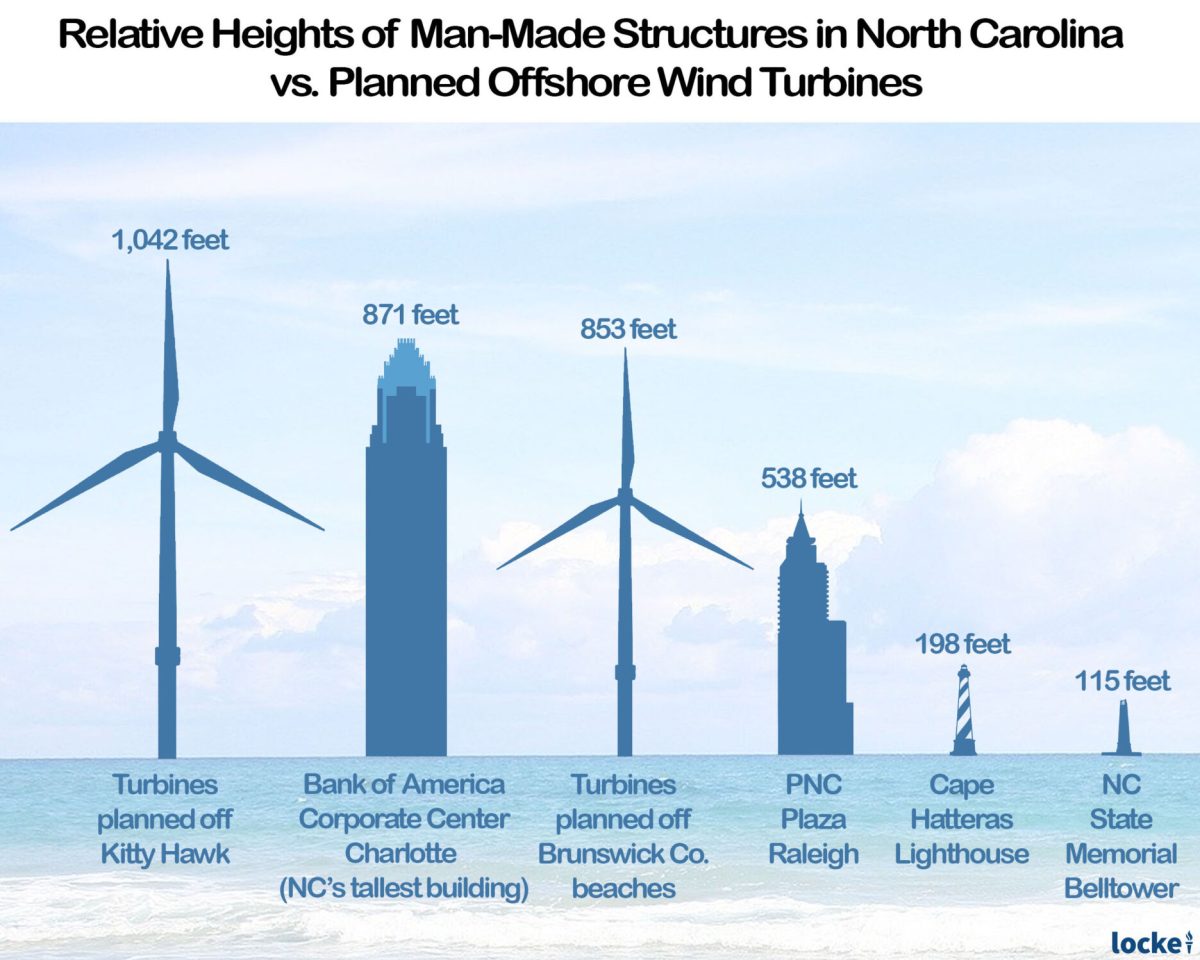
No purchase agreement for the project’s power output has been announced, for example.  Unless it has turned up recently, no application has been filed with Virginia’s State Corporation Commission.  There is a construction and operations plan filed last September with the Bureau of Ocean Energy Management which describes up to 69 turbines of up to 1,042 feet in height.

The Protect Sandbridge Beach Coalition plans to be at the hearing and is actively recruiting local members, with a petition and membership portal on its website.  Its leadership recently reached out to coordinate with a national umbrella group, American Coalition for Ocean Protection, which includes the Thomas Jefferson Institute for Public Policy among its affiliates.  ACOP is participating in a lawsuit challenging the first of the large Biden Administration-blessed projects, Vineyard Wind off Nantucket, Massachusetts.

The flyer Protect Sandbridge Beach it is circulating to drum up attendance next week cites a number of concerns among its bullet points, starting with the years-long disruption to tourism activity the transmission construction project would create.  It cites: “No net benefit to the most impacted communities, only risk of impacting property values, tax revenues, rate increases and tourism. What are the unknown unintended consequences to our vital beach nourishment program and the environment?”

Beyond the specific Sandbridge local impact, Sandbridge resident Joe Bourne says the group’s members are expressing “a general concern about the pace of offshore wind development.”  Bourne is a retired DuPont executive who worked for years in Scotland, and his impression is the wind projects in the North Sea have not lived up to their promises.

He can see Dominion’s two test turbines more than 25 miles from his home’s porch, clearly enough some nights to see the rotation of lights on the blade tips.  “If the claim is you can’t see it, that’s not true,” he said.  The next 170 turbines Dominion will build will be far taller than the first two, with wider arcs, very visible from the main Virginia Beach tourist area, especially from the upper hotel floors.

Concerns about the visual impact on North Carolina tourism have drawn fire from the John Locke Foundation in that state.  Projects further south than Kitty Hawk Wind are much closer to shore.

Avangrid’s proposed first phase, Kitty Hawk North, is expected to have a nameplate capacity of 800 megawatts.  It is about 27 miles off the Outer Banks, but the high voltage transmission cables to Sandbridge would be 36 miles long and come ashore right in the large parking lot at the north end of the complex, where the shopping and restaurants are located.

From there, power lines would extend to Corporate Landing for a connection to the main electrical grid’s backbone.  The preferred power line route in the filed plan follows Sandbridge Road.  Construction is slated to begin in early 2027.

Dominion’s wind power will come ashore on state property away from homes and businesses, creating less disruption.  But its plans to connect to the grid are more detailed now, and its miles of major overhead lines are drawing local opposition.  Bourne gives Dominion high marks for public engagement, and for making some adjustments to its design.  Avangrid has not been as responsive, he said.  That was one reason Virginia Beach City Council punted on the easement request in February.

If its website is up to date, the last time the region’s newspaper wrote about the opposition to the project was last summer, before the updated construction plan was filed and before the first discussion at Virginia Beach City Council.   The region’s governments and business community still have high hopes of becoming the construction and operations hub for many offshore wind complexes, which has been the focus of multiple supportive comments filed with BOEM about the Dominion project.

Bourne said he and others are going group by group to present the case that offshore wind is not going to be a boon and has major drawbacks.  Ultimately, he thinks that the longer the build-out takes, the more financial support may dry up.  Several of the wind developers are showing signs of financial stress.  Avangrid is one of the firms seeking to renegotiate previously made U.S. power purchase deals.

“People lie, governments lie, but the money tells the truth”, Bourne said.  Money is the “unbiased referee.”

Posted in Energy | Comments Off on Virginia Beach Residents Fighting Wind Project Cables

Government Protects Itself from Inflation, But Not You

Share this article on:

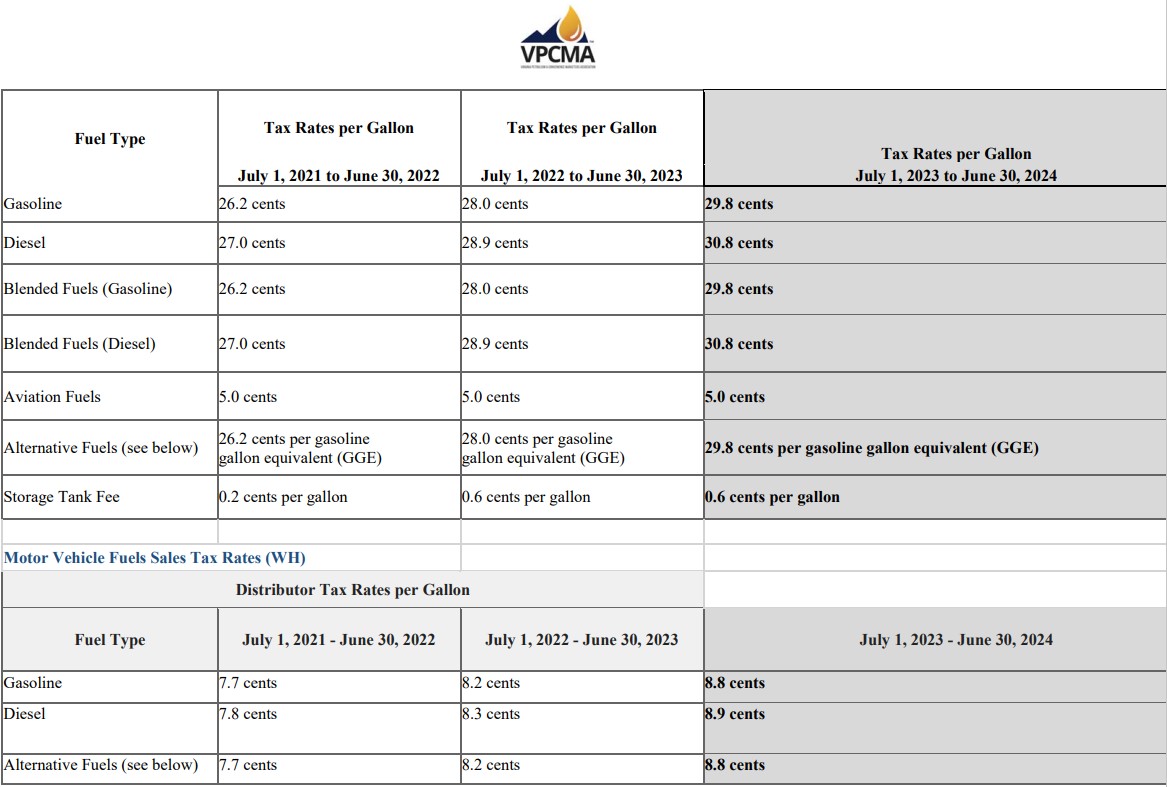
Virginia motor fuel taxes will rise again July 1, to just over 39 cents per gallon on gasoline and just over 40 cents per gallon on diesel. This will be the second automatic increase in gas taxes since the 2020 General Assembly voted to index the gas tax to inflation.

Add the retail gasoline tax and storage tank fee in the first table to the wholesale gasoline tax in the second table to get the total tax per gallon. Do the same for diesel. Source, Virginia Petroleum and Convenience Marketers Association.

This is the all-in combined tax, including the retail tax (29.8 cents as of July 1), the separate wholesale tax that is often forgotten (8.8 cents as of July 1), and a 0.6-cent per gallon tax for a fund dealing with abandoned underground tanks.  The way Virginia splits up the fuels tax and tries to hide the totals has been addressed before. (Also here.) It all ends up in the pump price.

This will also increase the highway user fee (HUF), the alternative to gas taxes imposed on electric cars and hybrids in Virginia. Details on how that works are below, along with how it is cheaper than the gas tax.

The 2023 figures come from the Virginia Petroleum and Convenience Marketers Association, which shared them with its members after it received notice from the state. They put it all in one chart with the details (see above, or here). The indexing provision has added about 15% over two years, or 5.1 cents per gallon, to the state’s gasoline tax. It went to 34.1 cents per gallon on July 1, 2021, 36.8 cents per gallon July 1, 2022 and will be 39.2 cents per gallon this July.

A busy family using 1,000 gallons of fuel a year will be paying $50 more per year in tax than two years earlier. They will pay $392 in total taxes. Keep that number in mind for the discussion on HUF below.

For more than a year the painful impact of high inflation on all commodities and services has been driven home to Virginians, but it remains the most effective and sneaky way for government to pad its coffers. Sales taxes go up with prices, and property taxes go up with assessments. But until recently, Virginia’s fuel taxes were a fixed amount per gallon and inflation effectively eroded them.

So, the 2020 Virginia General Assembly added inflation indexing for fuel taxes, something it also did for the state’s minimum wage. The idea of giving taxpayers a break by indexing the income tax deductions and brackets to inflation has proven a non-starter, however. This year Democratic legislators are also balking at another increase in the standard deduction, which can be viewed as an inflation hedge.

Governor Glenn Youngkin (R) tried to persuade the 2022 General Assembly to offer a break on the fuel taxes, but Democrats voted it down. Gas tax relief was not included in his tax package for the 2023 session.

Increasing the gasoline tax also triggers an increase in the highway users fee which is assessed both on electric vehicles which use no motor fuels and on gasoline or diesel vehicles with high mileage ratings. The HUF as it is known was also established just three years ago as a mechanism to protect transportation revenues from erosion as electric, hybrid or high efficiency motor fuel engines become more popular.

The complicated HUF provision in the law is here. The HUF, paid annually when the vehicle is registered or has its registration renewed, is based only on the retail portion of the tax. The separate wholesale tax and underground tank tax are not calculated into the HUF. So, for the year beginning July 1, the HUF will be based on 29.8 cents per gallon, not the full 39.2 cents per gallon paid on motor fuels.

Actually, the HUF is only 85% of that rate, so will be about 25.3 cents per gallon. And since nobody is tracking and reporting the actual mileage of these vehicles, the tax is calculated on the average vehicle miles traveled for Virginia. For this year, that has been 11,600 miles of use. The calculation formula also includes the average miles per gallon for fueled vehicles in Virginia, 23.7 mpg.

So, an all-electric vehicle will pay about $124 of HUF for a year, in lieu of motor fuel taxes, no matter how few or many miles it drives. That will be an increase from the current $116.50.

For the “fuel efficient” gasoline, diesel or hybrid vehicles, the annual HUF will be some lower amount based on their advertised miles per gallon rating. The higher it is, the more HUF will be imposed. Again, it will tick up just a bit with the higher retail gas tax on July 1.

Of course, their owners are also still buying fuel and there is no 11,600 miles per year cap on that for them. It is that cap that really opens up the wide disparity and provides a subsidy for the EVs.

If that family mentioned above using 1,000 gallons a year has a high-mileage vehicle or two, add some HUF to that $392 in gas taxes.

If you are curious about the spread of EVs and hybrids in the overall vehicle fleet, the HUF is an excellent proxy for their growth to watch. For the current fiscal year it is projected to produce $61 million in revenue. The traditional motor fuels taxes collect closer to $1.5 billion.

If Virginia does indeed see an explosion in EV use, and the federal government is deploying every carrot and stick in its arsenal to force us to buy electric cars, then the HUF is going to have to go up. It will need to be based on the full tax paid on motor fuels. The 15% discount will have to go away and so must the cap created by assuming only 11,600 annual miles of usage.

But right now hiding the true cost of this EV conversion from consumers is the goal of our governments. The lower tax paid by EV users through HUF is just one more inducement before the bait turns into the switch.

A version of this commentary originally appeared April 26 in the online Bacon’s Rebellion

Posted in Economy, Government Reform | Comments Off on Government Protects Itself from Inflation, But Not You