
Jefferson Institute Efforts Helped Youngkin Repeal RGGI

Share this article on:


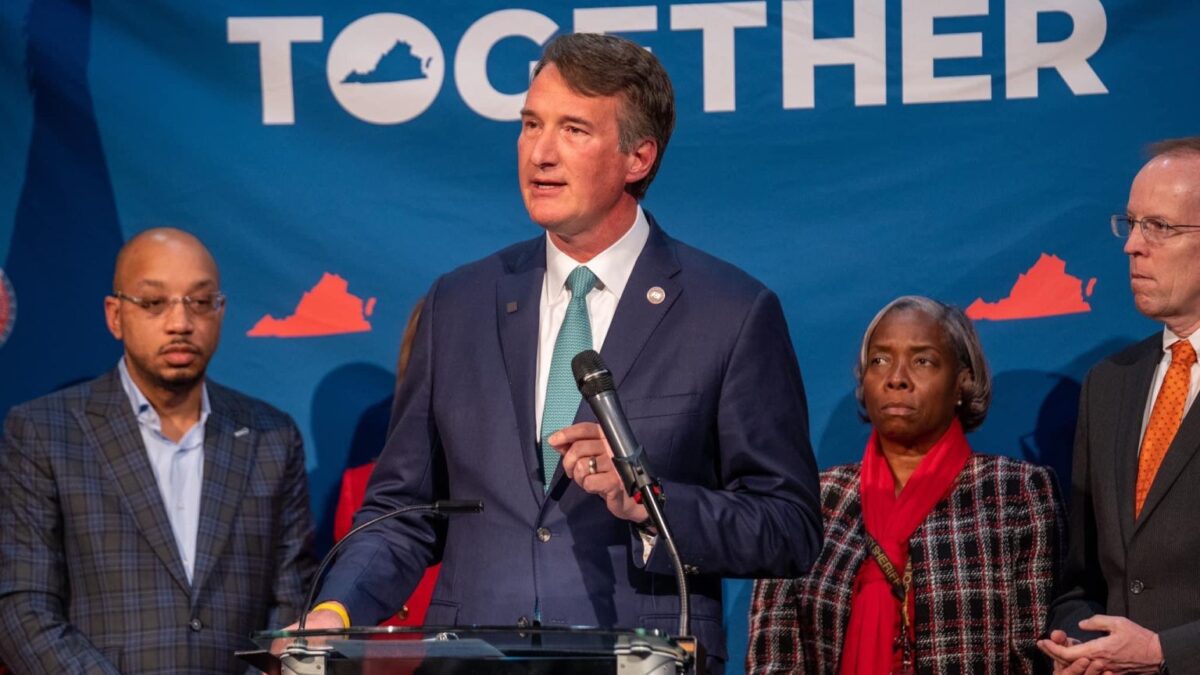
Virginia’s Air Pollution Control Board voted Wednesday to remove Virginia from the Regional Greenhouse Gas Initiative, keeping Republican Governor Glenn Youngkin’s promise to eliminate the related carbon tax that has been imposed on electricity ratepayers under RGGI since January 2021.

It was a step long advocated by the Thomas Jefferson Institute for Public Policy, which opposed the push by two previous Democratic governors to enter the regional cap and tax compact with northeastern states. Governor Youngkin is following a path to repealsuggested by the Jefferson Institute soon after his election. The Jefferson Institute issued a white paper on the topic in 2019, beginning its efforts to keep Virginia out of the compact.

The bad news is the tax itself won’t disappear until at the earliest September 2024. It is collected from customers on a delayed basis. Dominion Energy Virginia imposed and then removed a special RGGI surcharge on its bills. The surcharge is likely to be imposed again as of September 1 of this year and run 12 more months. A State Corporation Commission hearing examiner has recommended approval of Dominion’s petition.

The new surcharge is still being calculated, as there remains some dispute over what the full costs are. The warmer than normal winter reduced electricity demand and required fewer RGGI credits. The surcharge should settle somewhere above $4 per 1,000 kilowatt hours of usage. In effect, as the hearing examiner notes, Dominion is seeking to collect 17 months of RGGI allowance costs in just 12 months.

As the dominant utility, with a remaining fleet of some coal and many natural gas generators, Dominion and its customers have been the most impacted by Virginia joining RGGI. Several independent power plants also must buy RGGI allowances and pass the cost on to their customers, as well, and to the extent that power flows to Virginia electricity customers, that also comes out of their pockets.

The other large utility, Appalachian Power, has little to no generation within the state and buys few if any RGGI credits. Virginia’s electric coops share ownership of a major Southside Virginia coal plant with Dominion, so the coops do buy significant RGGI credits.

The Air Board’s decision to withdraw from RGGI won’t be implemented until the end of the current three-year RGGI contract period this coming December. Supporters of the regional cap and tax program are expected to sue, arguing that only the General Assembly has the authority to withdraw from the interstate compact. The lawsuit could also interfere with the Youngkin timetable to withdraw as of the end of 2023, and if successful expect the surcharge to remain into the future, too.

Former Governor Terry McAuliffe (D) began a regulatory process to join RGGI, with no specific vote of the General Assembly. In fact, General Assembly Democrats strongly objected when Republican legislators passed bills to insist Assembly approval was needed. Those bills died, and now the parties have reversed stances. It is the Democrats insisting this is a legislative prerogative.

The legislation they passed, and Governor Ralph Northam signed in 2020, however, states the Department of Environmental Quality and Air Board are “authorized” to move forward with joining RGGI. The wording does not include a clear mandate, nor does it insist the regulation could not be repealed in the future. In the normal course of business, regulations come and go.

Democrats were quick with their condemnation of the Air Board vote, including a demonstration outside the meeting followed by a huge wave of social media. Most of the messages followed what is now the usual tactic of blaming any adverse weather condition on supposed “climate change,” in this case the haze floating over much of the United States from Canadian forest fires. There is zero evidence fires have become more common as temperatures and greenhouse gases have crept up in recent decades.

But ironically, just as it was a warmer than expected winter, the particulates from the fires should cool temperatures within the RGGI zone for a while, again reducing the demand for electricity and RGGI allowances.

Since the tax will still be on electricity bills and very visible, and the court challenge will probably be underway, Virginia’s participation in RGGI will likely remain a topic of debate for the November elections. Clearly Democrats think it is highly popular, but polling continues to indicate most American’s have little tolerance for higher prices to fight “climate change.” Many Democrats disliked RGGI in a poll conducted by Mason-Dixon polling for the Jefferson Institute.

The Air Board was told the public comments it received, when repetitive mass emails were discounted, represented about a three-to-one ratio is favor of retaining membership. Much of the support centered on the ways the money is being spent, partly for flood protection projects and partly on home energy efficiency repairs.

A similar legal battle over RGGI is still raging in Pennsylvania, which has more than twice as many facilities that would need to start paying the carbon tax to operate. Those are among the fossil fuel plants which feed into the PJM Interconnection regional electricity market, but at a lower price than Dominion’s plants due to the RGGI tax. The disconnect between RGGI’s footprint and PJM’s is one reason RGGI has been ineffective at lowering total carbon emissions overall.

Worldwide, despite 40 years of feverish efforts to reduce the use of fossil fuels, the CO2 in the atmosphere keeps rising, even as U.S. emissions have been dropping for decades, long before RGGI came to Virginia.

Posted in Energy, Environment | Comments Off on Jefferson Institute Efforts Helped Youngkin Repeal RGGI

The Board of the Thomas Jefferson Institute for Public Policy Appoints Derrick Max As New President and CEO

Share this article on:

As the Virginians debate over the direction of education, public employee unionization, taxes and energy policy, it is essential to have a strong, independent voice standing for freedom and flourishing for our great Commonwealth. 

Round Hill, VA, June 5, 2023. The Thomas Jefferson Institute announced today that Derrick Max has been appointed the new CEO and President of Virginia’s non-partisan, free-market public policy organization.

An experienced thought leader and advocate, Derrick Max will succeed outgoing CEO Chris Braunlich, who is retiring from full-time employment,  and assume full responsibilities on July 1, 2023.

Derrick Max has worked at the American Enterprise Institute, the Cato Institute and served as a staff economist on the U.S. House of Representatives Committee on Education and the Workforce where he led investigation into the International Brotherhood of Teamsters, the Departments of Education and Labor, the National Endowment for the Arts and AmeriCorps.  Derrick led two business organizations trying to reform Social Security and co-founded and ran Cornerstone School, a private Christian school in Southeast, DC serving low-income students for more than 23 years.

“Derrick has a passion for public policy and has dedicated his life to helping those less fortunate.” said William Howell, Jefferson Institute Board President. “His experience gives him a unique insight into the policy challenges facing the Commonwealth of Virginia.”

While working to reform Social Security, Derrick appeared on multiple television and radio programs including the Today Show, andwas published and quoted in numerous publications and was named by USA Today as one of six individuals who would “shape the future.”

About Thomas Jefferson Institute

The Thomas Jefferson Institute for Public Policy was founded in 1998 by long-time business, civic and political leader Michael W. Thompson.  Its mission is to craft and promote public policy solutions that advance prosperity and opportunity for all Virginians.

Media Contact:

Derrick A. Max

President

dmax@thomasjeffersoninst.org

(540) 751-8255

Posted in Government Reform | Comments Off on The Board of the Thomas Jefferson Institute for Public Policy Appoints Derrick Max As New President and CEO

The Board of the Thomas Jefferson Institute for Public Policy Appoints Derrick Max As New President and CEO

Share this article on:
As the Virginians debate over the direction of education, public employee unionization, taxes and energy policy, it is essential to have a strong, independent voice standing for freedom and flourishing for our great Commonwealth.  Round Hill, VA, June 5, 2023. The Thomas Jefferson Institute announced today that Derrick Max has been appointed the new CEO and President of Virginia’s non-partisan, free-market public policy organization. An experienced thought leader and advocate, Derrick Max will succeed outgoing CEO Chris Braunlich, who is retiring from full-time employment,  and assume full responsibilities on July 1, 2023. Derrick Max has worked at the American Enterprise Institute, the Cato Institute and served as a staff economist on the U.S. House of Representatives Committee on Education and the Workforce where he led investigation into the International Brotherhood of Teamsters, the Departments of Education and Labor, the National Endowment for the Arts and AmeriCorps.  Derrick led two business organizations trying to reform Social Security and co-founded and ran Cornerstone School, a private Christian school in Southeast, DC serving low-income students for more than 23 years. “Derrick has a passion for public policy and has dedicated his life to helping those less fortunate.” said William Howell, Jefferson Institute Board President. “His experience gives him a unique insight into the policy challenges facing the Commonwealth of Virginia.” While working to reform Social Security, Derrick appeared on multiple television and radio programs including the Today Show, andwas published and quoted in numerous publications and was named by USA Today as one of six individuals who would “shape the future.” About Thomas Jefferson Institute The Thomas Jefferson Institute for Public Policy was founded in 1998 by long-time business, civic and political leader Michael W. Thompson.  Its mission is to craft and promote public policy solutions that advance prosperity and opportunity for all Virginians. Media Contact: Derrick A. Max President dmax@thomasjeffersoninst.org   (540) 751-8255
Posted in Government Reform | Comments Off on The Board of the Thomas Jefferson Institute for Public Policy Appoints Derrick Max As New President and CEO

Renewables or Fossil Fuels? Voters Want Both

Share this article on:

Given a choice between an energy future that is a) dependent on generation using sun, wind or falling water, or b) dependent on thermal sources using fossil fuels or uranium, or c) a combination of both, which do Americans prefer?  Should it surprise anybody that the answer is both?

Reliance on both, the need for at least a substantial amount of electricity not depending on weather, is at the heart of the recommendations coming at Virginians from many directions.  It came recently from the Federal Energy Regulatory Commission, including the Virginian on that panel, Mark Christie.  It is the premise for both Virginia Governor Glenn Youngkin (R) 2022 Energy Plan and Dominion Energy Virginia’s new integrated resource plan.

The message is being disputed by the advocates for the rapid retirement of existing coal and natural gas generation, many of whom are (sadly) also strongly anti-nuclear. But a recent poll shared with the Thomas Jefferson Institute for Public Policy indicates the message of maintaining traditional baseload strongly resonates.  It does so across party lines.

The American people are receptive to the message because they already believe that fossil fuels will continue to be around, and surprising percentages of them would like to see their use expanded.  The number of Americans dubious of reaching the poorly defined target of “net zero” by 2050 – a Shibboleth among Democrats — is higher than the percentage who believe it possible.

A recent poll by Hearts + Minds Strategies of Reston, with the Thomas Jefferson Institute an invited listener to the discussion (watch it in full or read a summary here), underscores this assertion. This was not a confab of climate catastrophe skeptics.  Quite the opposite.

Its polling found a large majority (72%) of Americans, even 69% of identified liberals, want the U.S. to be energy independent.  Asked about whether they wanted traditional energy sources, renewable, or both, 64% said both and 23% said traditional only.  Only about 1 in 8 respondents favored pure renewable.

That bears repeating.  Of the 1,000 polled, 87% favored either full reliance on thermal generation or some combination of traditional and renewable generation. Only 13% favored renewables exclusively.  The rigid Democratic positions of “green only” are in response to just a subset of their own core voters.

Looking at various energy sources, solar and wind were the most popular, with oil and coal the least popular.  But 67% favor either expansion or retention of natural gas, with only 19% advocating its retirement. A quarter of Democrats favor gas expansion.  Nuclear power’s support remains soft, with only 25% favoring expansion and 28% favoring retention, combining to a bare majority.

Given just two choices, support or opposition, 56% overall favored expansion of domestic energy production (oil and gas included) and only 14% opposed it.  On related infrastructure, 58% favored expansion and only 12% opposed.  The crosstabs were not shared, but those figures cannot represent just Republicans or conservatives.

Asked whether they believed “net-zero” was probable by 2050, only 5% said definitely yes and 22% probably yes.  The definitely not and probably not groups added up to 39% with 33% not sure.  Plenty of liberals and Democrats were among the skeptics, although one of the analysts said parsing the results by age in a different poll produced more dramatic gaps.

The youngest voters embrace the climate apocalypse narrative.  That is the case in both parties, although among the youngest Democrats the results approach unanimity (99.4%, the analyst says on the recording.) Look to the schools and 30 years of a unified media message of alarmism for explanation.

It is not surprising that people who have lived through five or six decades of weather are less susceptible to the nonsense that every storm or drought is a sign of imminent climate catastrophe.  The good thing about youth and inexperience is time cures both (but probably not before the next election.)

Again, the Youngkin Energy Plan and new Dominion IRP line up very well with those attitudes, even though the poll was national and not just a Virginia sample.  The people are ready to hear and accept the advice coming from FERC, the regional transmission organization PJM and our own FERC Commissioner Christie.

Every time anybody preaches the message that we can run a modern economy on wind and solar, it should be challenged.  Politicians and industry should not be afraid to engage with a contrary message of the need for balance, diversity and reliability.  The American people are smarter on this than many give them credit for.

Posted in Energy, Government Reform | Comments Off on Renewables or Fossil Fuels? Voters Want Both

FERC’s Mark Christie Warns Electricity Growing Unreliable

Share this article on:

Virginian Mark Christie is using his position on the Federal Energy Regulatory Commission as a national pulpit to preach a message of energy reliability doom, and he is being heard.

It helps that he is not alone in spreading the alarm.  It also helps that he is basing his warning on actual instances of energy shortages, from Texas’s deadly experience two years ago to the problems in the Eastern United States just before Christmas 2022, which merely came close to catastrophe.

“The United States is heading for a very catastrophic situation in terms of reliability,” Christie told a United States Senate hearing May 4. “The arithmetic doesn’t work…This problem is coming. It’s coming quickly. The red lights are flashing.”

Christie joined the FERC panel in January 2021, after 17 years as a member (and often chairman) of Virginia’s energy regulator, the State Corporation Commission.  Prior to that he had a career as a lawyer, lobbyist and then legal advisor to Virginia’s Republican state legislators.  

This is not just a national debate, but also a Virginia debate.  Virginia’s Governor Glenn Youngkin (R) 2022 Energy Plan and now Dominion Energy Virginia with its new integrated resource plan are sending the same message. They also warn that eliminating most or all fossil-fueled baseload generation rapidly and replacing it with wind and solar only is a recipe for failure.  

And Christie isn’t alone.  The other three FERC commissioners, two of them appointed by Democratic administrations, joined him in the message to the Senate.  The uniformity of their views is the point that cannot be ignored, and you can watch the full hearing here.  The Utility Dive coverage quoted the other commissioners extensively as well, but then ran to various advocates for intermittent renewable energy who proceeded to dispute that there is a problem or sought to blame it on fossil fuels. 

Behind the argument is a February report from the regional PJM Interconnection transmission network, the largest such regional electricity sharing organization in the country.  Quoting from the media release of the same date: 

Energy policies and market forces already have, and could further expedite, the retirement of existing generation resources faster than new resources are able to come online. PJM’s analysis…indicates that there is up to 40 GW (gigawatts) at risk of retirement from economic and policy drivers by 2030. The report also highlights significant uncertainty around the pace of resource additions, which at current completion rates would be inadequate to maintain resource adequacy. The potential also exists for significant load growth in the future, driven by data center additions and electrification of transportation, heating and industry.

The coal, gas and nuclear plants disappearing are reliable baseload generators. They account for more than 20% of PJM’s entire power assets.  Dominion’s entire generation portfolio is 21 gigawatts.  While they are retiring, demand is expected to grow about 13 gigawatts. The replacements coming online, and coming online more slowly than the retirements, are weather dependent.  

Solar panels produce nothing 75% of the time and wind turbines produce nothing 60-65% of the time. That is Christie’s point about the numbers not adding up.  Some of the plants PJM warned were going to close, however, were Dominion’s and its new IRP calls for maintaining them instead.

In a Tweet, Christie (who has become prolific on Twitter), noted that another energy market observer, Independent Market Monitor, published an estimate the retired generation within PJM could reach or exceed 50 gigawatts.  

Christie then bolstered his argument with a law journal article challenging some of the basic economics and incentives of our current energy market, including PJM’s capacity market and the standard practice of paying all power generators within a single clearing price. That is usually higher than their actual costs. The article is technical, but you don’t need to be an economist or engineer to understand it.  Read the summary at least. 

Utility Dive went to the Natural Resources Defense Council and a Washington lobbying group for the renewable industry to dispute FERC’s warning.  In Virginia, the angry pushback has come from Virginia Mercury, with a column by the Sierra Club’s Ivy Main complaining that Dominion is simply pandering to Youngkin.  Main ignores the possibility that Dominion, in earlier IRP filings moving away from gas, might also have been pandering to a Governor she agreed with, Ralph Northam. 

Main makes no mention of the PJM reliability report from February, or of the energy crunch right before Christmas. Virginia Mercury appears to have ignored both, along with the unanimous and bipartisan testimony in front of the Senate two weeks ago. Those who have disputed PJM’s report claim the problem in December was caused by a failure of the natural gas plants, but that is misleading.  

In Texas two years ago, gas plants and pipelines that were not properly winterized failed from the cold.  PJM facilities were better prepared for the cold (some still failed) but a different problem cropped up.  Much of the shortfall happened because gas plants could not get supply.  

When PJM was stretched near the breaking point, on December 23 and then again on December 24, generation units which had participated in the capacity market and been paid for their promised electricity didn’t step up.  Some are facing fines, and the excuse that they could not get fuel is not being accepted.  Christie’s complaints that the capacity markets are not working is becoming a common one. 

The argument for more gas supply is also a Virginia debate, as the Mountain Valley Pipeline across Southwest Virginia and TC Energy’s pipeline upgrade into Hampton Roads are being opposed bitterly by the wind and solar industry advocates.  Both are vital. Both could still fail. 

The competing visions for Virginia’s energy future, a diverse supply adding new natural gas and nuclear, or retiring gas to rely on two sources – wind and solar with some battery backup – should be put honestly before the voters picking a new General Assembly in November. 

Steve Haner is Senior Fellow with the Thomas Jefferson Institute for Public Policy.  He may be reached at steve@thomasjeffersoninst.org

Posted in Energy, Government Reform | Comments Off on FERC’s Mark Christie Warns Electricity Growing Unreliable