Invest in Virginia Workers, Not Corporate Subsidies

Share this article on:

The Virginia Economic Development Partnership (VEDP), once one of the most respected economic development teams in the country, has been taking it on the chin. A year ago, a Chinese company bilked the partnership for a $1.4 million incentive payment in a deal that never transpired. The scandal prompted the departure of VEDP’s CEO and sparked a legislative inquiry that unearthed “systemic deficiencies” in its management.
In December, Gov. Terry McAuliffe proposed reforms to improve oversight of incentives, which amounted to $384 million over the past decade. Among his recommendations: Create new divisions within VEDP, one to administer the incentive programs and another to audit VEDP activities and report the findings directly to its board of directors.
I have a simpler idea. Instead of adding new layers of bureaucracy, eliminate the incentives altogether and use the money for workforce training.
Virginians have long had a love-hate relationship with economic development incentives, viewing them as an ugly necessity for competing with other states, most of which offer subsidies and tax breaks to lure corporate investment. The Old Dominion was one of the first states to make incentives contingent upon the recipient meeting benchmarks for dollars invested and jobs created. If a company fails to keep its promises, the state will claw back its payments.
But there’s a bigger problem that tighter administration of state incentive programs cannot solve: There is no way to tell if subsidies and tax breaks actually work.
Site location in the United States has evolved into a racket. When a corporation decides to expand, it typically hires a site consultant to scout the ideal location. It is common practice to narrow down the choice to two or three localities in different states and then to set them bidding against one another to offer the sweetest incentive package.
So many states dangle subsidies, grants, tax breaks and other kinds of bribes that companies would be negligent to not try to extract the biggest, fattest concession possible.
The trouble is that economic developers are bidding in the dark. The VEDP can make educated guesses, but it has no way of knowing exactly how much money it will take to sway a particular corporation to invest in Virginia, no way of knowing whether it gave away too much, indeed no way of knowing if a company would have invested in Virginia without an incentive package at all.
As it happens, the timing is perfect to re-think incentives. The VEDP board has hired Steven Moret, Louisiana’s former economic development chief and a superstar in the field, to run the organization. Key to his success was FastStart, a program he built into one of the nation’s premier workforce development initiatives. Moret should be given the resources to replicate the program in Virginia.
Once upon a time, VEDP had a respectable job-training program, which it offered as a perk to companies investing in the state. But the Virginia Jobs Investment Program (VJAP) has undergone considerable restructuring and reorganization over the past 20 years, and not to its benefit.
Between 2010 and 2014 it shrank from 16 operational and support personnel to six. While Louisiana was building a best-in-class workforce development initiative, Virginia was dismantling its own.
In an era of abundant capital and near-zero interest rates, reputable corporations can easily and cheaply borrow the money they need to expand. A much tougher task is finding a skilled workforce.
Many communities are out of the running for a wide range of economic development projects because their workers lack industry-specific skills. In Martinsville, for instance, the 6.8 percent unemployment rate is higher than almost anywhere in the state, yet in November local companies were complaining that they were having difficulty filling some 1,325 job openings.
If local companies can’t find the workers they need, what chance does Martinsville have in attracting out-of-state industry?
Addressing the jobs-skills mismatch is arguably the greatest economic challenge facing Virginia today. If a corporation can’t find the workers it needs, it won’t consider a community no matter how big the incentives.
Virginia’s colleges, community colleges and universities can do most of the heavy lifting on education and training, but they are not equipped to provide a fast-response, turnkey workforce solution like Louisiana’s FastStart program.
While the General Assembly ponders how to reform VEDP, it also needs to re-think the state’s economic-development incentives: Virginia needs to emphasize workforce development over subsidies and tax breaks.
Given the state’s current budget constraints, the most logical pot of money to fund a program like FastStart is the Commonwealth’s Opportunity Development Fund. We can continue doling out payola to out-of-state corporations or we can invest in Virginia’s workers, likely with a better result. It’s not a difficult choice.
(This article first ran in Bacon’s Rebellion on January 15, 2017)
bacon-90Email this author

Posted in Economic Development, State Government | Comments Off on Invest in Virginia Workers, Not Corporate Subsidies

Reality-Based Climate Forecasting

Share this article on:

These days, even shipwreck museums showcase evidence of climate change.
After diving recently among Key West’s fabled ship-destroying barrier reefs, I immersed myself in exhibits from the Nuestra Senora de Atocha, the fabled Spanish galleon that foundered during a ferocious hurricane in 1622. The Mel Fisher Maritime Museum now houses many of the gold, silver, emeralds and artifacts that Mel and Deo Fisher’s archeological team recovered after finding the wreck in 1985.
Also featured prominently in the museum is the wreck of a British slave ship, the Henrietta Marie. It sank in a hurricane off Key West in 1700, after leaving 190 Africans in Jamaica, to be sold as slaves.
As Fisher divers excavated the Henrietta wreck, at 40 feet below the sea surface they found – not just leg shackles and other grim artifacts from that horrific era – but charred tree branches, pine cones and other remnants from a forest fire 8,400 years ago! The still resinous smelling fragments demonstrate that this area (like all other coastal regions worldwide) was well above sea level, before the last ice age ended and melting glaciers slowly raised oceans to their current level: 400 feet higher than during the frigid Pleistocene, when an enormous portion of Earth’s seawater was locked up in glaciers.
Climate change has clearly been “real” throughout earth and human history. The question is, exactly how and how much do today’s human activities affect local, regional or global climate and weather?
Unfortunately, politicized climate change researchers continue to advance claims that complex, powerful, interconnected natural forces have been replaced by manmade fossil fuel emissions, especially carbon dioxide; that any future changes will be catastrophic; and that humanity can control climate and weather by controlling its appetite for oil, gas, coal and modern living standards.
If you like your climate, you can keep it, they suggest. If you don’t, we can make you a better one.
Not surprisingly, climate chaos scientists who’ve relied on the multi-billion-dollar government gravy train are distraught over the prospect that President Donald Trump will slash their budgets or terminate their CO2-centric research. Desperate to survive, they are replacing the term “climate change” with “global change” or “weather” in grant proposals, and going on offense with op-ed articles and media interviews.
“This is what the coming attack on science could look like,” Penn State modeler and hockey stick creator Michael Mann lamented in a Washington Post column. “I fear what may happen under Trump. The fate of the planet hangs in the balance.” (Actually, it’s his million-dollar grants that hang in the balance.)
A “skeptic” scientist has warmed to the idea that a major Greenland ice shelf may be shrinking because of climate change, a front-page piece in the Post claimed. Perhaps so. But is it manmade warming? Does it portend planetary cataclysm, even as Greenland’s interior and Antarctica show record ice growth? Or are warm ocean currents weakening an ice shelf that is fragile because it rests on ocean water, not land?
The fundamental problem remains. If it was substandard science and modeling under Obama era terminology, it will be substandard under survivalist jargon. The notion that manmade carbon dioxide now drives climate and weather – and we can predict climate and weather by looking only at plant-fertilizing CO2 and other “greenhouse gases” – is just as absurd now as before.
Their predictions will be as invalid and unscientific as divining future Super Bowl winners by modeling who plays left guard for each team – or World Cup victors by looking at center backs.
As climate realists take the reins at EPA and other federal and state agencies, the Trump Administration should ensure that tax dollars are not squandered on more alarmist science that is employed to justify locking up more fossil fuels, expanding renewable energy and “carbon capture” schemes, reducing US living standards, and telling poor countries what living standards they will be “permitted” to have.
Reliable forecasts, as far in advance as possible, would clearly benefit humanity. For that to happen, however, research must examine all natural and manmade factors, and not merely toe the pretend-consensus line that carbon dioxide now governs climate change.
That means government grants must not go preferentially to researchers who seek to further CO2-centrism, but rather to those who are committed to a broader scope of solid, dispassionate research that examines both natural and manmade factors. Grant recipients must also agree to engage in robust discussion and debate, to post, explain and defend their data, methodologies, analyses and conclusions.
They must devote far more attention to improving our understanding of all the forces that drive climate fluctuations, the roles they play, and the complex interactions among them. Important factors include cyclical variations in the sun’s energy and cosmic ray output, winds high in Earth’s atmosphere, and decadal and century-scale circulation changes in the deep oceans, which are very difficult to measure and are not yet well enough understood to predict or be realistically included in climate models.
Another is the anomalous warm water areas that develop from time to time in the Pacific Ocean and then are driven by winds and currents northward into the Arctic, affecting US, Canadian, European and Asian temperatures and precipitation. The process of cloud formation is also important, because clouds help retain planetary warmth, reflect the sun’s heat, and provide cooling precipitation.
Many scientists have tried to inject these factors into climate discussions. However, the highly politicized nature of US, IPCC and global climate change funding, research, regulatory and treaty-making activities has caused CO2-focused factions to discount, dismiss or ignore the roles these natural forces play.
The political situation has also meant that most research and models have focused on carbon dioxide and other assumed human contributions to climate change. Politics, insufficient data and inadequate knowledge also cause models to reflect unrealistic physics theories, use overly simplified and inadequate numerical techniques, and fail to account adequately for deep-ocean circulation cycles and the enormity and complexity of natural forces and their constant, intricate interplay in driving climate fluctuations.
Speedier, more powerful computers simply make any “garbage in-garbage out” calculations, analyses and predictions occur much more quickly – facilitating faster faulty forecasts … and policy recommendations.
The desire to secure research funding from Obama grantor agencies also perpetuated a tendency to use El Niño warming spikes, and cherry-pick the end of cooling cycles as the starting point for trend lines that allegedly “prove” fossil fuels are causing “unprecedented” temperature spikes and planetary calamity. 
Finally, the tens of billions of dollars given annually in recent years to “keep it in the ground” anti-fossil fuel campaigners, national and international regulators, and renewable energy companies have given these vested interests enormous incentives to support IPCC/EPA pseudo-science – and vilify and silence climate realists who do not accept “catastrophic manmade climate change” precepts. 
The Trump Administration and 115th Congress have a unique opportunity to change these dynamics, and ensure that future research generates useful information, improved understanding of Earth’s complex climate system, and forecasts that are increasingly accurate. In addition to the above, they should:
* Reexamine and reduce (or even eliminate) the role that climate model “projections” (predictions) play in influencing federal policies, laws and regulations – until modeling capabilities are vastly and demonstrably improved, in line with the preceding observations.
* Revise the Clean Air Act to remove EPA’s authority to regulate carbon dioxide – or compel EPA to reexamine its “endangerment” finding, to reflect the previous bullet, information and commentary.
* Significantly reduce funding for climate research, the IPCC and EPA, and science in general. Funding should be more broadly based, not monopolistic, especially when the monopoly is inevitably politicized.
This is not an “attack on science.” It is a reaffirmation of what real science is supposed to be and do.
Email this author
 

Posted in Environment | Comments Off on Reality-Based Climate Forecasting

Energy Facts and Figures for Dummies Part XII

Share this article on:

(This is part XII and the final part of this series on energy. We hope it helped the reader better understand the issues facing our country and our state as we endeavor to tackle the problem of providing our citizens and our businesses with their energy needs.)

Fracking

* Some natural gas and oil resources are located in semi-porous or non-porous rocks that don’t allow the fuel to freely flow when accessed through drilling. Such fuels are often found in shale formations and are referred to as “tight oil” and “tight gas.” These resources can be extracted by using a combination of technologies known as horizontal drilling and hydraulic fracturing.[1069] [1070] [1071] [1072]
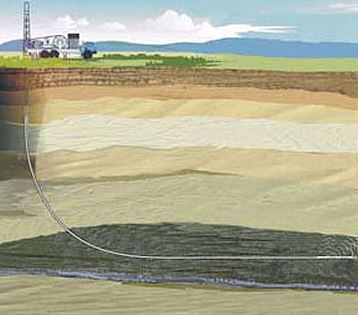
* Horizontal drilling involves penetrating the ground vertically (like traditional drilling) and then turning horizontally in order to drill along the layer that contains the fossil fuel resources. This method of drilling exposes more of the fossil fuel resources to the bore of each well, thus increasing yields and decreasing the surface footprint of drilling operations.[1073] [1074]

[1075]

* Horizontal drilling was first successfully employed in 1929 and has been used commercially since the late 1980’s. By 1990, more than 1,000 horizontal wells were drilled worldwide, almost all for the purpose of extracting crude oil.[1076]
* Hydraulic fracturing or fracking involves injecting fluids at high pressures from the bore of a well into the layer that contains the fossil fuel resources. This process creates fractures in the rock, which allows the fuels to flow to the bore of the well. The fluids used for fracking typically contain sand or ceramic beads that serve to hold open the fractures after they have been created. This fluid also contains varying chemicals that are used for purposes such as preventing pipe corrosion.[1077] [1078] (A detailed description of the process is shown in the video below.)
* Hydraulic fracturing was first successfully employed to drill for oil in 1947 and has been used commercially since the 1950’s. By 1955, more than 100,000 fracking treatments were performed. In the 1980’s and early 1990’s, Texas oilman George Mitchell refined the process of fracking to extract natural gas from shale in a cost-effective manner.[1079]
* In the early 2000’s, horizontal drilling coupled with hydraulic fracturing became widely used to extract tight gas. In the mid-2000’s, the combination of these technologies also became widely used to extract tight oil.[1080] [1081] [1082] The process for extracting natural gas is shown in this video:
* From 2005 to 2015, U.S. natural gas production increased by 50%, primarily due to the use of horizontal drilling coupled with hydraulic fracturing in shale formations.[1083] [1084] [1085] [1086]
* In 2016, the U.S. Energy Information Administration reported that fracking:

  • has “allowed the United States to increase its oil production faster than at any time in its history.”
  • now produces “about half of total U.S. crude oil production.”[1087]

* Per a 2012 U.S. Government Accountability Office (GAO) report:

[A]ccording to a number of studies and publications GAO reviewed, shale oil and gas development poses risks to air quality, generally as the result of (1) engine exhaust from increased truck traffic, (2) emissions from diesel-powered pumps used to power equipment, (3) gas that is flared (burned) or vented (released directly into the atmosphere) for operational reasons, and (4) unintentional emissions of pollutants from faulty equipment or impoundments—temporary storage areas. Similarly, a number of studies and publications GAO reviewed indicate that shale oil and gas development poses risks to water quality from contamination of surface water and groundwater as a result of erosion from ground disturbances, spills and releases of chemicals and other fluids, or underground migration of gases and chemicals.
The risks identified in the studies and publications we reviewed cannot, at present, be quantified, and the magnitude of potential adverse affects or likelihood of occurrence cannot be determined for several reasons. First, it is difficult to predict how many or where shale oil and gas wells may be constructed. Second, the extent to which operators use effective best management practices to mitigate risk may vary. Third, based on the studies we reviewed, there are relatively few studies that are based on comparing predevelopment conditions to postdevelopment conditions—making it difficult to detect or attribute adverse conditions to shale oil and gas development.[1088]

* The primary concern about fracking is that the fuels it releases from tight formations will migrate to the surface of the earth and contaminate wells and other bodies of water.[1089]
* In areas that are rich in petroleum and natural gas (methane), these fuels commonly seep up to ground level through natural processes:

  • Per the Institute for Plasma Physics in the Netherlands: “In 1859, the first petroleum was pumped out of the ground in Pennsylvania in the USA. For long the petroleum had been a nuisance, contaminating wells for drinking water.”[1090]
  • Per the U.S. Geological Survey: “Reports from the 1800’s document [methane] gas bubbles in water wells, in streams, and in fields after heavy rains; this evidence suggests that migration has always existed.”[1091]
  • Per a 2007 academic textbook The Chemistry and Technology of Petroleum: “Most of the crude oil currently recovered is produced from underground reservoirs. However, surface seepage of crude oil and natural gas are common in many regions.”[1092]
  • Per the Encyclopædia Britannica: “The first discoveries of natural gas seeps were made in Iran between 6000 and 2000 BC. Many early writers described the natural petroleum seeps in the Middle East, especially in the Baku region of what is now Azerbaijan.”[1093]
  • Per the Kentucky Department for Environmental Protection: “Water wells located in pump houses, well pits, basements or any enclosed structure should be properly vented as a safety precaution to prevent the buildup of methane. … Naturally occurring gases, such as methane and hydrogen sulfide, may be present in some wells. These gases occur naturally in the subsurface, accumulating in voids within the rock and as dissolved gas in groundwater.”[1094]
  • Per GAO: “Methane can occur naturally in shallow bedrock and unconsolidated sediments and has been known to naturally seep to the surface and contaminate water supplies, including water wells.”[1095]

* Because methane is odorless, invisible, and generally nontoxic, people who have naturally occurring methane in their wells may be unaware of it until they test for it.[1096] [1097]
* Fracking is typically performed at depths of 6,000 to 10,000 feet, and the fractures can extend for several hundred feet. Drinking water is commonly located at depths of less than 1,000 feet.[1098]
* As with conventional drilling and other industrial processes (including biofuel production), in cases of accidents and negligence, fracking can and has caused gas leaks, contaminant spills, and other environmental damage.[1099] [1100]
* In May of 2011, Lisa Jackson, head of the Obama administration EPA stated: “I’m not aware of any proven case where the fracking process itself affected water, although there are investigations ongoing.”[1101]
* A 2012 GAO evaluation of three major studies and a series of interviews with regulatory officials in eight states found no proven cases where groundwater contamination was caused by properly conducted fracking. However, GAO noted that:

the widespread development of shale oil and gas is relatively new. As such, little data exist on (1) fracture growth in shale formations following multistage hydraulic fracturing over an extended time period, (2) the frequency with which refracturing of horizontal wells may occur, (3) the effect of refracturing on fracture growth over time, and (4) the likelihood of adverse effects on drinking water aquifers from a large number of hydraulically fractured wells in close proximity to each other.[1102]

* In 2014, the U.S. Department of Energy published the results of an investigation to determine if natural gas or fracking fluids had migrated upward to an underground gas field that is “1,300 feet below the deepest known groundwater aquifer” at six fracking wells in Greene County, Pennsylvania. The study found there was “no detectable migration of gas or aqueous fluids” to the gas field.[1103]
Email this author

Posted in Energy | Comments Off on Energy Facts and Figures for Dummies Part XII

More Data on Hospital-Acquired Infections, Please

Share this article on:

Pneumonia is among the more common hospital-acquired infections. The public deserves more transparency.


Hospitals are dangerous places. Americans acquired 722,000 infections in a hospital setting in 2011, the most recent year cited by the Center for Disease Control and Prevention. About one out of twenty-five patients fell victim to preventable hospital-acquired infections.
In the interest of controlling infectious disease, health care officials have begun tracking the data more closely in recent years. In November the Virginia Department of Health published its Virginia-specific findings for 2015. Overall, hospitals in the Old Dominion compare fairly favorably with their peers nationally based on a methodology that adjusts for the acuity of patients and other relevant factors.
But that conclusion is tempered by (a) significant weak spots in Virginia hospital performance, and (b) the fact that the methodology compared only five categories of common infections, not all infections.
That said, here follow the statewide conclusions from the consumer version of the study based on 2015 data. Virginia hospitals exhibited:

  • Fewer bloodstream infections than predicted based on the national experience in 2006-2008.
  • Fewer urinary tract infections than predicted based on the national experience from 2009.
  • More infections following abdominal hysterectomies and about the same number following colon surgeries based on the national experience from 2006-2008.
  • Fewer methicillin-resistant Staphylococcus aureus bacteremia laboratory-identified events than predicted based on the national experience from 2010-2011.
  • About the same number of hospital-onset Clostridium difficile laboratory-identified events as predicted based on the national experience from 2010-2011.

Bacon’s bottom line: As I argued previously, Virginia consumers/patients should have full transparency into the risks they are taking when they enter a hospital. When I wrote previously, I was unaware that the Virginia Department of Health collected the data. The department deserves kudos for publishing its report in a form comprehensible to the public. But it should go further.
The report lists every hospital in the state and gives it a green star (better than expected compared to national norms) a red X (worse than expected), an equal sign or a “No Conclusion.” This really isn’t very helpful. Does the Depaul Medical Center, to pick a random example, outperform national norms for bloodstream infections by a razor-thin margin or a wide margin? Do Virginia Commonwealth University patients undergoing colon surgeries experience many more infections or just a few?
More to the point, why doesn’t the health department tell us the total of all hospital-acquired infections at each institution and how the numbers compare to national norms?
It also would be helpful to get a sense of what’s happening to hospital-acquired infections over time. To pick an example, it’s nice to know that Virginians incurred fewer bloodstream infections in 2015 compared to the national baseline of 8- to 10-years previously. But that’s a long period of time. How much progress has been made? How rapid has the progress been — have Virginia hospitals made big gains, or are they doing only marginally better than a decade previously?
The cost of health care poses one of the greatest challenges to 21st-century American society. Eliminating hospital-acquired infections should be low-hanging fruit for controlling costs and improving medical outcomes. While Congress argues over Obamacare and the zero-sum question of who subsidizes whom, Virginia needs to take the lead in driving down costs and improving medical outcomes to the benefit of all. Greater transparency can help by making hospitals more attentive to patients’ concerns and by shining a spotlight on under-performers. If  hospital managements fear looking bad in the eyes of the public and its board of directors, they will make the control of infections a top priority.
(This First ran in Bacon’s Rebellion on Jan. 3, 2017)
–
bacon-90Email this author

Posted in Uncategorized | Comments Off on More Data on Hospital-Acquired Infections, Please

Severe Mental Illness and the Death Penalty

Share this article on:

The U.S. Supreme Court has ruled that juveniles and people with intellectual disabilities should not be executed due to their diminished culpability.
However, it remains legal to execute people who suffered from severe mental illness (SMI) at the time of the offense.  While our understanding of mental illness improves every day, it is surprising that people with severe mental illnesses, like schizophrenia, can still be subject to the death penalty in Virginia.
I firmly believe that anyone who commits a crime should face very serious consequences for it.  However, in light of our increased understanding of the severe impairments brought by mental illness, I believe that life in prison without parole is the appropriate punishment for those with documented severe mental illness at the time of their crime.
Severe mental illness is characterized by psychotic episodes, which affect one’s ability to exercise rational judgment. A severe mental illness can also lead to wrongful conviction; several studies show a link between mental illness and false confession.
In addition, the money saved by not sentencing someone to death in these cases could be used to solve cold cases, train and staff police forces, fund victims’ services, or expand mental health programs.
Many organizations agree that the time for reform has come. The American Psychiatric Association, the American Psychological Association, the National Alliance on Mental Illness, Mental Health America and the American Bar Association have all expressed their opposition to the use of the death penalty for those with severe mentally illness.
In our state, the National Alliance on Mental Illness Virginia, Virginia Counselors Association, Mental Health America of Virginia, the disability Law Center, VOCAL and the National Association of Social Workers Virginia Chapter have endorsed legislation to exclude those with severe mental illness from the death penalty.
I find it unconscionable that the Commonwealth can and does execute people who suffer from severe mental illness. Severely mentally disabled defendants are not the “worst of the worst” for whom the death penalty is intended, and no purpose is served by their execution.
While it is difficult to know how many people would be affected by the SMI exemption in Virginia, the requirement of the presence of a severe mental illness with significantly impaired capacity at the time of the offense ensures that this would remain a limited exemption. Mental Health America estimates that 5 to 20 percent of inmates currently on death row in the United States have a severe mental illness.
The legislation sponsored by Del. Jay Leftwich (HB 1522) has a restrictive definition that includes only the most serious forms of mental illness.  Many diagnoses — and many people with any given diagnosis — would not meet the requirements of this proposed legislative exemption.
It is time that Virginia stops sentencing people with severe mental illness to death.  Life in prison without parole is a more appropriate sentence for offenders with SMI who have a diminished culpability for their actions. 
Email this Author 
 

Posted in Crime, Government Reform | Comments Off on Severe Mental Illness and the Death Penalty